Cylinder Magnets vs Disc Magnets: Which is Better for Your Project?
Cylinder Magnets vs Disc Magnets: Which is Better for Your Project?
Cylinder magnets and disc magnets are common choices for many commercial and industrial projects. Choosing the right one affects your project's performance and cost.
Cylinder magnets offer strong, focused axial pull ideal for insertion into housings, linear actuators, or holding applications where depth is available in tight spaces. While disc magnets provide broad surface contact and uniform field distribution, perfect for attaching flat panels or creating magnetic couplings on planar surfaces over larger areas.
Keep reading to understand more about cylinder magnets and compare them with disc magnets to find the best fit.
Table of Contents
What is a cylindrical magnet?
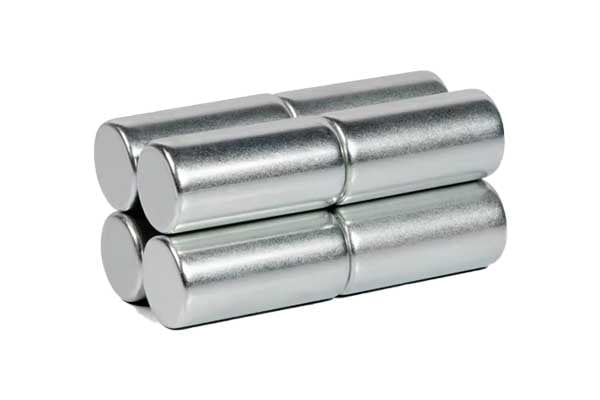
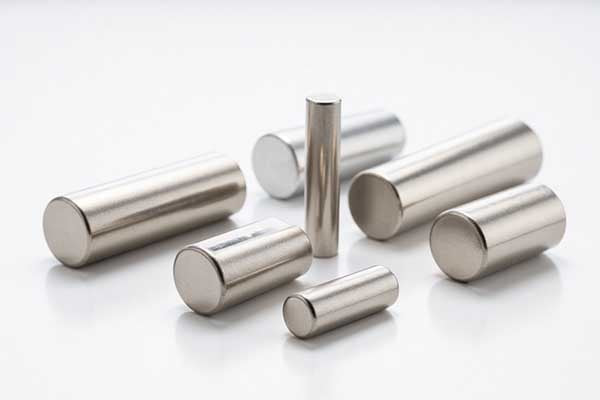
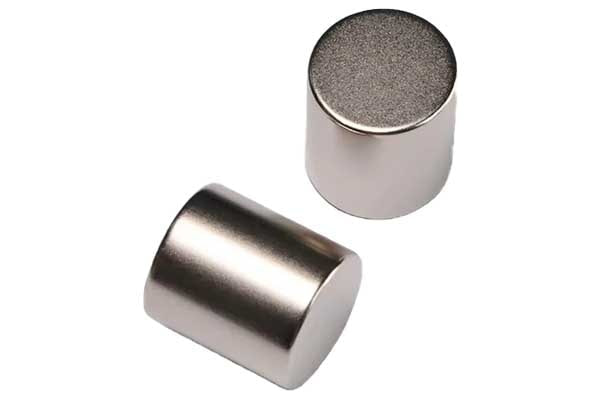
Cylinder magnets are magnets shaped like a straight cylinder. They have a circular cross-section and length longer than their diameter.
They create a strong magnetic field mostly concentrated at the circular faces, which is useful in many commercial and industrial projects requiring focused magnetic force.
Cylinder magnets can be easily customized in size and magnetic strength, such as neodymium cylinder magnets which are powerful and compact. They are commonly used in sensors, motors, and holding applications.
Cylinder magnets, especially neodymium types, combine a strong magnetic field with a compact shape. This makes them favorable in commercial applications needing durability and precision.
One key advantage is their ability to produce a focused magnetic field on the circular poles, which can be aligned easily with metallic or magnetic components. This feature is crucial in designing mechanisms like latching devices, magnetic couplings, and custom magnetic assemblies.
However, the shape also means the magnetic field strength tapers off quickly along the cylinder’s length, which can be a downside for applications requiring uniform field distribution over a surface.
Below is a table outlining key properties of cylinder magnets compared with disc magnets:
Cylinder Magnets vs Disc Magnets Comparison
| Feature | Cylinder Magnets | Disc Magnets |
|---|---|---|
| Shape | Long cylinder, circular cross-section | Flat and round, thin thickness |
| Magnetic Field Focus | Concentrated on circular faces | Spread over flat surfaces |
| Common Uses | Sensors, motors, latching | Speakers, magnetic seals |
| Customization | Easy size and strength adjustments | Standard size but varied diameters |
Because cylinder magnets are versatile and can be tailored to precise project needs, they often outperform disc magnets where a narrow and strong magnetic field is critical. Their use in high-performance commercial applications, including precision tools and magnetic fixtures, is increasing. Yet, their benefits should be weighed against the intended magnetic field distribution and geometry requirements.
What are cylinder magnets used for?
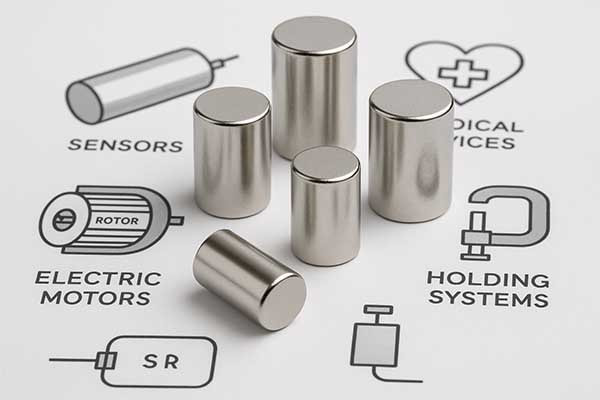
Choosing the right magnet shape often puzzles designers. Cylinder magnets solve space constraints while delivering strong axial magnetic fields. They're essential in compact mechanical designs across industries.
Cylinder magnets provide focused magnetic fields along their axis for precision applications. Common uses include sensors, electric motors, medical devices, and holding systems. Their shape allows efficient stacking in tight spaces. Manufacturers select them when directional magnetic force or rotational stability is required.
Key Industrial Applications and Technical Considerations
Cylinder magnets serve critical functions where disc magnets can't fit or perform. Their unique shape creates concentrated magnetic fields along a single axis. This directional control makes them irreplaceable in many technologies.
Industrial & Manufacturing
Cylinder magnets are widely used in industrial machinery and manufacturing. Their strong axial fields make them ideal for motors, generators, sensors and magnetic couplings on assembly lines.
For example, compact NdFeB cylinder magnets often serve as rotor poles in brushless motors or as synchronous generator magnets, where they produce high torque in minimal space.
Cylindrical magnets also act in sensors (e.g. hall-effect or proximity probes) to detect metal parts on conveyors or machine.
In metal fabrication and recycling, powerful large ferrite or neodymium cylinders are built into magnetic chucks, lifting platforms and separators to handle ferrous scrap and hold workpieces. These industrial magnets typically range from a few centimeters up to ~10 cm in diameter, with pull forces of tens to hundreds of kilograms (hundreds to thousands of newtons).
High-strength rare-earth grades (NdFeB or SmCo) are common for maximum force and heat resistance, while ceramic (ferrite) magnets are used where cost or temperature tolerance (e.g. welding fixtures) is critical.
Consumer Electronics
In electronics, small cylinder magnets provide precise control in compact devices. Neodymium cylinders as small as a few millimeters power smartphone vibration motors, micro-speakers, headphone drivers and haptic feedback actuators.They are also used in hard drives and smart-phone cameras as focusing actuators.
Audio equipment frequently uses cylindrical NdFeB or ferrite magnets: their strong but focused field enables high-quality sound in tiny speakers and earphones. Typical consumer-magnet sizes are sub-5–15 mm in diameter (with lengths of similar scale), providing pull forces from a few hundred grams up to a few kilograms.
The compactness of neodymium (N35–N52 grades) makes it the material of choice for premium electronics, while lower-cost ferrite or even small AlNiCo cylinders may appear in budget devices or volume applications.
Automotive
Modern vehicles incorporate many cylinder magnets in both safety and drive systems. High-energy NdFeB cylinders are used in electric-vehicle (EV) and hybrid drive motors to efficiently convert electrical energy to motion.Magnets also appear in alternators, ABS and wheel-speed sensors, torque converters, and various small servo motors (windows, seats, windshield wipers) for power accessories.
In car audio, cylinder speakers use NdFeB or ferrite to deliver robust soundstanfordmagnets.com. Automotive magnets must often resist heat and vibration; thus samarium-cobalt cylinders are common in high-temperature engine sensors, while ceramic magnets serve in less-demanding contexts. Magnet diameters in automotive parts typically range from ~5–30 mm, with pull (holding) forces on the order of 5–50 kg (50–500 N), depending on application.
Medical & Healthcare
Cylinder magnets play roles in diagnostics and therapeutic devices.
Strong, long neodymium cylinders are even used in MRI scanners’ gradient coils to create detailed images. Miniature NdFeB cylinders and discs are used in pacemakers and implantable hearing aids for both signal transduction and secure position.In dentistry, tiny cylindrical magnets help align orthodontic braces (materials ranging from neodymium to AlNiCo are used).
Other medical uses include drug-delivery guides and magnetic surgical tools, where compact high-grade magnets provide controlled forces in small form factors. These medical magnets are very small (often <10 mm) and produce modest pull forces (fractions of a kilogram), favoring materials like NdFeB for strength or AlNiCo/ferrite when biocompatibility and stability are needed.
Application Comparisons
| Application (Industry) | Cylinder Magnet Size (Ø×L) | Typical Pull Force (holding/torque) | Common Materials |
|---|---|---|---|
| Consumer Electronics | Ø ~3–15 mm (length ~similar) | ~0.2–5 kg (2–50 N) | NdFeB (N35–N52), Ferrite, AlNiCo |
| Automotive & Transportation | Ø ~5–30 mm | ~5–50 kg (50–500 N) | NdFeB, SmCo, Ferrite |
| Industrial / Manufacturing | Ø ~10–50+ mm | ~10–100+ kg (100–1000 N) | NdFeB, Ferrite, SmCo |
| Medical Devices & Healthcare | Ø ~1–10 mm | ~0.1–2 kg (1–20 N) | NdFeB, AlNiCo, Ferrite |
Each of these application areas draws on the cylinder magnet’s unique blend of high force density and compact shape. By selecting the appropriate size, grade and material, manufacturers tailor cylinder magnets for holding, sensing or motion roles – from attaching components in consumer gadgets to driving heavy-duty industrial motors.
How are cylinder magnets made?
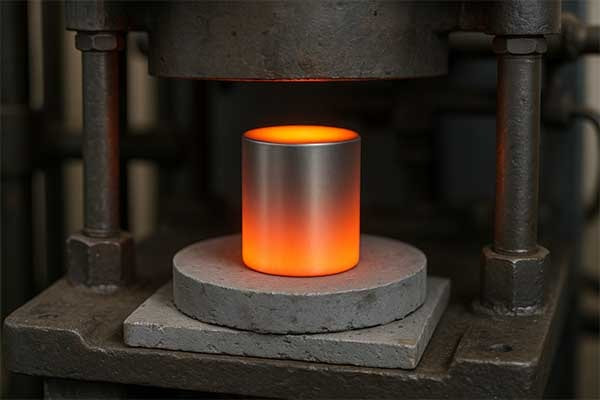
Choosing the right magnet shape affects your project's success. Cylinder magnets offer unique advantages but require specific manufacturing processes. Understanding how these magnetic cylinders are created helps you make better decisions for your applications.
Cylinder magnets are manufactured through powder metallurgy, where rare earth materials are pressed into cylindrical molds, sintered at high temperatures, and then magnetized. The process involves mixing neodymium, iron, and boron powders, compacting them under pressure, heat treatment at 1000-1100°C, machining to precise dimensions, and final magnetization using strong electromagnetic fields.
The manufacturing of magnetic cylinder units involves several critical stages that determine their final performance and quality. M-Magnet employs advanced production techniques to ensure consistent results across different cylinder specifications.
Raw Material Preparation
The process begins with preparing high-purity raw materials. Neodymium, iron, and boron elements are combined in specific ratios to achieve the desired magnetic properties. The quality of these base materials directly impacts the final magnet's strength and durability. Manufacturers must maintain strict quality control during this initial phase to prevent contamination.
The alloy composition typically consists of approximately 30% neodymium, 65% iron, and 5% boron by weight. Additional elements like dysprosium or terbium may be added to enhance temperature resistance. These materials undergo vacuum melting to create a homogeneous alloy ingot.
Powder Production and Processing
The alloy ingot is crushed and milled into fine powder using jet milling or ball milling techniques. This powder typically measures 3-5 micrometers in diameter. The milling process occurs in an inert atmosphere to prevent oxidation of the reactive rare earth materials.
Particle size distribution plays crucial roles in achieving optimal magnetic properties. Uniform powder ensures consistent density throughout the final magnetic cylinder. The powder is then mixed with binding agents to improve handling during subsequent processing steps.
| Manufacturing Stage | Temperature (°C) | Duration | Atmosphere |
|---|---|---|---|
| Powder Preparation | Room Temperature | 2-4 hours | Inert Gas |
| Pressing | Room Temperature | 5-10 minutes | Magnetic Field |
| Sintering | 1000-1100 | 4-6 hours | Vacuum |
| Tempering | 500-650 | 2-3 hours | Vacuum |
Pressing and Alignment
The powder is placed into cylindrical molds and subjected to high pressure, typically 200-400 MPa. During this pressing stage, a strong magnetic field aligns the powder particles to create the desired magnetic orientation. This alignment step is crucial for achieving maximum magnetic performance in the finished cylinder.
The pressing operation must be carefully controlled to ensure uniform density throughout the cylinder. Variations in density can lead to cracks or weak spots in the final product. The molds are designed with precise tolerances to accommodate shrinkage during subsequent sintering.
Sintering and Heat Treatment
The pressed cylinders undergo sintering in vacuum furnaces at temperatures between 1000-1100°C. This high-temperature process bonds the powder particles together, creating a solid, dense magnetic cylinder. The sintering atmosphere must be carefully controlled to prevent oxidation and maintain material purity.
Following sintering, the cylinders receive tempering treatment at lower temperatures (500-650°C) to optimize their magnetic properties. This tempering process helps relieve internal stresses and improves the magnet's coercivity. The cooling rate during this stage affects the final microstructure and magnetic performance.
Machining and Finishing
After heat treatment, the cylinders are machined to achieve precise dimensions and surface finishes. Diamond grinding wheels are typically used due to the hardness of sintered neodymium material. This machining step removes any surface irregularities and brings the cylinders to their final specifications.
Quality control measures include dimensional inspection, surface roughness measurement, and visual examination for defects. Custom applications may require additional machining operations such as drilling holes or creating special surface features.
Magnetization Process
The final manufacturing step involves magnetizing the cylinders using powerful electromagnetic coils. The magnetization process requires applying magnetic fields several times stronger than the magnet's final operating field. This step gives the cylinder its permanent magnetic properties.
How to make a cylindrical magnet? The magnetization direction can be axial (through the cylinder's length) or diametral (across the diameter), depending on the intended application. The magnetization equipment must be capable of generating uniform fields to ensure consistent magnetic performance throughout the cylinder.
Quality Assurance and Testing
Each batch of magnetic cylinders undergoes comprehensive testing to verify their magnetic properties, dimensional accuracy, and surface quality. Tests include measurement of magnetic flux density, coercivity, and maximum energy product. These parameters determine how well the magnets will perform in their intended applications.
Temperature stability testing ensures the cylinders maintain their magnetic properties under various operating conditions. M-Magnet implements rigorous quality control procedures to guarantee that every magnetic cylinder meets specified requirements before shipment to customers worldwide.
Is a cylindrical magnet has only one pole?
Many people mistakenly think a cylindrical magnet has only one pole. This common misunderstanding can lead to problems in a project's design. You need to know the correct pole orientation for your application to work properly. Let's clear up this confusion and give you the facts you need.
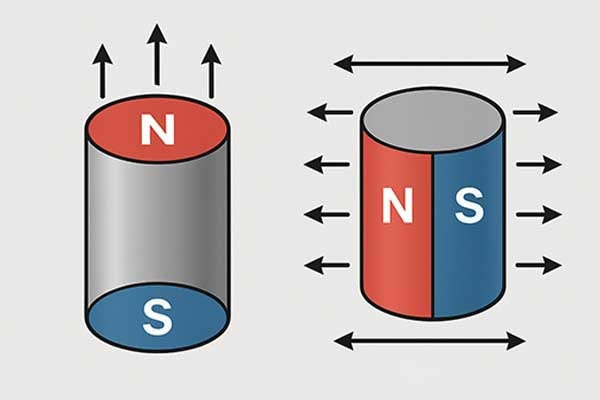
A cylindrical magnet does not have just one pole. All magnets, including cylindrical ones, must have at least two poles: a North and a South pole. This is a fundamental rule of physics. The poles are located on opposite ends of the magnet. On a typical cylindrical neodymium magnet, the poles are on the two flat, circular faces.
The idea of a magnet with a single pole, called a monopole, is something scientists have looked for, but they have never found one. This means that if you cut a magnet in half, you do not get two separate poles. Instead, you get two new, smaller magnets.
Each of these smaller magnets still has its own North and South pole. This principle is key to understanding how magnetism works, whether you are dealing with a simple disc magnet or a complex system of multiple cylindrical neodymium magnets. The shape of a magnet can change where the poles are located, but it cannot remove one of the poles.
For example, when you compare cylinder magnets vs disc magnets, they both have two poles. They are just shaped differently. The way a magnet is made and magnetized decides where its poles are.
The question "Where are the poles on a cylindrical magnet" depends on its magnetization direction.
The most common type is axial magnetization. This means the poles are on the two flat, circular faces. The magnetic field lines go straight from one face to the other. This type is very strong when attracting something directly to its flat face.
A second type is diametric magnetization. In this case, the poles are on the curved sides of the cylinder. The North pole is on one side, and the South pole is on the other, across the diameter. This creates a magnetic field that is perpendicular to the magnet's length. This type of magnet is good for different uses, like for motors or sensors.
Knowing the difference is important for any project. For example, a magnet used in a motor needs a specific field direction. Choosing the wrong type could make the motor not work. The expert team at M-Magnet can help you decide which magnetization direction is right for your project. We also offer customized solutions to meet any specific needs.
Understanding Magnetization Directions
Knowing the difference between axial and diametric magnetization is key for any design. This is especially true when working with powerful materials like neodymium. The magnetization direction changes how the magnetic force acts. This table shows the main differences between the two types.
Magnetization Types for Cylinder Magnets
| Feature | Axial Magnetization | Diametric Magnetization |
|---|---|---|
| Pole Location | On the flat, circular ends. | On the curved side, across the diameter. |
| Magnetic Field | Field lines run parallel to the magnet's length. | Field lines run perpendicular to the magnet's length. |
| Common Uses | General holding, closures, simple sensors. | Motors, rotors, bearings, switches. |
M-Magnet can help you decide on the best type of magnetization for your specific needs. Choosing the right one is a key part of our custom solutions process.
What is the difference between a bar magnet and a cylindrical magnet?
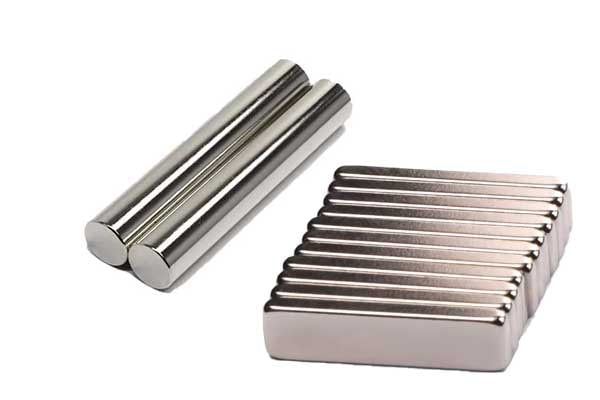
Many people confuse bar neodymium magnets and cylindrical neodymium magnets, especially when choosing the right magnet for their project. This confusion can lead to selecting the wrong type, which might not perform optimally. Understanding the key differences is crucial for making the right choice.
A bar neodymium magnet is typically rectangular, while a cylindrical neodymium magnet is round with a circular cross-section. Both are made from neodymium, but their shapes affect their magnetic field distribution and suitability for different applications. Bar neodymium magnets are often used in educational settings and simple holding tasks, whereas cylindrical neodymium magnets are preferred for applications requiring a concentrated magnetic field along a length, such as in sensors or linear motors.
Definition and Shape
A bar neodymium magnet is generally a rectangular prism with its length significantly greater than its width and thickness. This shape is common in traditional magnets used for educational purposes or simple magnetic experiments. For example, bar magnets are often seen in classroom demonstrations to show magnetic field lines.
On the other hand, a cylindrical neodymium magnet, often called a rod magnet, has a circular cross-section with its length equal to or greater than its diameter. This shape allows for a unique distribution of magnetic fields, making it suitable for specific applications where a focused field is needed.
Both shapes are crafted from neodymium, a rare-earth material known for its exceptional strength.
Magnetic Field Characteristics
The shape of a magnet significantly influences how its magnetic field is distributed.
For bar neodymium magnets, the magnetic field lines emerge from the north pole and enter the south pole, spreading out uniformly from the flat surfaces. This broad field distribution makes them ideal for applications requiring a wide magnetic reach, such as magnetic holders or educational tools used in physics classes.
In contrast, cylindrical neodymium magnets have their magnetic field lines concentrated along their length, with poles at the circular ends. This results in a stronger, more focused magnetic field along the axis, which is beneficial for applications like magnetic resonance imaging (MRI) machines or linear actuators, where a deep field is essential. Cylindrical magnets excel in applications needing a concentrated field.
Applications
Bar neodymium magnets are commonly used in:
Compasses: Their rectangular shape allows easy pivoting to align with the Earth’s magnetic field, making them a staple in navigation tools.
Educational tools: Bar magnets are straightforward for demonstrating magnetic principles due to their simple shape, often used in school experiments.
Holding applications: They are effective for magnetizing or holding flat surfaces together, such as in magnetic latches or closures.
Cylindrical neodymium magnets are preferred in:
Sensors: Their concentrated field along the length is ideal for triggering sensors over a distance, as seen in industrial automation.
Magnetic assemblies: These magnets are often stacked or arranged linearly in devices requiring a consistent field along a path.
Medical devices: Cylindrical magnets are used in MRI machines, where a strong, uniform field is needed over a larger area, as highlighted in studies.
Comparison with Disc Magnets
Since the broader topic is "Cylinder Magnets vs Disc Magnets," it’s worth comparing cylindrical neodymium magnets with disc magnets.
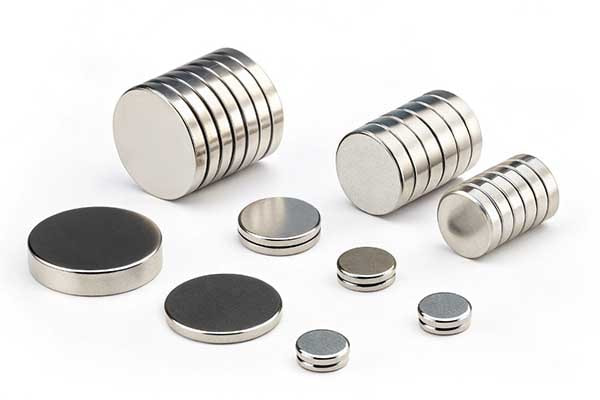
Disc magnets are flat and circular, with magnetic poles on their flat faces, providing a strong magnetic field close to the surface. This makes them ideal for holding applications where space is limited, such as in electronics, jewelry clasps, or magnetic fasteners.
In contrast, cylindrical neodymium magnets offer a longer reach with their magnetic field, making them suitable for applications needing depth or linear arrangements, like sensors or linear motors. Another advantage of cylindrical magnets is their ability to handle higher temperatures when taller, due to better heat dissipation.
To illustrate the differences, here is a comparison of the three shapes:
| Shape | Description | Magnetic Field | Common Applications |
|---|---|---|---|
| Bar | Rectangular | Spread out from flat poles | Compasses, education, holding |
| Cylindrical | Round, long | Concentrated along length | Sensors, linear motors, MRI |
| Disc | Flat, circular | Strong near the magnet | Holding, assemblies, speakers |
Choosing the Right Magnet
Selecting between bar, cylindrical, and disc neodymium magnets depends on your project’s specific needs.
If you need a broad magnetic field for holding or educational purposes, a bar neodymium magnet is likely the best choice. For applications requiring a deep, concentrated field, such as in sensors or medical devices, a cylindrical neodymium magnet is more suitable.
Disc magnets are perfect for compact spaces where strong holding is needed, like in electronics or closures.
At M-Magnet, we specialize in providing high-quality neodymium magnets in various shapes, including bar, cylindrical, and disc, to meet the diverse needs of our customers. Our expertise in custom magnet solutions ensures that you get the perfect magnet for your specific application.
Where can I find small cylinder magnets?
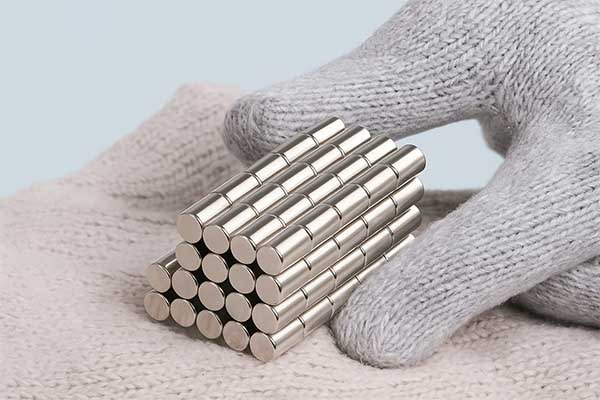
Finding the right magnet for your project can be a challenge, but knowing where to look can make all the difference.
Small cylinder magnets are available from specialized magnet manufacturers and online suppliers. Companies like M-Magnet Company offer a wide range of cylinder magnets in various sizes and strengths, suitable for different applications.
When it comes to finding small cylinder magnets, there are several factors to consider.
First, the material of the magnet is crucial. Neodymium cylinder magnets are popular due to their high strength and durability. These magnets are often used in applications where space is limited but strong magnetic force is required.
For example, in electronics, small cylinder magnets can be used to hold components in place or to create magnetic switches. In addition to neodymium, other materials like ferrite and samarium cobalt are also available, each with its own advantages.
One important aspect to consider is the size and shape of the cylinder magnet. Cylinder magnets come in various diameters and lengths, allowing them to fit into tight spaces. For instance, a small cylinder magnet with a diameter of 3mm and a length of 5mm can be ideal for precision applications.
The shape of the magnet also affects its magnetic field. A hollow cylinder magnet, for example, can have a different magnetic field distribution compared to a solid cylinder magnet. This can be important in applications where the direction and strength of the magnetic field need to be precisely controlled.
Another factor to consider is the strength of the magnet. The strength of a cylinder magnet is usually measured in Gauss or Tesla. Strong cylinder magnets, such as those with a rating of N52, can provide a powerful magnetic force. This is particularly useful in applications like lifting heavy objects or in medical devices where a strong magnetic field is needed.
However, it's important to note that stronger magnets can also be more challenging to handle due to their powerful attraction.
When choosing a supplier for small cylinder magnets, it's essential to consider the quality and reliability of the product. M-Magnet, for example, is a reputable manufacturer known for its high-quality neodymium rod magnets and other custom solutions. They offer a wide range of cylinder magnets with different grades and coatings to meet various needs. Their products are designed to be durable and resistant to corrosion, making them suitable for long-term use.
In addition to the product itself, the service provided by the supplier is also important. A good supplier should offer technical support and advice to help you choose the right magnet for your project. They should also provide reliable shipping and after-sales service to ensure your satisfaction. For example, M-Magnet offers custom-made solutions and excellent after-sales support, which can be very helpful for customers with specific requirements.
| Material | Size | Strength | Application |
|---|---|---|---|
| Neodymium | Diameter: 3mm, Length: 5mm | N52 | Electronics, Medical Devices |
| Ferrite | Diameter: 5mm, Length: 10mm | N42 | Toys, Crafts |
| Samarium Cobalt | Diameter: 4mm, Length: 6mm | N45 | Industrial Equipment |
Finding small cylinder magnets involves considering the material, size, strength, and application of the magnet. Reputable suppliers like M-Magnet offer a wide range of options and excellent service to help you find the perfect magnet for your project. Whether you need a strong cylinder magnet for industrial use or a small one for a DIY project, the right supplier can make all the difference.
Conclusion
In choosing between cylinder magnets and disc magnets, consider the shape, magnetic field focus, and application needs. Cylinder magnets offer a concentrated magnetic field ideal for precision and strength, fitting many commercial projects. Disc magnets cover wider surfaces but with less depth. Your choice should balance magnetic performance with project goals, size, and cost. For customized solutions, manufacturers like M-Magnet Company provide tailored neodymium cylinder magnets to fit high-performance needs.
About Blogger
Benjamin Li
Operation Manager of M-Magnet Company