Top-Grade Circle Magnets for Sale – Choose the Right Size & Strength
Top-Grade Circle Magnets for Sale – Choose the Right Size & Strength
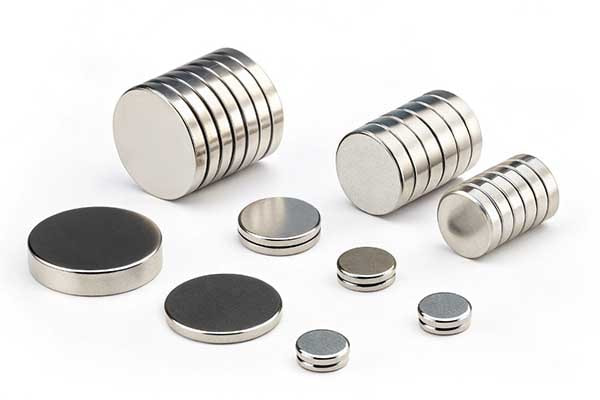
Need reliable magnets? Weak or poorly sized magnets fail to hold securely. Our top-grade circle magnets offer precise sizing, ultra-strong hold, and durable materials — get the grip you need!
To choose the right size & strength for circle magnets, match the magnetic force to your task — use thicker discs for deeper reach and wider discs for larger contact area and higher pull force. For compact devices like sensors or motors, select small-diameter, high-grade neodymium discs (e.g., N52–N55) to maximize strength in tight spaces. Always factor in air gap and temperature; high-temp applications may need SmCo or heat-resistant NdFeB grades.
Keep reading to learn what circle magnets really are and how to pick the best ones for your projects.
Table of Contents
What are circle magnets called?

Circle magnets are often called disc magnets because of their flat, round shape problem many face is knowing exactly what these magnets are named and used for.
Circle magnets are also known as disc magnets. They are permanent magnets made typically from neodymium (NdFeB), ferrite, or other magnetic materials. Their shape is flat and round, ideal for many applications requiring strong magnetic force in a compact form.
What Defines A Circle Magnet?
From a practical standpoint, circle magnets are among the most common magnet shapes. Their flat, circular geometry allows them to be easily installed on flat surfaces or embedded in devices. They differ from ring magnets, which have a hollow center, but both are used in applications such as electronic devices, magnetic fasteners, motors, and sensors.
Circle magnets versus other magnet shapes
| Characteristics | Circle (Disc) Magnets | Ring Magnets | Block Magnets |
|---|---|---|---|
| Shape | Flat and round | Ring-shaped with a center hole | Rectangular or square shape |
| Magnetic field direction | Typically along thickness | Complex, depends on pole layout | Uniform along one side |
| Common use cases | Electronics, craft, industrial | Motors, sensors, loudspeakers | Magnetic clamps, industrial use |
| Manufacturing ease | High | Moderate | High |
Their size matters greatly for magnetic force. The bigger the diameter and thickness, the stronger the magnet usually is. However, magnet grade also affects strength as NdFeB magnets from N35 to N52 have different maximum magnetic energy products.
Additionally, coating plays a role in durability, preventing corrosion especially in neodymium magnets prone to rust without protection.
M-Magnet Company, based in China, manufactures top-grade circle magnets including high-performance neodymium types. Their quality control ensures dimensional accuracy and strength consistency, suitable for American and European markets.
Understanding these terms and features helps you choose the exact circle magnet that fits your size and strength needs, avoiding weak or oversized magnets that waste cost and effectiveness.
How do circle magnets work?
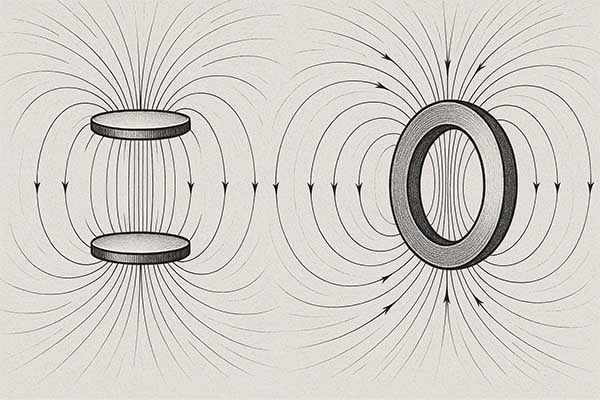
Without clarity, you might pick the wrong magnet or misplace it, wasting time and money. You need a simple grasp of how circle magnets create force. Circle magnets attract ferromagnetic materials using magnetic force.
Circular magnets produce a magnetic field that pulls ferrous materials. The field flows from the north pole to the south pole, forming loops. These magnets stick to metal because of this force. Their shape helps make the pull even and steady.
Many people think all magnets work the same. But shape changes how they behave. A circular magnet, with its rounded edges and uniform radius, creates a field that is different from rectangular or block magnets. The way these magnets work has everything to do with how the magnetic field spreads out around them.
Magnetic Field Distribution: Shapes Compared
| Shape | Field Pattern | Best Use |
|---|---|---|
| Circular | Radial & Balanced | Sensors, speakers, holding |
| Rectangular | Linear & Strong at edges | Motors, lifting, tools |
| Ring (with hole) | Concentrated through center | Magnetic coupling, measuring |
This round design gives a symmetrical magnetic field. That’s why circular magnets are often used in rotating devices or fixtures that need even pull. At M-Magnet, our circular magnet options come in multiple grades, diameters, and thicknesses to fit many jobs. You might need a small one for electronics or a thick one for mounting tools.
Their working strength also changes based on their grade (like N35, N52, etc.) and magnetic material, often made from neodymium, ferrite, or samarium cobalt. Each one provides a unique balance between strength, cost, and heat resistance. When customers ask us for customized circular magnet setups, we always start by understanding what function it will serve.
Where does a circular magnet come from?
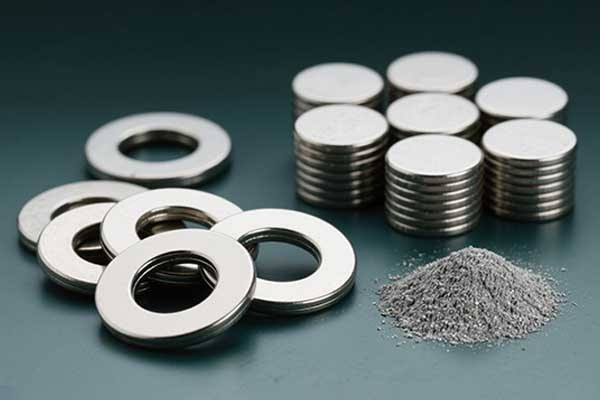
Circular magnets are made by shaping magnetic material into discs and magnetizing them.
A circular magnet starts from a powdered alloy, pressed into a round mold, then sintered at high temperatures. After shaping, it is magnetized by strong electric fields. This process gives it a fixed north-south polarity.
The process of making a circular magnet is part of a longer supply chain that combines metal science, advanced machinery, and tight quality control. The origin begins with raw material — neodymium, iron, and boron — often mined in China or Australia. These materials are mixed to form the base of neodymium magnets. Other types, like ferrite magnets, use iron oxide instead.
After sourcing, the next step is processing the raw powder. This powder is pressed into a mold that defines the magnet’s shape — round, disc, or ring. For a circular magnet, the mold ensures a clean round edge. Then it goes through sintering: a high-heat treatment where the powder becomes solid. Post-sintering, the magnet is cut to the final size and polished. Cutting precision is very important — especially for thin, high-grade discs.
Steps in Making a Circular Magnet
| Step | Process | Details |
|---|---|---|
| 1 | Raw Material | Neodymium, Ferrite, or Samarium Cobalt base |
| 2 | Pressing & Molding | Material shaped into circular form |
| 3 | Sintering | Heated to solidify and bond particles |
| 4 | Cutting & Grinding | Final size and thickness set with precision tools |
| 5 | Magnetization | Exposed to strong magnetic field for polarity |
Some customers request custom-made magnets with exact pull strength. To meet these, we adjust the grade, size, or coating (like nickel, epoxy, or zinc). Our factory at M-Magnet Company has special machines to cut thin discs under 0.5mm or large ones over 150mm.
With circular magnets, their size and strength must match the task. Too strong may damage equipment. Too weak may not hold. That’s why we help buyers choose carefully, often offering samples. When designed right, circular magnets can lift, hold, seal, or align with excellent performance.
How to remove circle magnet from phone case?

Removing a circle magnet from a phone case can be tricky, especially if it's stuck with strong adhesive. You might worry about damaging your phone or leaving residue behind. But with the right method, you can safely remove it without any hassle.
To remove a circle magnet from a phone case, use dental floss or a thin card to gently pry it off. For stubborn magnets, apply heat or use isopropyl alcohol to loosen the adhesive. Always be careful not to scratch your phone.
When it comes to removing a circle magnet from a phone case, there are several methods you can use, each with its own advantages and precautions. The most common and safest method is using dental floss. By wrapping the floss around the magnet and pulling it through, you can cut through the adhesive without damaging the phone. This method is recommended by many users and experts because it minimizes the risk of scratching the phone's surface.
Another effective method is using a thin card, like a credit card, to slide under the magnet and pry it off. This works well if the magnet is not too strongly adhered. However, you need to be gentle to avoid applying too much pressure, which could damage the phone case or the phone itself.
For magnets that are particularly stubborn, applying heat can help. Using a hairdryer on a low setting to warm the adhesive can make it softer and easier to remove. Be cautious not to overheat, as this could damage the phone case or the phone.
If the above methods don't work, you can try using isopropyl alcohol. Soaking a cotton swab in alcohol and applying it around the edges of the magnet can help dissolve the adhesive. After letting it sit for a few minutes, you should be able to peel the magnet off more easily. Make sure to clean any remaining residue with a soft cloth.
It's important to note that while these methods are generally safe, you should always handle your phone with care. Avoid using sharp objects like knives or screwdrivers, as they can scratch the phone's surface. Also, if you're dealing with a very strong magnet, it might be better to seek professional help to avoid any accidental damage.
In the context of choosing the right size and strength for top-grade circle magnets, understanding how to remove them can be crucial, especially if you're testing different magnets for various applications. For instance, if you're using large circle magnets for industrial purposes, you might need to frequently adjust or replace them, and knowing the best removal method can save time and prevent damage to your equipment.
Moreover, for consumers who purchase magnetic phone cases or accessories, knowing how to remove the magnets can be useful for switching cases or troubleshooting issues with magnetic attachments. This knowledge can enhance the overall experience with magnetic products, ensuring that users can maintain and customize their devices as needed.
For specialized applications, custom-made magnets from M-Magnet can be the perfect solution.
Does a circle magnet have poles?
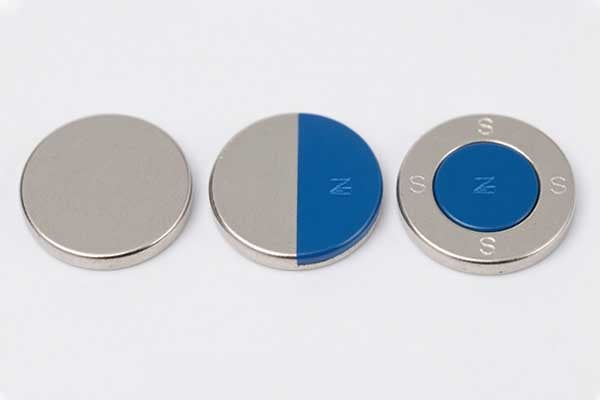
Circle magnets do have poles, but they are arranged differently than in bar magnets. like those used in various applications. Understanding this can help in choosing the right magnet for your needs, especially when dealing with top-grade circle magnets.
Yes, all magnets, including circle magnets, have two poles: north and south. For a circle magnet, these poles are typically on the flat faces(axial magnetization), with one face being north and the other south; or around the inner/outer edges (radial magnetization), creating a 3D magnetic field.
The concept of magnetic poles is fundamental to understanding how magnets work. Every magnet, regardless of its shape, has at least two poles: a north pole and a south pole. This is true for bar magnets, horseshoe magnets, and yes, even circle magnets. For a circle magnet, which is essentially a disk-shaped magnet, the poles are located on the two flat faces. One face will be the north pole, and the opposite face will be the south pole.
This property is crucial because it determines how the magnet interacts with other magnets and magnetic materials. Like poles repel each other, while unlike poles attract. So, if you place the north pole of one circle magnet near the north pole of another, they will push each other away. Conversely, if you bring the north pole of one close to the south pole of another, they will attract each other.
Understanding the polarity of circle magnets is particularly important in applications where precise alignment is needed. For example, in magnetic levitation systems or in the design of magnetic couplings, knowing the exact location of the poles ensures that the magnets function correctly.
In the context of top-grade circle magnets for sale from M-Magnet, choosing the right size and strength often involves considering the polarity as well. For instance, if you're looking for large circle magnets for holding applications, you might need to ensure that the poles are correctly oriented to maximize the holding force.
Additionally, for educational purposes or for those new to magnets, it's interesting to note that you cannot isolate a single pole. If you cut a magnet in half, each piece will still have its own north and south poles. This is a fundamental property of magnets and is why we never find magnetic monopoles in nature.
To further illustrate this, let's consider a table that compares different types of magnets and their pole locations:
| Magnet Shape | Pole Location |
|---|---|
| Bar Magnet | Ends |
| Horseshoe Magnet | Ends (facing each other) |
| Circle Magnet | Flat faces |
| Sphere Magnet | No distinct poles, but still has north and south |
As you can see, while the shape of the magnet can vary, the presence of north and south poles is consistent. For circle magnets, the poles are on the flat surfaces, making them ideal for applications where a broad contact area is needed, such as in magnetic switches or in holding applications where the magnet needs to be flush against a surface.
When selecting large circle magnets for heavy-duty applications, understanding their polarity can help ensure they perform as expected. We provide customized solutions to meet your specific needs, ensuring you get the right magnets for your project.
How to Choose the Best Circle Magnet for Electronics Assembly?
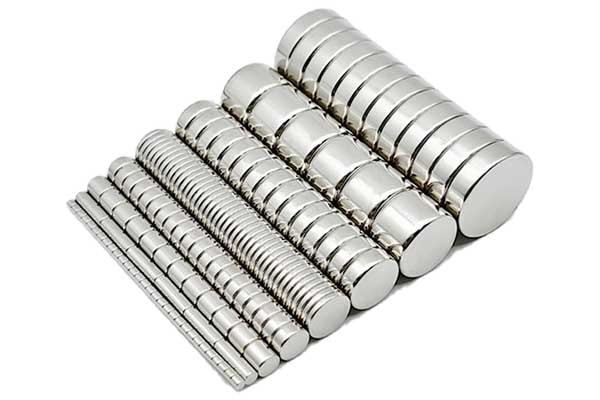
Picking the wrong circle magnet for electronics can cause EMI, heat failures, or weak sensor triggers, and reworking a sealed assembly is expensive and may scrap the entire board. This guide helps you make the best decision.
Choosing the best circle magnet for electronics assembly requires considering factors like size, strength (grade), temperature resistance, and coating. The magnet's dimensions must fit the device's design, while its pull force needs to meet functional requirements. Environmental conditions, such as operating temperature, also dictate material selection to ensure optimal performance and longevity in electronic applications.
Choosing the right circle magnet for electronics assembly is complex. It involves balancing several factors.
First, consider the magnet's size. A magnet too large will not fit. One too small may not provide enough holding force. Precision in sizing is key for compact electronic devices.
Second, the strength or grade of the magnet matters greatly. Higher grades, like N52, offer stronger magnetic fields for their size. This is important for applications needing strong holding power or precise alignment.
Third, temperature resistance is crucial. Electronics often generate heat. If a magnet’s operating temperature is exceeded, it can lose its magnetic properties permanently. This is called demagnetization.
As a leading neodymium magnet manufacturer, we offer a range of grades and coatings to meet diverse needs.
When thinking about these factors, also consider the coating on the magnet. Coatings protect the magnet from corrosion, which is important for longevity, especially in humid environments. Common coatings include nickel, zinc, or epoxy. Each offers different levels of protection and appearance.
The intended application also guides your choice. For example, a speaker may need a different type of circle magnet than a sensor. A holding application requires strong pull force. A sensing application needs a stable magnetic field. These differences affect the required size, shape, and strength of the magnet.
Our magnet customized solutions allow for precise tailoring. We can produce custom round magnets designed to your exact specifications. This ensures perfect integration and performance in your electronic assemblies. Our MagSafe magnet factory expertise also helps in understanding the precise requirements for consumer electronics.
Key Considerations for Circle Magnets in Electronics
| Factor | Description | Impact on Electronics |
|---|---|---|
| Size (Diameter & Thickness) | Physical dimensions of the magnet. | Must fit within device space; impacts total magnetic flux. |
| Strength (Grade) | Indicates the magnet's pull force (e.g., N35, N52). | Determines holding power, sensor sensitivity, and field intensity. |
| Temperature Resistance | Maximum temperature the magnet can withstand without demagnetizing. | Prevents performance degradation in hot operating environments. |
| Coating | Protective layer on the magnet surface (e.g., Ni-Cu-Ni, Epoxy). | Protects against corrosion and wear; can be insulated. |
| Polarization | How the poles are oriented (e.g., axial, diametric). | Affects interaction with other magnetic components or sensors. |
We can provide custom solutions for all these parameters. For instance, for a small, high-performance earbud, you would need a tiny yet powerful circle magnet with excellent temperature stability. For a larger electronic enclosure, a broader range of options might be suitable. We work closely with our clients to ensure the final product meets all technical requirements. Our expertise as a neodymium magnet manufacturer allows us to guide you through these choices. We ensure you get the best magnet for your specific electronic assembly needs.
Conclusion
Circle magnets, also known as disc magnets, come in various sizes and magnetic strengths tailored to your application. Knowing their correct name and understanding size, magnetic grade, and coating ensures you select the best magnet. M-Magnet Company offers reliable, high-quality circle magnets perfect for diverse industrial and consumer uses. Selecting the right circle magnet is key to your product’s performance and durability.
About Blogger
Benjamin Li
Operation Manager of M-Magnet Company