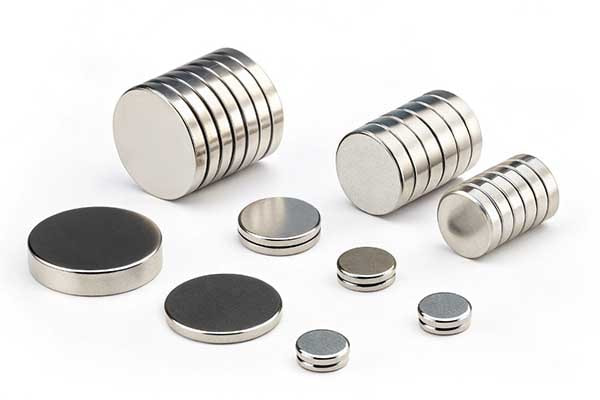
Magnets are fascinating, eay to use and required a lot on both household purposes and industrial purposes. Are all metals respond to their pull? What do magnets stick to? Is your metal magnetic? What determines attraction onto magnets?
The direct answer is no. Magnets only attract certain metals such as iron, cobalt, nickel and some of their alloys(1). Their behavior depends on metal properties like ferromagnetism and conductivity.
Understanding how magnets interact with metals will help in applications like manufacturing and material selection. Let me explain.
What metals are not attracted to magnets?
Many people think magnets attract all metals, but this is not true. Some metals repel or stay neutral.
Metals like aluminum, copper, gold(2), silver, lead, and tin are not magnetic. They have little or none ferromagnetic property and do not interact strongly with magnets.

Ferromagnetism is the key property. Right below is a comparison between magnetic and non-magnetic metals:
Magnetic vs. Non-Magnetic Metals
| Metal Type | Example Metals | Magnetic Interaction |
|---|---|---|
| Magnetic | Iron, Nickel, Cobalt | Strongly Attracted |
| Non-Magnetic | Aluminum, Copper, Gold, Silver, Lead, Tin, etc | No Interaction |
What do magnets never attract?
People often wonder if magnets repel everything that is not metal. This is a misconception.
Magnets never attract organic materials, wood, plastic, rubber, glass, liquids, or gases. You can't stick 15 pieces of paper on fridge but iron. These lack the atomic structure needed for magnetism.

The absence of ferromagnetic elements in these materials explains why magnets ignore them completely.
Does a magnet stick to all metals?
This is a common question, especially for people working with metal materials. The answer is nuanced.
Not all metals stick to magnets. Ferromagnetic metals like iron and nickel show strong attraction. While others have few to none attraction with all kinds of magnets.

Other metals like stainless steel may have varied reactions depending on their specific alloy composition. Coins(3) are mostly not magnetic material, but still some of them are nickel-included to be magnetic.
Do magnets work everywhere?
Some people assume magnets work universally, but environmental factors can influence their performance.
Magnets lose strength in extreme heat(4) or cold(5). However certain environments, like space, alter their behavior.
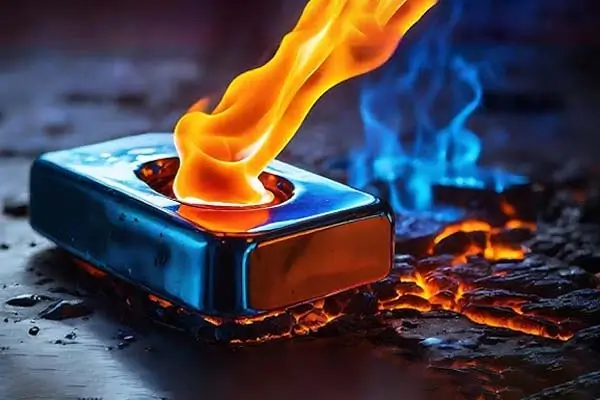
Understanding these limitations helps in designing systems that rely on magnetic forces.
Will a magnet stick to silver?
Many think silver, being a metal, will attract magnets. However, this belief is incorrect.
Silver is not magnetic. It has no ferromagnetic properties to interact with magnetic fields.
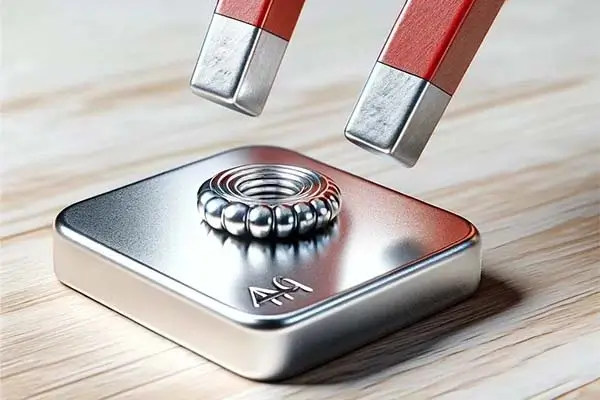
Silver is widely used in our daily life, such as electronics, medicine, glass and mirror(6). To test silver’s authenticity, you can use a magnet. If it attracts, the item may contain ferromagnetic impurities. rather than pure silver.
What should you not put magnets near?
Magnets have significant effects on certain objects, which raises safety concerns for their placement.
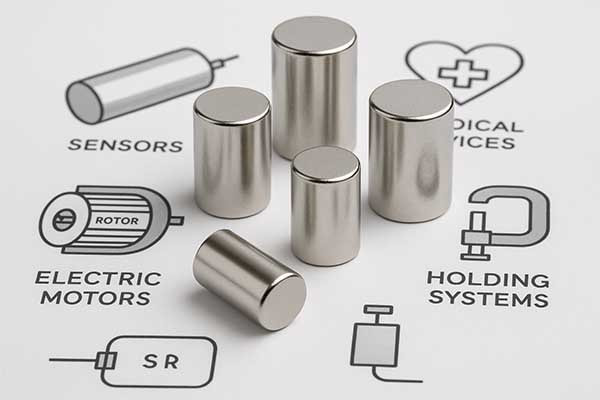
Keep magnets away from electronics, credit cards, displayer(7), and medical devices like pacemakers, ultrasound, CT scanners, electrocardiogram monitor, surgical and laboratory instruments to avoid damage and huge mistake.
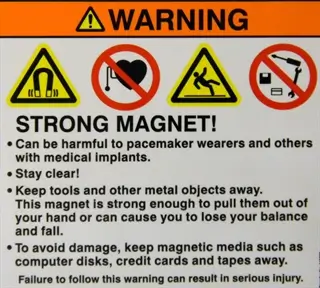
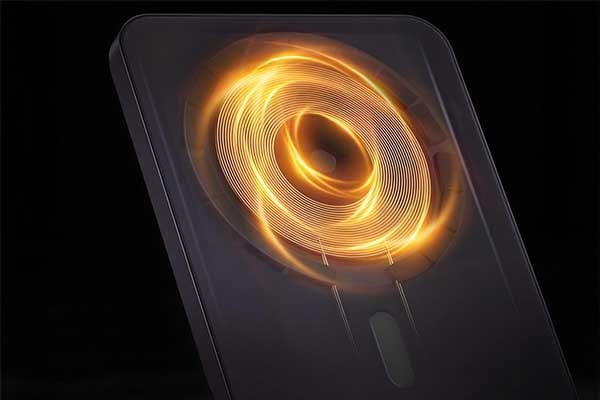
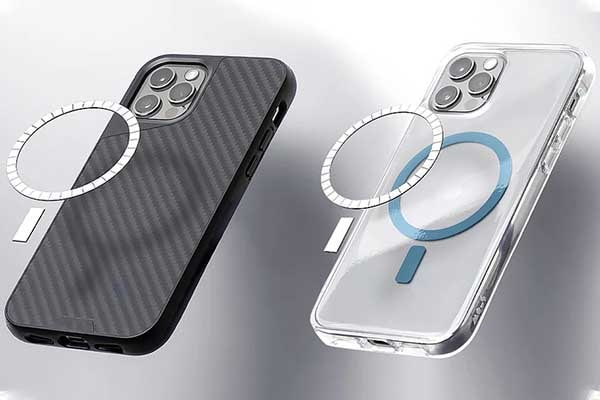
Magnets have little effects or damage on smart phone(8) in today's technology, but it is still better to be carefully moved away from each other. Magnetic fields can disrupt or permanently harm sensitive items. Take precautions when using strong magnets.
Conclusion
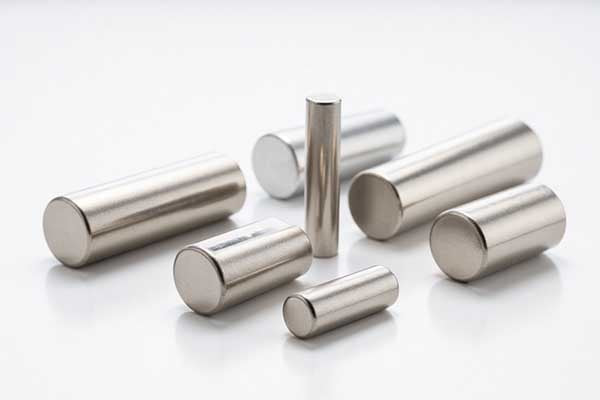
Magnets mainly interact with metals based on ferromagnetic properties. Their uses and limitations depend on specific materials such as iron, cobalt, nickel and some of alloys like neodymium and samarium cobalt.
Note:
(1)What kind of alloys are magnetic and why neodymium magnets are one of them.
(2)It tells you why gold is a non magnetic materials and how could you use this properties.
(5)Neodymium magnets will lose their magnetic field in frigid cold condition below -135℃.
(6)Here is where can see silver in our dailylife.
(7)Check that displayer types that can affect by magnets.
(8)Will magnets damage your phone?