What are different types of magnets?

Magnets are essential elements in various industries, technologies, and everyday life. Whether you’re using a simple fridge magnet or advanced technology like MRI machines, magnets are everywhere.
Understanding the different types of magnets, their shapes, and their applications can help you make informed decisions, especially if you’re involved in industries like manufacturing, electronics, or energy. Let’s dive into the world of magnets and explore their types, shapes, and functions.
Magnets come in various shapes, types, and strengths. These include permanent magnets, temporary magnets, and electromagnets, each with unique applications. Understanding these differences helps us harness their full potential in everything from electronics to industrial tools.
Let’s take a closer look at the various shapes magnets can take and whether they are limited in form.
Table of contents
What are the shapes of magnets?
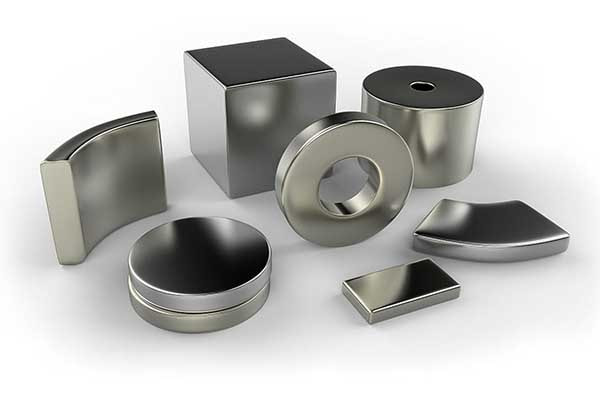
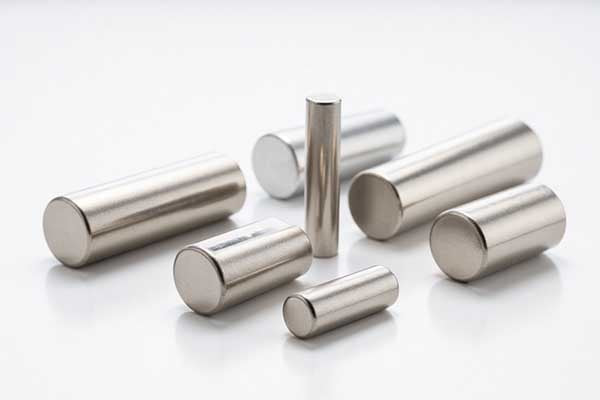
Magnets are not restricted to any particular shape. While many people associate magnets with common forms like bar magnets or disc magnets, magnets can actually be made into virtually any shape. Whether it’s a simple bar, a ring, a disc, or even complex shapes like spheres, magnets can be manufactured in a variety of designs to suit specific applications.
Magnets can be molded into many shapes, including bars, discs[1], rings, and spheres, depending on their intended use. This flexibility in design allows magnets to be used in a wide range of applications, from electronics to machinery.
In most applications, the shape of a magnet plays a crucial role in its performance. For example, a ring-shaped magnet[2] is commonly used in electric motors, while a bar magnet may be more suitable for educational demonstrations. For high-performance needs, like in medical or aerospace applications, magnets may be specially designed to fit into tight spaces or conform to specific surface areas. The key here is understanding how the shape of a magnet affects its magnetic field. For instance, a cylindrical magnet can create a uniform magnetic field around its surface, whereas a bar magnet creates a dipole field, with distinct north and south poles at each end. Countersunk magnets[3] or pot magnets[4] are magnets with holes through delicate laser cut techiques, it is widely used in building construction or some special purposes.
Let’s take a look at the influence of shape on the magnet’s functionality:
| Shape Type | Common Uses | Magnetic Field Properties |
|---|---|---|
| Bar Magnet | Education, simple applications | Strong dipole with distinct poles |
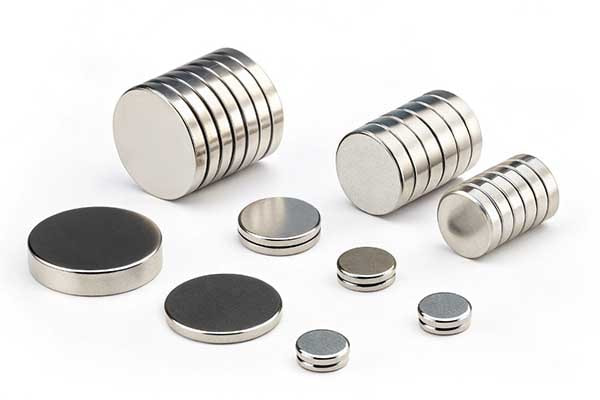
| Disc Magnet | Speakers, hard drives, motors | Uniform field distribution |
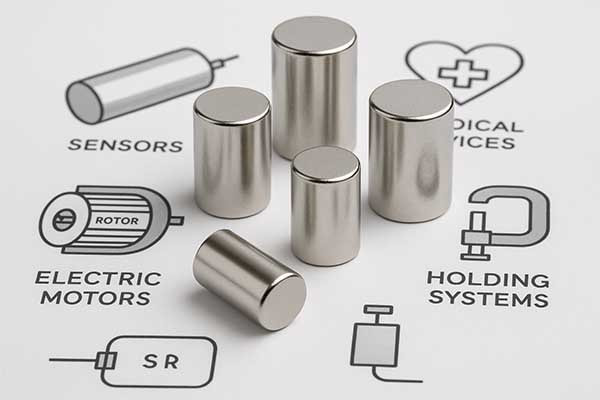
| Ring Magnet | Electric motors, sensors | Directional field, often used in precise machinery |
| Sphere Magnet | Advanced applications, small devices | Spherical magnetic field, compact use |
What are the 3 main types of magnets?
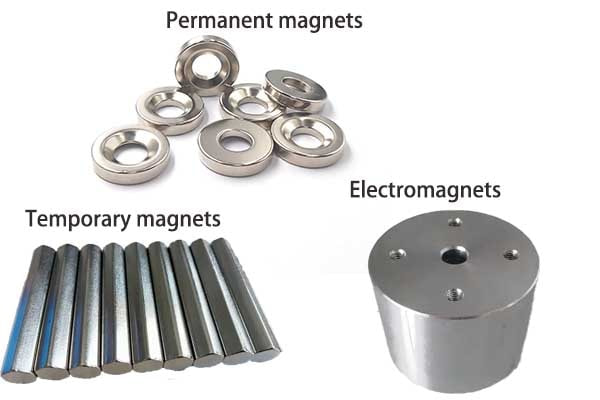
Magnets can be broadly categorized into three main types: permanent magnets, temporary magnets, and electromagnets. Each of these types has its own characteristics and uses.
Magnets fall into three main categories: permanent, temporary, and electromagnets. Permanent magnets retain their magnetism, temporary magnets become magnetized in specific conditions, and electromagnets rely on electricity to generate magnetic fields.
-
Permanent Magnets[5]: These magnets retain their magnetic properties over time without needing external energy. They are usually made from materials like neodymium or samarium cobalt. These magnets are commonly used in applications like motors, speakers, and MRI machines due to their stable and strong magnetic fields. Neodymium magnets, for instance, are highly sought after for their strength-to-size ratio and have found widespread use in modern consumer electronics.
-
Temporary Magnets[6]: Unlike permanent magnets, temporary magnets only exhibit magnetic properties under specific conditions. When placed in a strong magnetic field, these materials become magnetized but lose their magnetism once the external field is removed. Iron is a good example of a temporary magnet, often used in applications where temporary magnetic effects are required, like in certain types of electrical relays.
-
Electromagnets[7]: Electromagnets are created by passing an electric current through a coil of wire, generating a magnetic field. These magnets are highly customizable in terms of strength and size because the magnetic field can be controlled by adjusting the current. Electromagnets are commonly used in applications like cranes for lifting heavy metal objects, electric motors, and medical imaging devices like MRI machines.
| Magnet Type | Key Characteristics | Common Uses |
|---|---|---|
| Permanent Magnet | Retains magnetism without energy | Motors, speakers, magnetic locks |
| Temporary Magnet | Becomes magnetized under influence | Electrical relays, temporary fixtures |
| Electromagnet | Magnetism created by electricity | Cranes, MRI machines, electric motors |
What are the applications of magnets?
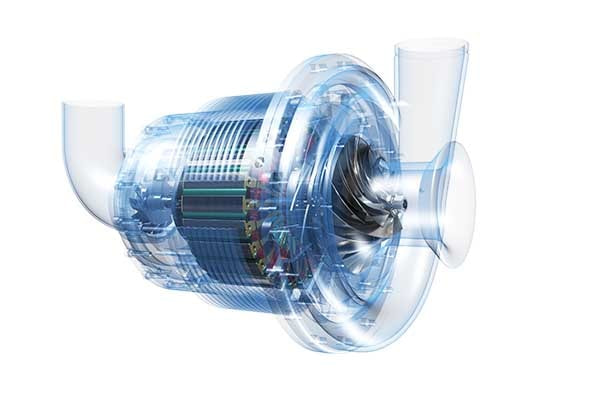
Magnets are essential in countless industries, ranging from healthcare to transportation and electronics. Their versatility allows them to be used in a variety of ways, whether it’s for powering devices, holding objects, or generating fields for various applications.
Magnets play a significant role in various industries, from healthcare to electronics. They’re found in everything from hard drives and motors to MRI machines and renewable energy technologies[8].
Magnets are used in a wide range of technologies. One prominent example is in electric motors. Magnets help convert electrical energy into mechanical movement, which powers everything from household appliances to industrial machines. The use of neodymium magnets[9] has made electric motors more efficient, smaller, and powerful.
Another area where magnets have an enormous impact is in medical technology. MRI (Magnetic Resonance Imaging) machines rely on powerful magnets to generate detailed images of the inside of the body. The strong magnetic field in MRI machines helps align hydrogen atoms in the body, and when the field is altered, these atoms emit signals that create detailed images for doctors.
Magnets also play a significant role in renewable energy. For instance, they are used in wind turbines, where magnets help generate electricity by interacting with coils in the generator. Wind turbines equipped with permanent magnets have been developed to increase efficiency and reduce energy consumption.
| Application | Example Device/Technology | Role of Magnet |
|---|---|---|
| Motors | Electric fans, power tools | Converts electrical energy to motion |
| Medical Devices | MRI machines, pacemakers | Generates magnetic fields for imaging or energy |
| Renewable Energy | Wind turbines, solar panels | Helps generate and store electricity |
| Electronics | Hard drives, speakers, headphones | Store data, amplify sound, etc. |
What are the different types of permanent magnets?
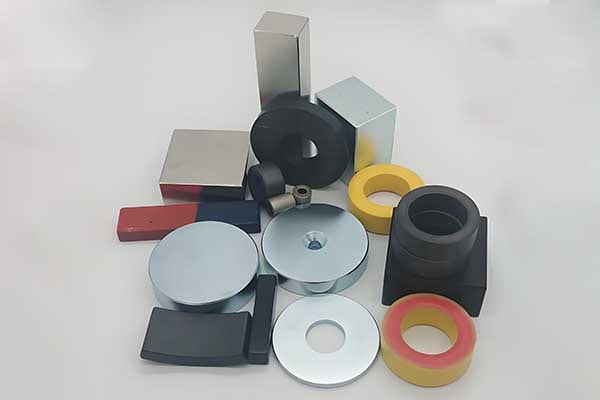
Permanent magnets are classified based on their material composition and magnetic strength. The most common types are ceramic (ferrite)[10], alnico, and rare-earth magnets, with neodymium magnets being the strongest and most widely used in modern applications.
Permanent magnets come in several varieties, including ceramic, alnico, and rare-earth magnets. Neodymium magnets, a type of rare-earth magnet, are especially popular for their powerful magnetic field.
Permanent magnets can be divided into the following types:
-
Ceramic Magnets (Ferrite Magnets): These are made from a mixture of iron oxide and barium or strontium. Ceramic magnets are widely used due to their cost-effectiveness, but they tend to have weaker magnetic properties compared to other types. They are commonly found in refrigerator magnets, speakers, and small electric motors.
-
Alnico Magnets: Alnico magnets are made from aluminum, nickel, cobalt, and iron. These magnets are known for their high temperature resistance, making them suitable for high-heat environments. Alnico magnets are used in applications such as microphones, sensors, and industrial equipment.
-
Rare-Earth Magnets: These include neodymium and samarium-cobalt magnets. Neodymium magnets are incredibly strong and have a higher magnetic force than any other type of permanent magnet. They are used in high-performance applications, such as hard drives, MRI machines, and even wind turbines. Samarium-cobalt magnets, while slightly weaker than neodymium magnets, have superior temperature stability and resistance to corrosion.
| Type | Material Composition | Key Features |
|---|---|---|
| Ceramic (Ferrite) | Iron oxide, barium/strontium | Cost-effective, low magnetic strength |
| Alnico | Aluminum, nickel, cobalt, iron | High heat resistance, good for sensors |
| Rare-Earth | Neodymium, samarium-cobalt | Strong, compact, high-performance |
What are the strength/magnetic force of magnets?
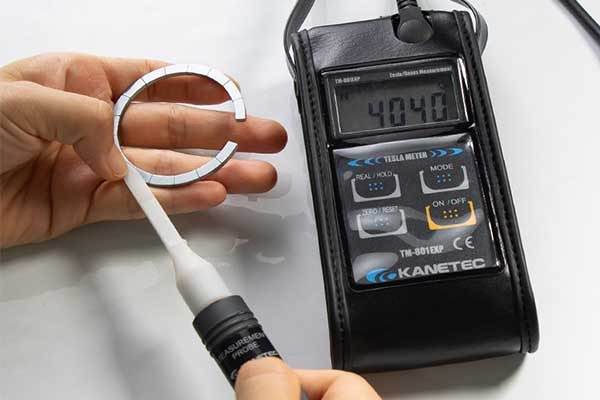
Magnetic strength refers to how strong a magnet’s magnetic field is. It depends on the material of the magnet, its shape, and its size. The strength of a magnet is measured in terms of the magnetic field it produces.
The strength of a magnet is determined by its material, size, and shape. Neodymium magnets are some of the strongest, with the ability to lift hundreds of times their own weight.
Magnet strength[11] is typically measured in Tesla (T) or Gauss (G), with 1 Tesla equaling 10,000 Gauss. The strength of a magnet depends on several factors, including its size, material, and the method by which it was magnetized.
-
Neodymium magnets are the strongest permanent magnets available, capable of generating fields in the range of 1.0 to 1.4 Tesla. These magnets are used in applications that require high magnetic strength in a compact size, such as in electric motors, magnetic resonance imaging (MRI) machines, and speakers.
-
Samarium-cobalt magnets[12], while slightly weaker than neodymium, can still reach field strengths of 1.0 Tesla and are prized for their high temperature tolerance and corrosion resistance.
The magnetic force can also be influenced by the geometry of the magnet. For example, a larger magnet will typically have a stronger field due to its larger size, while a smaller magnet will have a weaker field but may be able to fit into smaller spaces.
| Magnet Type | Strength (Tesla) | Common Uses |
|---|---|---|
| Neodymium | 1.0 - 1.4 Tesla | Motors, hard drives, MRI machines |
| Samarium-Cobalt | 0.8 - 1.0 Tesla | High-temperature applications, sensors |
| Ceramic | 0.2 - 0.5 Tesla | Fridge magnets, toys, small motors |
What are the regular magnetic directions of magnets?
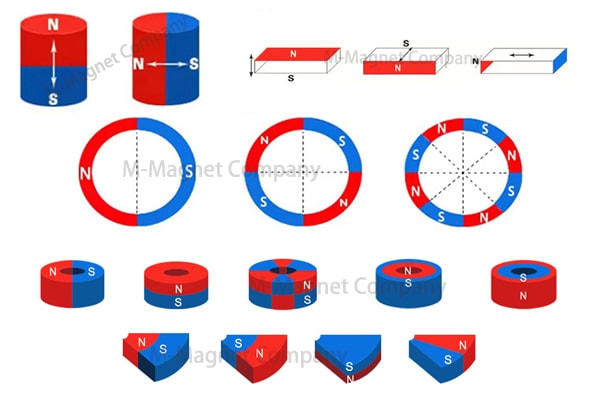
Magnets have two poles, typically labeled as the north and south poles. Magnetic field lines always travel from the north pole to the south pole outside the magnet, and from the south to the north pole inside the magnet.
The magnetic direction of a magnet always follows the path from the north pole to the south pole among axial direction, radial direction, diametrical direction, etc. Understanding this direction helps in various applications like motors and navigation.
Magnetic field direction is vital in several technological applications. For instance, in electric motors, the interaction between the magnetic field created by the rotor and the stator determines the direction of motion. Similarly, in compasses, the earth’s magnetic field guides navigation by pointing to the north pole. The poles of a magnet can be detected using a compass needle, which aligns itself with the direction of the magnetic field.
| Magnet Pole | Direction of Magnetic Field | Use Case |
|---|---|---|
| North Pole | Field lines point outward | Navigation (compasses), motors |
| South Pole | Field lines point inward | Electric motors, magnetic sensors |
Conclusion
Magnets come in various types, shapes, and strengths, each with unique properties and applications. From the everyday use of refrigerator magnets to advanced applications in motors, medical devices, and renewable energy, magnets are integral to modern technology. Understanding the different types of magnets—permanent, temporary, and electromagnets—helps us appreciate their versatility and importance across industries.
Note:
[9]Deep dive onto the neodymium magnets's application and why it is important in our daily life.
[10]Find out what is ceramic magnet and their application.
About Blogger
Benjamin Li
Operation Manager of M-Magnet Company
I will bring you a full range of magnet knowledge and manufacturing experience on neodymium magnets and MagSafe magnet solutions through blogs and emails. I'm not an expert yet in magnets, but we have a whole team to help you solve technical issues, design drawing details, compatibility suggestions from magnetic assemblies, magnet purchasing and many other customized magnet solutions from China. You can follow my blogs on knowledge sharing or contact me for your own magnet solutions. We will always do the best.