Neodymium magnets are incredibly powerful, but why are they so strong? In this article, we’ll break down the science behind their strength, the materials that make them unique, and their uses in everyday life.
Neodymium magnets are the most powerful permanent magnets available because of their atomic magnetic moments align strongly in one direction, resulting in a powerful magnetic field. Understanding why they are so strong involves exploring the science behind their materials and design.
Stay with us as we dive into the details, from their composition[1] to their uses and safety concerns.
Table of Contents
What is a Neodymium Magnet?

Neodymium magnets are a type of rare-earth magnet made from an alloy of neodymium, iron, and boron (NdFeB). The strength of these magnets comes from their crystal structure, which allows them to maintain their magnetic field for long periods.
Neodymium magnets are made from rare-earth materials[2], giving them a strong and permanent magnetic field. Their unique composition results in a powerful magnet that is compact and efficient.
These magnets are found in a variety of applications, from industrial equipment to consumer electronics. But what makes them so strong, and how do these materials interact?
Neodymium magnets[3]’ strength is derived from the magnetic properties of neodymium itself. Neodymium (Nd) is one of the rare-earth elements, and when combined with iron (Fe) and boron (B), it forms a crystalline structure that aligns the magnetic domains more effectively than other materials. This results in a higher magnetic field and energy density.
This ability to align magnetic domains is what makes neodymium magnets so much stronger than traditional magnets like ferrite[4]. The crystals in the NdFeB alloy act like tiny magnetic compass needles, pointing in the same direction, which multiplies their power.
In addition to the materials themselves, the manufacturing process plays a crucial role in their strength. Neodymium magnets are often produced using a process called sintering, which involves heating the alloy to a high temperature before pressing it into shape. This ensures that the magnetic domains are well-aligned, creating a strong and stable magnetic field.
Magnetic Properties of Neodymium Magnets
| Material | Magnetic Strength | Energy Density | Resistance to Demagnetization |
|---|---|---|---|
| Neodymium-Iron-Boron | Very Strong | High | Moderate |
| Samarium-Cobalt | Strong | Moderate | High |
| Alnico | Moderate | Low | High |
| Ferrite | Weak | Low | High |
What Are Neodymium Magnets Used For?

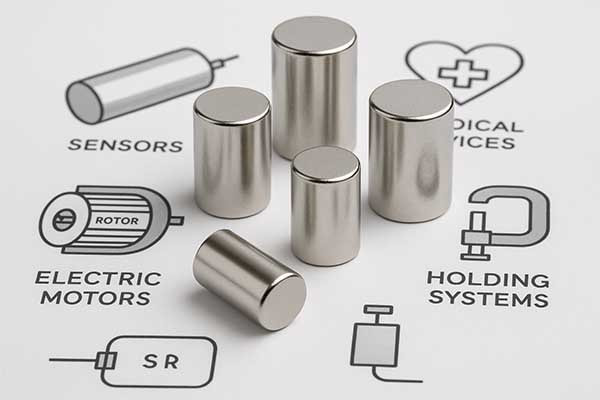
Neodymium magnets are used in many devices we rely on daily, from electric motors to medical devices. Their small size and powerful magnetic fields make them ideal for applications where space is limited but strength is needed.
Neodymium magnets power many devices from speakers to MRI machines. Their small size and immense strength make them indispensable in modern technology.
Understanding where and how they are used shows just how crucial these magnets are to the functioning of many technologies.
Neodymium magnets are used in a wide range of industries, including automotive, electronics, medical, and renewable energy sectors. In the automotive industry, they are used in electric motors and power steering systems. In electronics, they are found in hard drives, speakers, and headphones. They are even used in wind turbine generators, where they help convert wind energy into electricity.
One of the most fascinating uses of neodymium magnets is in medical applications. For example, magnetic resonance imaging (MRI)[5] machines rely on strong magnetic fields, and neodymium magnets play a role in creating these fields. Due to their compact size and strength, these magnets help produce the high-field strengths necessary for effective imaging, making them essential in diagnosing various conditions.
Another interesting application of neodymium magnets is in wireless charging technology[6]. By using powerful magnets, wireless charging stations can transfer energy without physical contact, which is an essential part of technologies like Magsafe charging for phones and laptops.
Examples of Neodymium Magnet Applications
| Industry | Application | Impact |
|---|---|---|
| Automotive | Electric Motors[7] | Increased efficiency and smaller motor size |
| Electronics | Speakers and Hard Drives | Enhanced sound quality and storage capacity |
| Renewable Energy | Wind Turbines[8] | Improved energy conversion |
| Medical | MRI Machines[9] | Better imaging quality and accuracy |
Why Do Neodymium Magnets Break Easily?

Despite their impressive strength, neodymium magnets are also known to be brittle. They can break or chip easily, especially when subjected to strong impacts or sudden forces.
Neodymium magnets can break or chip because of their brittle nature[10]. While powerful, they require careful handling to maintain their structural integrity.
Understanding the reasons behind their fragility helps explain why these magnets should be treated with care.
The brittleness of neodymium magnets is due to the very materials that make them so strong. Neodymium (Nd) and boron (B) are both relatively brittle elements, which means that the alloy they form can fracture under pressure. Additionally, the sintering process, which aligns the magnetic domains, can also create internal stresses within the magnet. These stresses make the magnet more susceptible to breaking if it is dropped or exposed to a sharp impact.
While the magnetic properties of neodymium magnets are incredibly strong, they are not flexible. This lack of flexibility makes them prone to chipping or cracking, particularly when they are subjected to sudden shocks or placed in high-stress environments. Therefore, it is important to handle these magnets with care and avoid dropping or applying pressure directly to them.
There are also protective coatings[11] that can be applied to neodymium magnets to help prevent chipping or corrosion. These coatings can add an extra layer of protection, ensuring that the magnets last longer and retain their strength.
Handling and Protecting Neodymium Magnets
| Potential Issue | Cause | Solution |
|---|---|---|
| Chipping or Cracking | Impact or pressure | Use protective coatings and handle gently |
| Corrosion | Exposure to moisture or humidity | Coat with nickel or epoxy |
| Demagnetization | High temperatures | Avoid high-heat environments |
Are Neodymium Magnets Safe?

Neodymium magnets are generally safe when handled correctly. However, their strength can pose a danger if they snap together or are mishandled, potentially causing injury.
When used properly, neodymium magnets are safe, but they must be handled with care to avoid injury or damage.
It’s essential to follow safety guidelines to minimize risk and ensure that these powerful magnets are used appropriately.
One of the main safety concerns[12] with neodymium magnets is their powerful magnetic fields[13]. These magnets are strong enough to cause pinching injuries if they come together too quickly, especially when handling small magnets. The magnetic field can also interfere with electronic devices, so it is essential to keep them away from credit cards, pacemakers, and other sensitive electronics.
Another safety issue is the potential ingestion of small neodymium magnets by children. If swallowed, these magnets can attract each other inside the digestive tract, causing severe internal injuries. To prevent such accidents, neodymium magnets should always be kept out of reach of children, and products containing them should be clearly labeled with safety warnings.
Despite these risks, with proper handling and precautions, neodymium magnets can be safely used in a variety of applications. Many companies, including our own, produce magnets with safety guidelines that help users avoid potential dangers.
Neodymium Magnet Safety Guidelines
| Safety Concern | Precaution | Recommended Action |
|---|---|---|
| Pinching Injury | Keep magnets apart during handling | Use gloves and caution |
| Ingestion Risk | Keep away from children | Supervise use, especially in toys |
| Electronics Interference | Avoid close contact with electronics | Store magnets separately |
Can Neodymium Magnets Damage Cell Phones?

Neodymium magnets are strong enough to potentially damage electronic devices, including cell phones. Their powerful magnetic fields can interfere with the phone’s circuitry and data storage.
Neodymium magnets can affect cell phones by interfering with the magnetic components inside, but the risk of damage is generally low if the magnet is kept at a safe distance.
How magnets interact with electronics? Why you should be cautious around your phone?
The primary concern with neodymium magnets and electronics lies in the way magnets interact with the magnetic components inside devices. For example, the magnet in a phone’s speaker can be disturbed by an external magnet, potentially altering its function. Additionally, hard drives and other data storage devices can be damaged if exposed to strong magnetic fields, leading to data loss[14].
However, while there is a risk, the chances of damaging a phone simply by having a neodymium magnet nearby are relatively low, especially if the magnet is not in direct contact with the device. Most modern phones have built-in shielding to protect against magnetic interference. Still, it’s always best to err on the side of caution and avoid placing strong magnets directly on or near your phone.
Magnet-Phone Interaction Risk
| Risk | Potential Impact | Action to Avoid Damage |
|---|---|---|
| Magnetic Interference | Disruption of electronics functionality | Keep magnets away from sensitive components |
| Data Loss | Possible data corruption | Store magnets away from data storage devices |
Where to Buy Strongest Neodymium Magnets?

When looking for high-quality neodymium magnets, it’s essential to choose a reliable supplier. You can purchase them from magnet manufacturers or online platforms like ours[15], where we offer magnets for various applications.
When buying neodymium magnets, consider factors like size, strength, and coating. A reputable supplier will ensure you receive a high-quality product.
We’re here to help you find the right magnets for your needs, offering expert advice and the highest quality products.
When buying neodymium magnets, it’s important to understand the specific requirements of your application. For example, if you need magnets for industrial use, you might need larger, higher-grade magnets. On the other hand, if you’re using them for a small DIY project, you may want smaller, less powerful magnets.
It’s also essential to consider the coating of the magnet, as this can affect its durability and resistance to corrosion. For example, magnets with a nickel coating are ideal for applications where the magnet will be exposed to moisture, while uncoated magnets are better for dry environments. Choosing the right coating can significantly extend the life of your magnets.
Finally, when purchasing magnets, ensure that you choose a reliable supplier who offers clear product specifications, competitive pricing, and excellent customer support.
Finding the Best Neodymium Magnet Supplier
| Supplier Quality | Criteria | Action to Take |
|---|---|---|
| Price | Compare prices from reputable sources | Ensure value for money |
| Magnet Grade | Check for the right strength and grade | Match magnets to your specific needs |
| Coating | Choose according to environment | Ensure the correct coating is applied |
Conclusion
Neodymium magnets are incredibly strong due to their unique composition and manufacturing process. Their wide range of uses makes them invaluable across industries, but they require careful handling to avoid damage. By understanding their strength and limitations, you can safely take advantage of their power in various applications.
Note:
[5]Learn how Neodymium magnets enhance MRI technology, crucial for accurate medical diagnoses.
[8]Further discover how wind turbines work and their types description.
[9]It tells you what is MRI machine and what is MRI used for.
[15]It links into one of the reliabe manfaucturer resources that can help your project.
About Blogger
Benjamin Li
Operation Manager of M-Magnet Company
I will bring you a full range of magnet knowledge and manufacturing experience on neodymium magnets and MagSafe magnet solutions through blogs and emails. I'm not an expert yet in magnets, but we have a whole team to help you solve technical issues, design drawing details, compatibility suggestions from magnetic assemblies, magnet purchasing and many other customized magnet solutions from China. You can follow my blogs on knowledge sharing or contact me for your own magnet solutions. We will always do the best.