What Types of Magnets Are Commonly Used in Electronics?

Electronics surround us every day. Your smartphone buzzes in your pocket. Your laptop hard drive spins quietly. Most people don't realize that tiny magnets make all this possible. Without these small but powerful components, our modern devices simply wouldn't work.
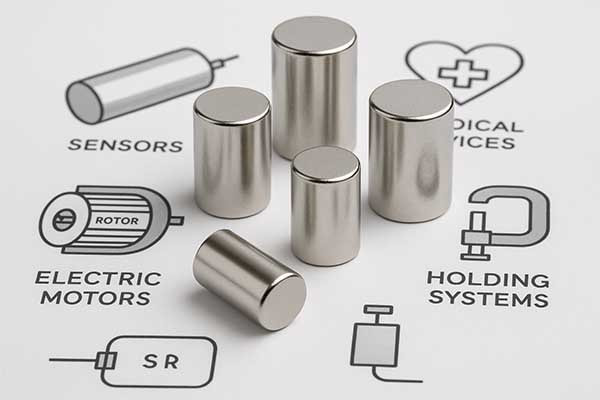
Neodymium magnets dominate the electronics industry due to their exceptional strength-to-size ratio. Ferrite magnets serve cost-effective applications. Samarium cobalt magnets handle high-temperature environments. AlNiCo magnets provide stable performance in sensitive circuits. Each magnet type offers specific advantages for different electronic applications and performance requirements.
Let me show you exactly which magnets power your favorite devices and why engineers choose specific types for different applications.
Table of Contents
What is the most commonly used magnet?
Electronic devices demand incredible performance from tiny spaces. Engineers face constant pressure to make products smaller and more powerful. This challenge drives them toward one clear solution. The physics of magnetic strength determines which materials can deliver the required performance in compact form factors.
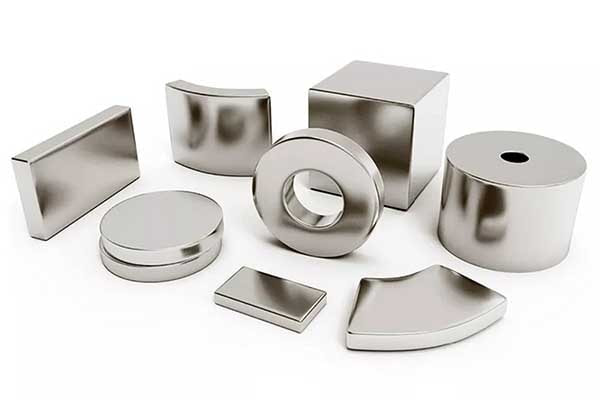
Neodymium iron boron (NdFeB) magnets represent the most widely used permanent magnets in modern electronics. These rare earth magnets deliver the strongest magnetic field per unit volume of any commercially available permanent magnet material. Their exceptional strength allows engineers to minimize component size while maximizing performance in smartphones, hard drives, speakers, and motors.
The shift toward neodymium magnets revolutionized entire industries during this time. Companies that once used large ferrite magnets now fit the same magnetic strength into components one-tenth the size. This transformation enabled the smartphone revolution we see today.
Understanding Neodymium Magnet Advantages
Neodymium magnets deliver magnetic energy products exceeding 50 MGOe (megagauss-oersteds). This measurement represents the maximum energy a magnet can store and release. Compare this to ferrite magnets, which typically achieve only 3-4 MGOe. The difference explains why your smartphone can vibrate strongly despite its thin profile.
Temperature stability presents the main challenge with neodymium magnets. Standard grades lose significant strength above 80°C (176°F). However, our manufacturing process creates specialized high-temperature grades that maintain performance up to 200°C (392°F). These advanced versions serve automotive electronics and industrial applications where heat poses serious concerns.
Corrosion protection becomes critical for neodymium magnets in electronics. The base material oxidizes rapidly when exposed to moisture. We apply nickel-copper-nickel plating systems that provide excellent corrosion resistance. Some applications require epoxy coatings or gold plating for ultimate protection against harsh environments.
Magnet Applications Across Electronics Categories
| Device Category | Magnet Type | Primary Function | Size Requirements |
|---|---|---|---|
| Smartphones | Neodymium | Speakers, Motors, MagSafe | Ultra-compact |
| Hard Drives | Neodymium | Voice Coil Motors | Precision miniature |
| Audio Equipment | Ferrite/Neodymium | Driver Magnets | Variable by power |
| Electric Motors | Samarium Cobalt | Rotor Magnets | High-temperature rated |
| Sensors | AlNiCo | Bias Fields | Stable micro-size |
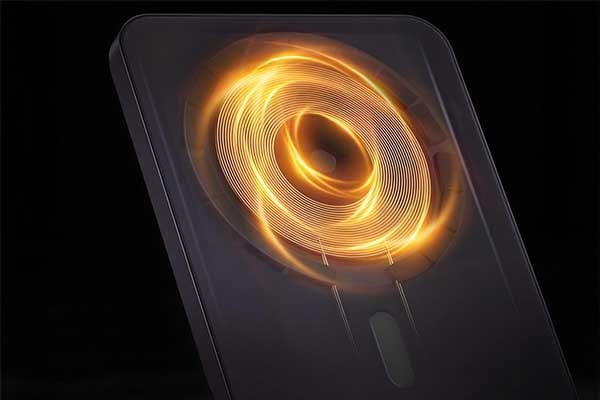
Consumer electronics drive the largest demand for neodymium magnets. Every smartphone contains multiple neodymium magnets. The main speaker uses a neodymium magnet to generate sound. The haptic feedback motor relies on neodymium magnets for precise vibration control. MagSafe charging systems in iPhones use carefully arranged neodymium magnet arrays for alignment and attachment.
Hard disk drives represent another massive application area. The voice coil motor that positions the read/write head uses high-grade neodymium magnets. These magnets must maintain precise magnetic fields across millions of operational cycles. Any variation in magnetic strength directly affects data accuracy and drive reliability.
Audio applications show interesting diversity in magnet selection. High-end headphones and speakers often use neodymium magnets for superior performance. Budget audio products frequently choose ferrite magnets to control costs. Professional audio equipment sometimes requires samarium cobalt magnets when operating in high-temperature stage lighting environments.
Electric motors in electronics demand specific magnet characteristics. Brushless DC motors use neodymium magnets in most consumer applications. Industrial motors operating at elevated temperatures require samarium cobalt magnets. The automotive industry increasingly specifies high-temperature neodymium grades that bridge the performance gap between these materials.
Sensor applications require exceptional magnetic stability. Hall effect sensors use small AlNiCo magnets to create precise bias fields. These magnets must maintain consistent output across wide temperature ranges. Position sensors in automotive electronics rely on neodymium magnets for accurate feedback signals.
My company M-Magnet specializes in custom magnet solutions for electronics manufacturers. We work closely with design engineers to optimize magnet selection for specific applications. Our experience shows that proper magnet choice often determines the success or failure of electronic products in competitive markets.
How are magnets used in computers and electronics?
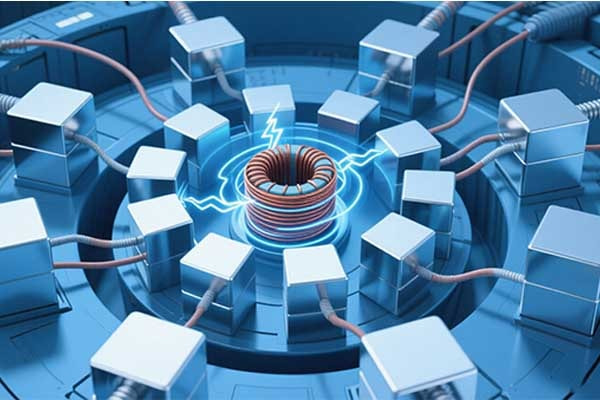
Magnets are essential in electronics and computers, powering many devices and functions we use daily.
Magnets in electronics serve multiple roles, such as generating electricity, producing sound in speakers, and enabling wireless charging. In computers, magnets are crucial for data storage in hard disk drives, where tiny magnetic regions represent digital data. Electromagnets and permanent magnets work together in various components to ensure device functionality and performance.
Magnets play a vital role in electronic devices by converting electric signals into mechanical movement or storing data magnetically.
For example, in speakers, magnets interact with electric currents to create sound waves.
In motors, magnets generate magnetic fields that drive rotation, improving efficiency and reducing energy loss. In computers, hard disk drives use billions of tiny magnets to encode data as magnetic patterns representing binary code.
Furthermore, electromagnetic fields in cathode ray tube (CRT) screens help form images, although modern screens often use different technologies.
Types of Magnets Used in Electronics and Computers
| Magnet Type | Characteristics | Common Uses in Electronics |
|---|---|---|
| Neodymium Magnets | Very strong permanent magnets | Hard disk drives, motors, speakers |
| Ferrite Magnets | Ceramic, cost-effective permanent magnets | Speakers, motors |
| Electromagnets | Magnetic only when powered by electricity | Motors, magnetic sensors, wireless charging |
| Alnico Magnets | Stable permanent magnets with good temperature resistance | Some sensors, older electronic devices |
| Samarium Cobalt | High temperature resistant permanent magnets | Specialized electronics and motors |
These magnets vary in strength, cost, and temperature tolerance, allowing manufacturers to select the best type for each electronic component. For instance, neodymium magnets are preferred in hard drives and motors due to their high magnetic strength and efficiency, which is critical for performance and energy savings.
Additional Roles of Magnets in Electronics
Magnets are also found in electronic compasses, magnetic card readers, vibration sensors, and medical devices like MRI machines. Their ability to generate stable and adjustable magnetic fields makes them indispensable across many technologies.
M-Magnet specializes in producing high-quality neodymium magnets and customized magnetic solutions that meet the demanding needs of modern electronics, particularly for markets in America and Europe.
Will a magnet pick up a cell phone?

Magnets generally cannot pick up a cell phone because phones have little ferrous metal content for magnets to attract.
A magnet will not effectively lift or hold a smartphone. A typical cell phone contains very little ferrous metal, so even strong magnets usually cannot pick one up. Some internal components have small magnets, but the phone’s casing and electronics are mostly non-magnetic.
The ability of a magnet to pick up a phone depends largely on the amount and type of metal inside the phone. Most modern smartphones use materials that are not attracted to magnets. While magnets inside phones serve functions like wireless charging and compass calibration, external magnets do not have enough grip to lift the device. Even very strong industrial magnets struggle to pick up phones because of the limited ferrous content and the phone’s design.
Effects of Magnets on Cell Phones
| Effect | Description | Impact on Phone Functionality |
|---|---|---|
| Wireless Charging Magnets | Small magnets inside phones help align wireless chargers | Enable efficient charging |
| Compass Sensors | Magnets can temporarily disrupt compass accuracy | Requires recalibration after exposure |
| Signal and Circuit Boards | Generally unaffected by typical magnets | No damage or interference to calls or data |
| Physical Pickup | External magnets rarely have enough pull to lift phones | Phones cannot be picked up by magnets easily |
In summary, while magnets are integrated inside phones for specific functions, external magnets do not pose a threat nor can they pick up phones effectively. This is reassuring for users concerned about magnets damaging their devices or unintentionally attracting them.
M-Magnet provides magnets designed for electronics that meet strict quality standards to avoid interference with sensitive devices while enhancing performance where needed.
Do magnets still mess up computers?

It is a common worry if magnets can damage our electronic devices. Many people have heard stories about magnets messing up computers. This fear often comes from older technologies. But electronics have changed a lot over time.
Most modern computers, especially those with solid-state drives (SSDs), are not easily damaged by common magnets. Older devices with magnetic hard drives (HDDs) or CRT monitors were more sensitive. But the magnets we encounter daily are usually too weak to cause harm.
When we talk about magnets and computers, we need to understand the type of magnet and the type of computer. Old computers used CRT monitors. These monitors worked by shooting electron beams to create images. A strong magnet could bend these beams. This would distort the image on the screen. It could also cause color issues. But most people do not use CRT monitors anymore. Modern screens, like LCD and LED displays, work in a different way. They are not affected by magnets in the same way.
The biggest concern for modern computers used to be hard drives. Old hard drives, called HDDs, stored data on spinning magnetic platters. A very strong magnet, placed directly on the hard drive, could potentially corrupt data. However, the magnets inside these hard drives are already very strong. They are designed not to erase data. So, an average magnet would not be strong enough to cause harm. Most modern computers use solid-state drives (SSDs) now. SSDs store data using flash memory. This type of memory does not use magnetism. So, SSDs are not affected by magnets at all.
There are also smaller components in electronics that use magnets. Speakers use magnets to create sound. Laptops often have small magnets for their lid sensors. These magnets tell the laptop when the lid is closed. They put the computer to sleep. These internal magnets do not harm the device. External magnets usually do not harm them either. We at M-Magnet Company specialize in a range of magnets, including neodymium magnets. These are very strong. But even these would need to be extremely powerful and applied in a very specific way to damage modern electronics. Most common household magnets, like those on refrigerators or in phone cases, are simply too weak.
Magnetic Sensitivity of Electronic Components
| Component Type | Magnetic Storage | Display Technology | Overall Risk |
| Old Computers | HDD (High) | CRT (High) | Higher |
| Modern Computers | SSD (None) | LCD/LED (Low) | Very Low |
| Smartphones | Flash Memory (None) | LCD/OLED (Low) | Very Low |
How to protect electronics from magnets?

Many people worry about magnets harming their electronics. It is good to be careful. But most modern devices are quite robust. There are simple steps to take. These steps help keep your electronics safe.
To protect electronics from magnets, avoid placing very strong magnets directly on or very close to sensitive components. For older devices with HDDs or CRT monitors, keep all magnets away. For modern electronics, the risk is minimal, but magnetic shielding materials like ferromagnetic metals can offer extra protection if needed.
The best way to protect electronics is to understand how magnets work. Magnets create a magnetic field. This field can pass through many materials. It does not get "blocked" like light. But we can redirect it. Materials with high magnetic permeability can do this. These are often ferromagnetic metals. Iron, nickel, and cobalt are good examples. When you place these materials in the path of a magnetic field, they attract the magnetic lines of flux. They channel the field lines through themselves. This reduces the magnetic field strength in the area you want to protect.
Magnetic shielding works best when the material completely surrounds the electronic device. This creates a sort of "cage" for the magnetic field. This way, the field travels around the device, not through it. For example, if you have a sensitive circuit board, you could enclose it in a box made of mu-metal or a similar ferromagnetic alloy. Mu-metal is specifically designed for magnetic shielding. It has very high permeability. It can effectively redirect weak magnetic fields.
For everyday use, you likely do not need special shielding. As a neodymium magnet manufacturer, we know that even our strong magnets pose little risk to most electronics in typical use. Wireless charging pads use magnets. These magnets do not harm your phone. Magnetic cases for tablets and phones also do not cause damage. This is because the devices are designed to handle these magnetic fields.
If you are working with very strong magnets, like those found in industrial settings, then more care is needed. These magnets can be powerful enough to affect certain components. In such cases, keeping a safe distance is often the easiest and most effective protection. Also, avoid leaving powerful magnets on top of electronic devices for long periods. Even if the risk is low, it is still good practice to separate them. Our company also offers magnet customized solutions. We can help you understand the specific magnetic properties of magnets. This helps you to make informed decisions about their use near electronics.
Magnetic Shielding Methods
| Method | Description | Effectiveness |
| Distance | Keeping magnets far from electronics. | Simple and effective for strong fields. |
| Ferromagnetic Shielding | Using materials like iron, nickel, or mu-metal to redirect fields. | Very effective, especially for weak fields. |
| Component Design | Manufacturers build in protections like internal shielding or use non-magnetic storage (SSDs). | High, integral to modern device safety. |
Do magnets give off electromagnetic radiation?
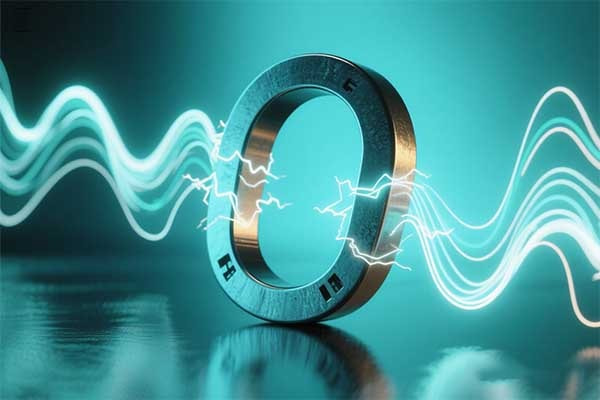
Many people wonder if magnets emit electromagnetic radiation that could affect devices or health.
Permanent magnets do not emit electromagnetic radiation because their magnetic fields are static and do not change over time. Only changing magnetic fields, like those from alternating currents or moving charges, produce electromagnetic waves. Therefore, magnets themselves do not give off radiation.
Permanent magnets, such as neodymium magnets used widely in electronics, produce steady magnetic fields. These fields come from the alignment of electron spins inside the magnet’s atoms. Since these magnetic fields do not change or oscillate, they do not create electromagnetic waves that travel through space. Electromagnetic radiation requires both electric and magnetic fields to oscillate together, which happens when charges accelerate or currents alternate. For example, electromagnets powered by alternating current emit very weak electromagnetic radiation, but steady magnets do not.
Why Permanent Magnets Do Not Radiate
| Feature | Explanation |
|---|---|
| Magnetic Field Type | Static magnetic field from aligned electron spins |
| Radiation Emission | None, because no changing electric or magnetic fields occur |
| Electromagnetic Waves Needed | Oscillating electric and magnetic fields that propagate through space |
| Quantum Effects | Electron spin creates intrinsic magnetism without classical radiation emission |
| Electromagnets | Can emit weak radiation if the current changes rapidly (AC), but not with DC or static fields |
The intrinsic magnetism of electrons is a quantum property. It does not produce classical electromagnetic waves. This explains why a fridge magnet or a neodymium magnet does not emit radio waves or harmful radiation. Even though the magnetic field extends into space, it remains constant and does not carry energy away as radiation.
When Do Magnets Produce Electromagnetic Radiation?
Magnets produce electromagnetic radiation only if their magnetic field changes with time. For example, if you rapidly move or shake a magnet, it can generate very weak, low-frequency electromagnetic waves. These waves are so faint that they have no practical effect or health risk. Similarly, electromagnets powered by alternating current produce oscillating fields that emit electromagnetic radiation, but this is controlled and usually very weak.
M-Magnet produces high-quality neodymium magnets that generate strong but stable magnetic fields, ideal for electronics without causing electromagnetic interference or radiation hazards.
Understanding Magnetic Fields vs. Electromagnetic Radiation
| Aspect | Magnetic Field (Static) | Electromagnetic Radiation (Wave) |
|---|---|---|
| Field Behavior | Constant, does not change over time | Oscillates, changing electric and magnetic fields |
| Energy Transfer | No energy radiated away | Energy carried away through space as waves |
| Source | Aligned electron spins in permanent magnets | Accelerating charges or time-varying currents |
| Health Impact | No harmful radiation | Depends on frequency and intensity |
| Presence in Electronics | Used for motors, sensors, storage devices | Used in wireless communication, light, X-rays |
This distinction is important for electronics manufacturers and users. While magnets are critical components, they do not emit radiation that could harm humans or interfere with devices unless the magnetic field is rapidly changing. This knowledge helps us design safer and more efficient magnetic solutions.
Conclusion
The electronics industry relies heavily on permanent magnets for essential functions across all device categories. Neodymium magnets dominate high performance applications. Ferrite magnets serve cost-sensitive products. Samarium cobalt magnets handle extreme temperature environments. AlNiCo magnets provide stable operation for sensitive circuits. Understanding these differences helps engineers select optimal solutions for their specific requirements. The continued miniaturization of electronics will further increase demand for high-performance magnetic materials in coming years.