What is Ndfeb Magnets?
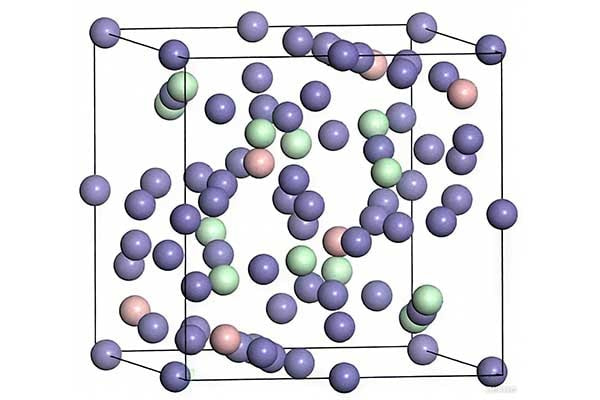
Many industries need powerful magnets but face limits with traditional types. What makes Ndfeb magnets stand out?
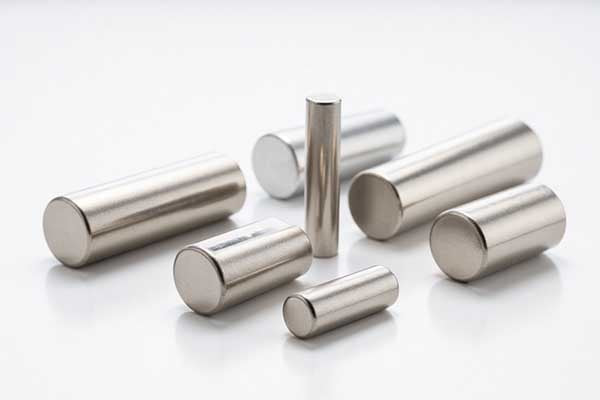
NdFeB magnets, or chemical formula Nd2Fe14B of neodymium magnets, are the strongest permanent magnets made from an alloy of neodymium, iron, and boron. They provide exceptional magnetic strength and are widely used in modern technology, from electric motors to medical devices.
Keep reading to learn why NdFeB magnets are essential in today’s world.
Table of Contents
What are NdFeB magnets used for?
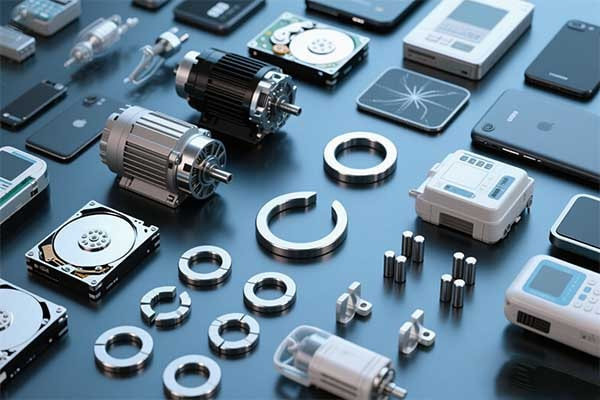
Industries need strong, reliable magnets for many uses. How do NdFeB magnets meet these needs?
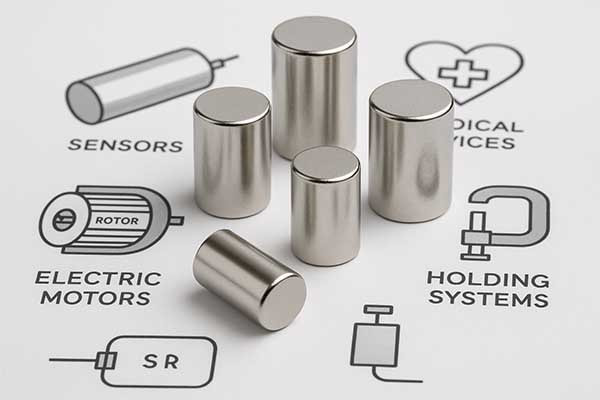
NdFeB magnets are used in electric motors, hard disk drives, magnetic fasteners, medical devices, renewable energy, and many consumer electronics, thanks to their high magnetic strength and compact size.
Applications and Benefits of NdFeB Magnets
NdFeB magnets have transformed many industries by offering the strongest magnetic force in a small, lightweight form. This strength allows devices to be more compact and energy-efficient. For example, electric motors in cordless tools and hybrid vehicles use NdFeB magnets to save space and weight while delivering high power. The Toyota Prius’s electric motors alone require about one kilogram of these magnets.
Besides motors, NdFeB magnets are vital in data storage devices like hard disk drives, where precise magnetic fields control read/write heads. They also appear in headphones, loudspeakers, and magnetic bearings, improving performance and durability.
In medical technology, NdFeB magnets enable open MRI scanners and surgical devices such as anti-reflux systems implanted in patients. Their strong, stable magnetic fields improve imaging quality and therapeutic outcomes.
The renewable energy sector benefits from NdFeB magnets in wind turbine generators, where their permanent magnet excitation increases efficiency and reduces maintenance.
Despite their advantages, NdFeB magnets have limitations. Their iron content makes them prone to corrosion, so coatings like nickel or epoxy are necessary for protection. They are also brittle, requiring careful handling during manufacturing and assembly.
Key Applications of NdFeB Magnets
| Industry | Application | Benefit |
|---|---|---|
| Automotive | Electric motors in hybrid vehicles | High power, lightweight, energy efficient |
| Electronics | Hard disk drives, headphones, speakers | Compact size, strong magnetic fields |
| Medical | MRI scanners, surgical implants | Stable magnetic fields, improved imaging |
| Renewable Energy | Wind turbine generators | Increased efficiency, low maintenance |
The versatility of NdFeB magnets is clear. Their strength and reliability make them irreplaceable in many modern technologies. However, manufacturers must address their brittleness and corrosion risk through coatings and careful design. This balance between power and durability drives ongoing innovation in NdFeB magnet production and application.
Is NdFeB a permanent magnet?
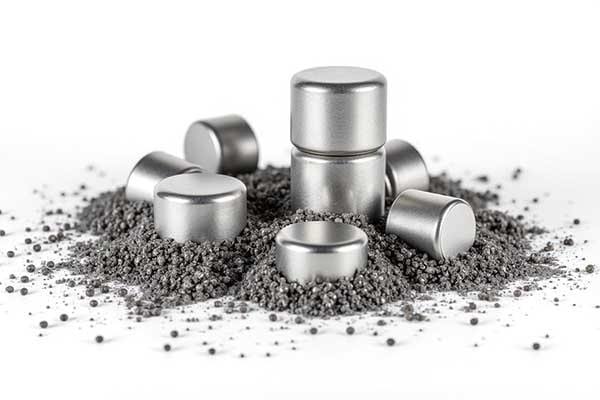
While you need strong magnetic solutions for your projects, you don't want magnets lose their power over time. Some reliable magnetic performance are required. NdFeB magnets offer exactly what you need.
Yes, NdFeB is a permanent magnet. NdFeB magnets are made from neodymium, iron, and boron elements. These magnets keep their magnetic properties for decades without external power. They are the strongest type of permanent magnets available today. NdFeB magnets work in temperatures up to 230°C depending on their grade.
Understanding NdFeB Permanent Magnet Properties
NdFeB magnets belong to the rare earth permanent magnet family. The name comes from the chemical symbols of its main components: Nd (neodymium), Fe (iron), and B (boron). These elements combine to create a magnetic material with exceptional strength and stability.
The permanent nature of NdFeB magnets means they maintain their magnetic field without needing external energy. This happens because of their unique crystal structure. The atoms arrange themselves in a way that creates strong magnetic domains. These domains align in the same direction, producing a powerful magnetic field.
NdFeB Magnet Properties Comparison
| Property | NdFeB | Ferrite | Alnico |
|---|---|---|---|
| Maximum Energy Product (MGOe) | 28-52 | 1-5 | 1-9 |
| Coercivity (kOe) | 12-30 | 3-4 | 0.6-2 |
| Maximum Working Temperature (°C) | 80-230 | 250 | 500 |
The strength of NdFeB magnets comes from their high magnetic energy product. This measures how much magnetic energy the material can store. NdFeB magnets have energy products ranging from 28 to 52 MGOe (mega gauss oersteds). This makes them 5 to 10 times stronger than ferrite magnets.
Temperature affects NdFeB magnet performance. Standard grades work up to 80°C. Higher temperature grades can function up to 230°C. The magnet loses some strength as temperature increases. However, it recovers its full strength when cooled back down.
M-Magnet produces various grades of NdFeB magnets for different applications. Each grade offers different combinations of strength and temperature resistance. We help customers choose the right grade for their specific needs.
The permanent nature of these magnets makes them ideal for many applications. Motors use NdFeB magnets because they provide consistent power. Speakers benefit from their strong magnetic field. Hard drives use them for precise positioning. Wind turbines rely on their permanent magnetism for electricity generation.
How are NdFeB magnets made?
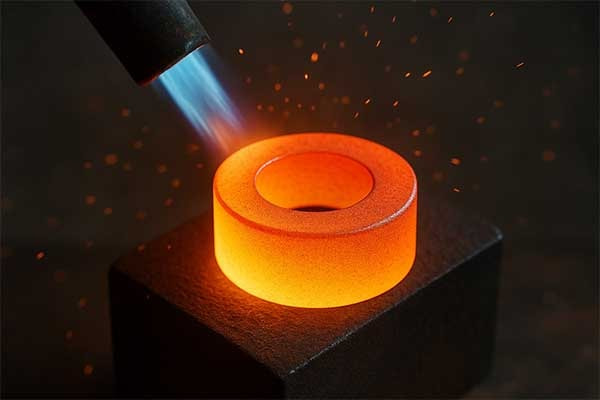
Creating NdFeB magnets is complex and unclear to many. Poor understanding leads to inefficient use or sourcing. The manufacturing process involves several precise steps.
NdFeB magnets are made through powder metallurgy processes. Raw materials are melted, crushed into powder, pressed into shapes, and sintered at high temperatures. The process includes alignment of magnetic domains, machining to final dimensions, and surface coating for protection. Quality control ensures consistent magnetic properties throughout production.
The Complete NdFeB Manufacturing Process
The manufacturing of neodymium magnet begins with preparing raw materials. Neodymium, iron, and boron are weighed according to specific formulas. Different grades require different ratios of these elements. Small amounts of other elements like dysprosium or terbium may be added to improve temperature resistance.
The first step is melting. All raw materials go into an induction furnace. Temperatures reach 1400°C to 1500°C. The molten metal is then rapidly cooled to prevent large crystal formation. This creates an alloy with the right chemical composition.
Next comes the crushing stage. The cooled alloy is brittle and breaks easily. It goes through jaw crushers first, then ball mills. The material becomes a fine powder with particles smaller than 5 micrometers. This powder size is critical for achieving high magnetic properties.
NdFeB Manufacturing Process Steps
| Process Step | Temperature (°C) | Time Duration | Purpose |
|---|---|---|---|
| Melting | 1400-1500 | 2-4 hours | Combine raw materials |
| Pressing | Room temperature | Few minutes | Shape formation |
| Sintering | 1000-1100 | 4-6 hours | Densification |
| Tempering | 500-650 | 1-3 hours | Optimize magnetic properties |
Pressing and Sintering Operations
The powder pressing step shapes the magnets. The fine powder goes into steel molds or dies. Hydraulic presses apply pressure up to 200 tons per square inch. This compacts the powder into green bodies with about 60% of final density.
During pressing, a magnetic field aligns the powder particles. This alignment is crucial for creating anisotropic magnets with preferred magnetic direction. The magnetic field strength during pressing reaches 15,000 to 20,000 Oersteds. Without this alignment, the final magnet would be much weaker.
Sintering comes next. The pressed parts go into vacuum furnaces. Temperatures reach 1000°C to 1100°C. The powder particles bond together at this temperature. The parts shrink by about 15-20% during sintering. This creates dense, solid magnets with about 95% theoretical density.
After sintering, the magnets undergo tempering. This heat treatment optimizes the magnetic microstructure. Temperatures range from 500°C to 650°C. The exact temperature depends on the magnet grade. This step increases coercivity and improves temperature stability.
Finishing and Quality Control
The sintered magnets are brittle and have rough surfaces. Diamond cutting tools machine them to final dimensions. Grinding and cutting operations require special coolants to prevent overheating. Overheating can damage the magnetic properties permanently.
Surface coating protects the magnets from corrosion. NdFeB magnets rust easily in humid conditions. Common coatings include nickel, zinc, and epoxy. The coating thickness ranges from 10 to 25 micrometers. M-Magnet offers various coating options to meet different application requirements.
Magnetization is the final step. The magnets go into magnetizing fixtures with strong electromagnetic coils. The magnetizing field is typically 3 to 5 times stronger than the magnet's coercivity. This process aligns all magnetic domains in the same direction.
Quality control happens throughout the manufacturing process. Raw material analysis ensures correct chemistry. Dimensional inspections verify size accuracy. Magnetic property testing measures strength and temperature performance. Visual inspections check for cracks or surface defects.
Modern manufacturing includes automated systems for consistency. Computer-controlled furnaces maintain precise temperatures. Robotic handling reduces contamination risks. Statistical process control monitors all critical parameters. These improvements ensure every magnet meets specification requirements.
The entire process from raw materials to finished magnets takes about one week. Most of this time involves heating and cooling cycles. The actual processing time is much shorter. However, each step requires careful control to achieve the desired magnetic properties.
How strong are NdFeB magnets?
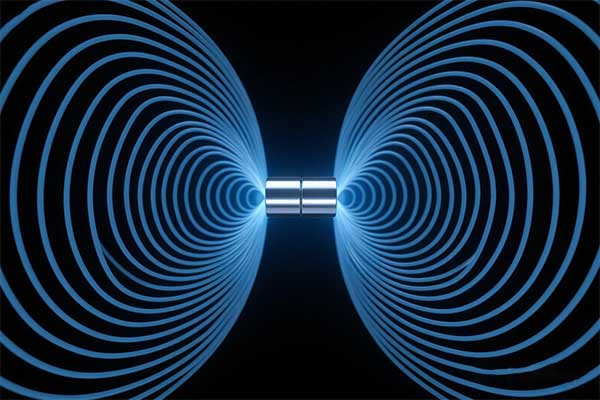
You need to understand the strength of NdFeB magnets. Their powerful nature is often misunderstood. Learning their strength helps in choosing the right magnet for your applications.
NdFeB magnets, also known as neodymium magnets or neo magnets, are the strongest type of permanent magnets available commercially. Their strength is measured by their magnetic flux density, or remanence, which can range from 1.0 to 1.4 Teslas. This high strength allows for smaller, lighter designs in various applications.
The strength of NdFeB magnets is truly remarkable. These magnets are much stronger than other types. This includes ceramic, alnico, or samarium cobalt magnets. Their strength comes from their unique crystal structure and composition. This structure allows them to store more magnetic energy. The key material is neodymium, combined with iron and boron. This specific mix gives them their superior magnetic properties. Engineers often choose neo magnets for applications where high power is needed in a small space. For example, they are used in motors, generators, and hard drives. They allow devices to be smaller and more efficient.
Different grades of NdFeB magnets exist. These grades show their maximum energy product. This value indicates the magnetic field strength per unit volume. Grades range from N35 to N52. A higher number means a stronger magnet. For instance, an N52 magnet is stronger than an N35 magnet of the same size. The choice of grade depends on the specific need. A stronger magnet might be needed for industrial lifting. A slightly weaker one might work for consumer electronics.
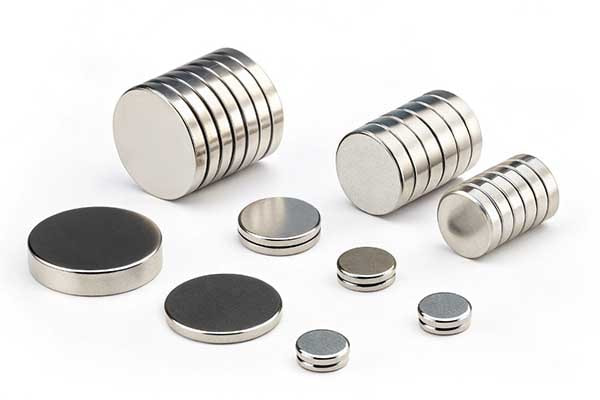
At M-Magnet Company, we can help you select the right grade. The shape and size also impact effective strength. A larger magnet generally has a stronger pull force. A thin disc magnet might be weaker than a thicker block magnet, even if they are made of the same material. The direction of magnetization also matters. Magnets can be magnetized axially, diametrically, or radially. This affects how their magnetic field interacts with objects.
NdFeB Magnet Strength Characteristics
| Characteristic | Description | Impact on Performance |
|---|---|---|
| Remanence (Br) | Magnetic flux density remaining after external field removed. | Higher Br means a stronger magnetic field. |
| Coercivity (Hcj) | Resistance to demagnetization from external magnetic fields. | Higher Hcj means better stability against demagnetization. |
| Max Energy Product (BHmax) | Maximum magnetic energy stored per unit volume. | Overall indicator of magnet strength and performance. |
Despite their strength, NdFeB magnets have some limitations. They are sensitive to heat. Above a certain temperature, they can lose their magnetism. This temperature varies by grade. Some grades are designed for higher temperatures.
They are also prone to corrosion. This is because they contain iron. To prevent rust, they usually have a protective coating. Common coatings include nickel, zinc, or epoxy. These coatings help protect the magnet from environmental damage. Choosing the right coating is important for durability. For applications like MagSafe magnets, ensuring proper coating and magnetization is crucial. This provides long-lasting performance.
What is the alternative to NdFeB magnets?
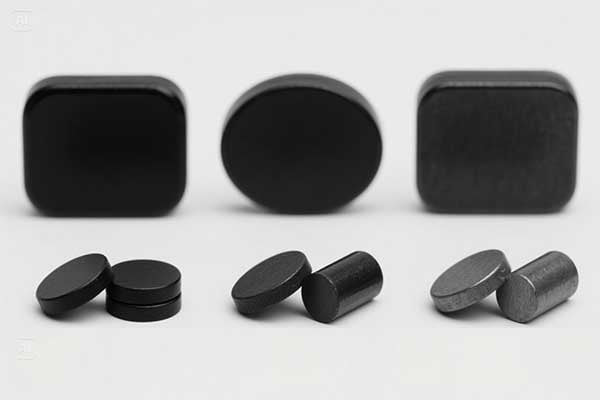
You need alternative magnets when NdFeB magnets are not suitable. Their unique properties mean direct replacements are rare. Different magnet types offer specific advantages for varied applications.
Alternatives to NdFeB magnets include samarium cobalt, ferrite (ceramic), and alnico magnets. Each type has different magnetic strengths, temperature tolerances, and costs. Samarium cobalt magnets are strong and perform well at high temperatures, while ferrite magnets are less powerful but very affordable. Alnico magnets offer good temperature stability but are weaker than neodymium.
When NdFeB magnets are not the right choice, other options exist. Each magnet type has its own set of advantages and disadvantages. These depend on the application's specific needs.
Samarium Cobalt Magnets
Samarium cobalt magnets (SmCo) are a strong alternative. They are part of the rare-earth magnet family, like neo magnets. They are not as strong as neodymium but perform better at higher temperatures.
They resist demagnetization at elevated temperatures much better than NdFeB. This makes them ideal for applications in hot environments. Examples include aerospace, military, and high-temperature motors. SmCo magnets are also highly corrosion-resistant. This means they do not need protective coatings in many cases. This simplifies their use in harsh environments.
However, SmCo magnets are generally more expensive than NdFeB magnets. This is due to the higher cost of samarium and the manufacturing process.
Ferrite (Ceramic) Magnets
Ferrite magnets, also known as ceramic magnets, are a common alternative. They are much weaker than NdFeB magnets.
However, they are very affordable and widely available. Their main advantages are low cost and high corrosion resistance. They are often used in simple applications. These include fridge magnets, craft projects, and loudspeakers.
They also have good resistance to demagnetization at room temperature. Their operating temperature range is wide. They can work in both hot and cold conditions. But their low magnetic strength means they need to be larger to achieve the same magnetic force as a smaller neodymium magnet. This makes them unsuitable for applications where space is limited.
Alnico Magnets
Alnico magnets are made from aluminum, nickel, and cobalt. They offer excellent temperature stability. They can operate at very high temperatures. This is often higher than both NdFeB and SmCo magnets.
They also have good corrosion resistance. However, they are weaker in magnetic strength compared to rare-earth magnets. They are also more susceptible to demagnetization if exposed to external fields.
Their main use is in applications where high operating temperatures are critical. These include sensors, meters, and some types of motors. Each of these alternatives provides a balance of cost, strength, and temperature performance. The best choice depends on the exact requirements of your project.
Magnet Alternatives to NdFeB
| Magnet Type | Key Advantage | Key Disadvantage | Typical Applications |
|---|---|---|---|
| Samarium Cobalt (SmCo) | High temperature stability, corrosion resistance | More expensive than NdFeB | Aerospace, medical, high-temp motors |
| Ferrite (Ceramic) | Very low cost, good corrosion resistance | Weakest magnetic strength | Crafts, speakers, simple holding applications |
| Alnico | Excellent temperature stability, good corrosion resistance | Relatively weaker than NdFeB and SmCo | High-temp sensors, guitar pickups, measuring instruments |
As a neodymium magnet manufacturer, we can guide you to the ideal magnet for your specific needs.
Where are NdFeB magnets for sale?
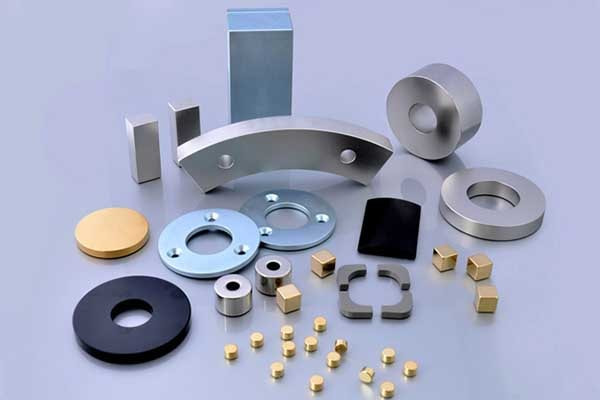
Finding reliable NdFeB magnets requires knowing your sourcing options. Many buyers struggle to identify trustworthy suppliers. This section maps out practical purchasing channels for quality magnets.
NdFeB magnets are available through manufacturers (like M-Magnet), industrial distributors, online marketplaces, and specialty retailers. For bulk/custom orders, Chinese factories offer competitive pricing with direct shipping to US/EU markets. Retail platforms like Amazon suit small-quantity purchases, while distributors serve prototyping needs.
Comparing NdFeB Magnet Purchasing Channels
Here's how different sources stack up for neodymium iron boron magnet procurement:
NdFeB Magnet Supplier Comparison
| Source Type | Delivery Time | Minimum Order | Price Range | Customization |
|---|---|---|---|---|
| Manufacturers (China) | 4-8 weeks | 500+ units | $0.10-$5/unit | Full support |
| US/EU Distributors | 1-3 weeks | 1-50 units | $1-$20/unit | Limited options |
| Online Marketplaces | 2-7 days | Single units | $0.50-$50/unit | None |
| Industrial Suppliers | 3-6 weeks | 100+ units | $0.30-$10/unit | Moderate |
Global supply chains create both opportunities and challenges. China produces over 80% of the world's neodymium iron boron magnets. This dominance affects pricing and availability. Some European buyers prefer local distributors despite higher costs. They value faster shipping and easier communication. However, this preference has limitations. Local distributors typically source from Asian factories anyway. They add markup without improving the core product.
Customization needs change the equation significantly. Stock magnets work for simple applications. Complex designs require direct manufacturer access. As a MagSafe magnet factory, we see this daily. Clients needing specific coatings or shapes must engage factories. Tier-1 manufacturers offer full technical support. They adjust dimensions, coatings, and magnetic strengths. This flexibility comes with trade-offs. Minimum order quantities (MOQs) can be challenging for startups. Production lead times extend beyond retail purchases.
Quality verification remains critical. Some suppliers exaggerate magnet grades. N35 magnets might be sold as N52. Reputable manufacturers provide material certifications. They share third-party testing reports. Buyers should request samples before bulk orders. Physical verification prevents costly mistakes.
Geopolitical factors impact sourcing. Tariffs and trade policies change costs. The US-China trade war increased prices by 15-25% for American buyers. Some companies relocated to Vietnam or India. But these regions lack China's full supply chain integration. Material quality can be inconsistent.
Shipping logistics matter. Sea freight takes weeks but saves money. Air shipments cost more but deliver faster. Customs clearance causes unexpected delays. Magnetic materials require special declarations. Working with experienced shippers prevents problems.
Payment security is another consideration. Letters of credit (LCs) protect both parties. But they increase transaction complexity. Escrow services offer middle-ground solutions.
Ethical sourcing is gaining importance. Responsible mining practices matter. Some manufacturers now provide supply chain transparency. Cobalt-free magnets are emerging too. They address resource sustainability concerns.
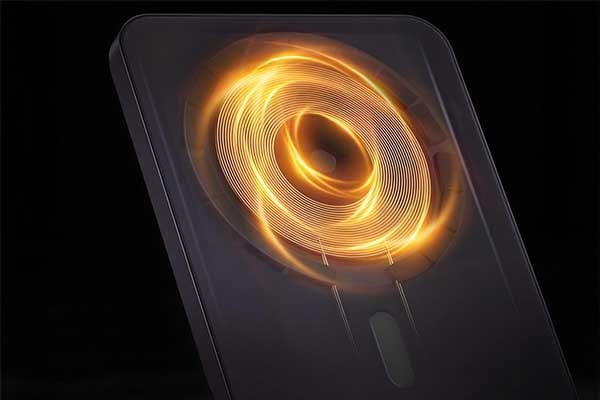
For MagSafe accessories, specialized suppliers excel. They understand Apple's technical requirements. Magnets need precise dimensions and pull forces. As a MagSafe magnet factory, we ensure magnetic arrays meet exact specifications. This expertise prevents compatibility issues.
Conclusion
Ndfeb magnets are the strongest permanent magnets, made from neodymium, iron, and boron. Their high magnetic strength and compact size make them essential in electric motors, electronics, medical devices, and renewable energy. Despite some limits like corrosion risk, their benefits drive widespread use and innovation in many industries.
About Blogger
Benjamin Li
Operation Manager of M-Magnet Company
I will bring you a full range of magnet knowledge and manufacturing experience on neodymium magnets and MagSafe magnet solutions through blogs and emails. I'm not an expert yet in magnets, but we have a whole team to help you solve technical issues, design drawing details, compatibility suggestions from magnetic assemblies, magnet purchasing and many other customized magnet solutions from China. You can follow my blogs on knowledge sharing or contact me for your own magnet solutions. We will always do the best.