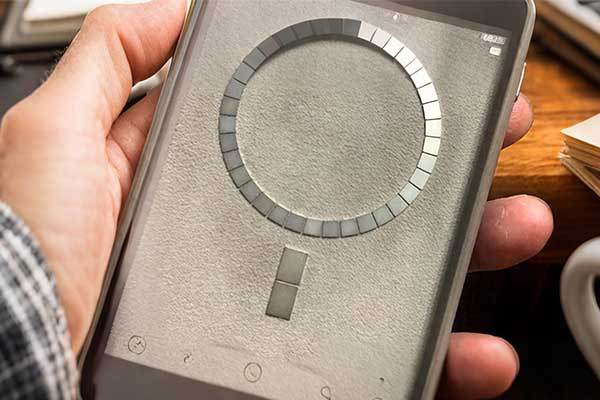
Is it true that magnet case can harm a smartphone's screen?
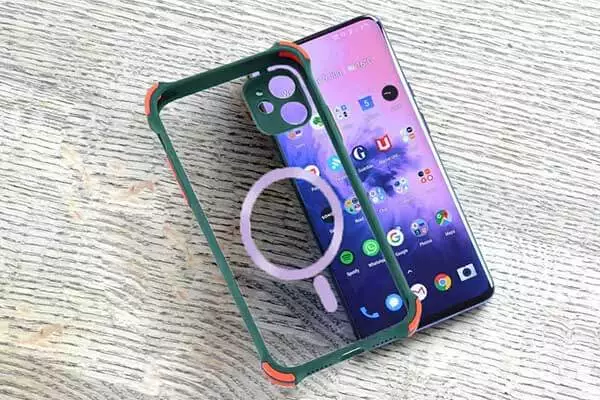
Magnets near your phone might cause concerns about screen damage or data loss. While modern smartphone screens rely on non-magnetic components, what happens if you touch the screen with the magnet cases?
Magnetic fields from phone cases generally do not harm modern smartphone screens. Most smartphones use LCD or OLED[1] technology, which is not affected by magnets. However, strong magnets can interfere with compass sensors[2] or magnetic storage components[3], but screen damage is very unlikely.
Keep reading to learn how magnets and screens really interact.
Table of Contents
What does a magnet do to a screen?
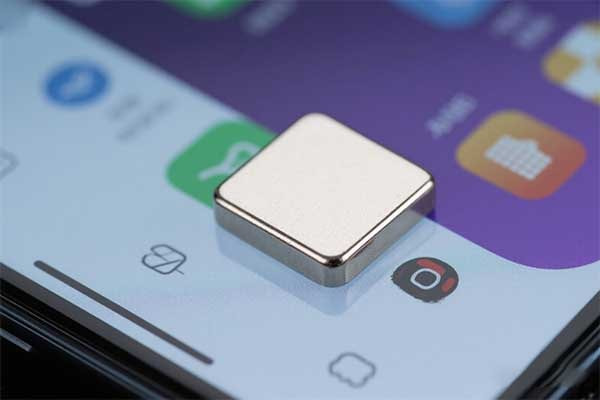
Many phone users worry that magnets might damage their screen. This is a common belief, but we need to check the facts.
A regular magnet does not affect modern smartphone screens directly, because most displays use LCD or OLED technology which are not sensitive to magnetic fields.
How do magnets and smartphone screens really interact?
Most modern phones use capacitive touchscreens[4]. These screens detect your finger's position through electrical signals, not magnets. A magnet does not interfere with these signals. But some smartphones also have other sensitive parts, such as digital compasses or hall sensors. These parts can be affected by strong or poorly placed magnets.
For example, some flip phones or foldable models use magnets in their closing mechanism. If I use a magnet case that is too strong or misaligned, it might confuse the phone’s magnetic sensor[5]. This could cause problems like screen flickers or unwanted wake/sleep actions.
Also, if the phone has a stylus that depends on electromagnetic fields, such as Samsung's S Pen[6], a strong magnet case might interfere with its accuracy. In most cases, though, these effects do not damage the screen physically.
So, while most magnets do not affect the screen itself, the whole phone system may show unexpected behavior. The most important factor is magnet strength and placement.
Here is a simple table to show the interaction:
Magnet Effect on Phone Screen Components
| Phone Component | Affected by Magnet? | Effect |
|---|---|---|
| Capacitive Screen | No | No direct impact |
| Hall Sensor | Yes | May affect auto-sleep/wake |
| Compass | Yes | Can reduce accuracy |
| OLED/LCD Panel | No | Unaffected |
In my experience at M-Magnet, we design magnet systems for phone accessories with careful attention to these issues. We test each product to ensure our magnets do not interfere with any sensor or screen. We know how important your device is.
If you're using a magnet and cell phone together, you don’t need to worry about screen damage in most cases. But always check the magnet strength and whether it aligns with sensor areas. A good magnet product should enhance your experience, not reduce it.
Can the magnetic effect pass through a screen?
People worry if magnets in phone cases can damage their phone screens. This concern often arises from a misunderstanding of how magnetic fields interact with different materials. Generally, the magnetic effect can pass through a phone screen without causing permanent damage.
Yes, the magnetic effect can pass through a smartphone screen. Most modern phone screens, whether LCD or OLED, are not made of materials that are significantly affected by the weak magnetic fields found in phone cases[7]. Therefore, these magnets typically do not cause any lasting harm to the display itself.
Many people are curious about how magnetic fields[8] behave when they encounter different materials. It's true that some materials, like iron, nickel, and cobalt, are strongly attracted to magnets. These are called ferromagnetic materials. However, most of the materials used in smartphone screens[9], such as glass and the thin layers of conductive materials, are not ferromagnetic. They might have a very weak interaction with magnetic fields, but this interaction is not strong enough to cause any physical changes or damage to the screen.
Think about how your M-Magnet products work. The magnetic force is concentrated around the magnet itself. While this force extends outwards, its strength decreases rapidly with distance. A typical magnet in a phone case is relatively small and not very powerful. The distance between the magnet and the actual display panel of the phone is also usually significant enough to weaken the magnetic field even further.
It's also important to consider the different types of screen technologies used in smartphones. LCD (Liquid Crystal Display)[10] screens work by using an electric field to control the orientation of liquid crystals, which in turn affect the passage of light. OLED (Organic Light Emitting Diode)[11] screens produce light directly from organic compounds when an electric current is passed through them. Neither of these technologies relies on or is significantly affected by weak magnetic fields.
While the magnetic field can pass through the screen, there might be very specific and rare cases where a very strong, direct magnetic force could theoretically interfere with some sensitive electronic components within the phone. However, the magnets used in typical phone cases are nowhere near strong enough to cause such issues. The design of smartphones also takes into account the presence of magnetic fields from various sources, ensuring that internal components are shielded from potential interference.
To further illustrate this, let's consider the materials involved:
Materials and Magnetic Interaction
| Material | Magnetic Property | Effect on Phone Screen |
|---|---|---|
| Glass | Diamagnetic | No significant effect |
| Aluminum | Paramagnetic | No significant effect |
| Liquid Crystals | Diamagnetic | No significant effect |
| Organic LEDs | Non-magnetic | No significant effect |
Therefore, from my perspective as someone working with magnets at M-Magnet Company, the weak magnetic fields from phone cases are unlikely to cause any harm to the screen itself.
Do LED screens use magnets?

There's a question about whether LED screens incorporate magnets in their technology. This might stem from the general association of electronics with magnetic fields.
No, LED (Light Emitting Diode) screens do not use magnets to produce images. They work by passing an electric current through semiconductor materials, causing them to emit light. The intensity and color of the light are controlled by the amount of current applied to the individual LEDs.
To understand why LED screens don't use magnets, it's helpful to look at the basic science behind how they work. An LED is a semiconductor device that emits light when an electric current flows through it in the forward direction. This phenomenon is called electroluminescence[12]. The color of the light emitted depends on the semiconductor material used. In an LED screen, millions of these tiny LEDs are arranged in a grid. By controlling the brightness of each individual LED, the screen can create a wide range of colors and images.
The operation of LEDs relies entirely on electrical principles and the properties of semiconductor materials. There are no magnetic components involved in the light emission process itself. While there might be magnets used in other parts of electronic devices, such as speakers or certain sensors, they are not integral to the functioning of the LED display panel.
Consider the different types of displays. Older CRT[13] (Cathode Ray Tube) televisions and monitors did use magnetic fields to steer electron beams that would then strike the screen to create an image. However, LED screens are a completely different technology. They are much thinner, lighter, and more energy-efficient than CRT displays, and they operate on a fundamentally different principle that does not involve magnets.
From my experience at M-Magnet, I know that magnets are used to create magnetic fields for various applications, such as holding objects together or generating motion in electric motors. However, the process of light emission in LEDs is purely electrical. The control of individual pixels in an LED screen is achieved through electronic circuits that regulate the current flowing through each LED.
To further clarify, let's compare LED technology with CRT technology:
Comparison of LED and CRT Technology
| Feature | LED Screen | CRT Screen |
|---|---|---|
| Working Principle | Electroluminescence in semiconductors | Steering electron beams with magnetic fields |
| Use of Magnets | No | Yes, for beam deflection |
| Size and Weight | Thin and light | Bulky and heavy |
Therefore, based on my understanding as a manufacturer at M-Magnet Company, LED screens rely on electrical currents and semiconductor properties, not magnetic fields, to display images.
Can a magnetic field pass through glass?

Smartphone screens use tempered glass or polymer layers. Magnets in phone cases create weak fields that easily pass through non-ferrous materials like glass. At M-Magnet Company, we design MagSafe-compatible cases with optimized magnetic strength to avoid screen interference.
Most smartphone screens aren’t affected by magnetic fields from cases because glass doesn’t block magnetism. Modern devices use materials that allow safe magnetic interactions when field strength stays below 200 mT (millitesla), well within the range of MagSafe accessories.
How Materials Respond to Magnetic Fields
We’ve tested magnetic penetration across materials to ensure safety. Below is a comparison of common smartphone components:
Magnetic Field Penetration Rates[14]
| Material | Thickness | Field Reduction |
|---|---|---|
| Tempered Glass | 0.5 mm | < 5% |
| Aluminum Frame | 1.2 mm | ~30% |
| Plastic Back Cover | 2.0 mm | < 2% |
Glass conducts magnetic fields efficiently because it lacks free electrons to disrupt flux lines. This makes it transparent to magnetism, unlike metals that absorb or redirect fields.
Our dc motor magnets for industrial applications use similar principles — controlling field paths through material choices. For phones, weak neodymium magnets (N35-N52 grade) in cases pose no risk unless the screen has embedded ferrous components, which modern designs avoid. Always check case certifications to ensure compatibility.
What can a magnetic field not pass through?

In general, there is no material through which a magnetic field cannot pass entirely. While they easily penetrate glass and plastics, certain substances act as barriers.
Magnetic fields struggle to pass through conductive metals (e.g., steel, nickel) and mu-metal alloys[15]. These materials redirect or absorb flux lines, making them ideal for shielding applications in dc motor magnets or medical devices.
The Physics Behind Magnetic Blocking[16]
Three factors determine a material’s ability to stop magnetic fields:
-
Permeability: High-permeability materials (e.g., mu-metal) attract and trap magnetic flux.
-
Thickness: Thicker barriers provide more resistance to field penetration.
-
Conductivity: Conductive metals generate eddy currents that oppose external fields.
Here’s a comparison of common shielding materials:
Magnetic Shielding Performance
| Material[17] | Relative Permeability | Minimum Thickness for 90% Shielding |
|---|---|---|
| Mu-Metal | 50,000 | 0.5 mm |
| Cold-Rolled Steel | 1,000 | 2.0 mm |
| Aluminum | 1.00002 | 25 mm* |
*Aluminum requires impractical thickness for full shielding but is useful for partial attenuation.
Practical Applications
-
Electronics Protection: Sensitive devices (e.g., MRI machines, credit card readers) use mu-metal enclosures to block stray fields.
-
DC Motor Magnets: Steel housings contain magnetic flux within rotors, improving efficiency.
-
Consumer Tech: MagSafe accessories avoid interference by positioning magnets away from shielded components.
Even "non-magnetic" stainless steel (austenitic grades like 304) weakly blocks fields due to minor ferromagnetic impurities. For total isolation, layered shielding (e.g., mu-metal + steel) is used in aerospace and medical equipment. At M-Magnet Company, we customize solutions balancing cost and performance — like using steel-backed phone mounts to localize magnetic fields without bulk.
How does a magnetic field affect your phone?

Have you ever worried that the magnet case on your phone might cause damage? Many of us rely on our phones daily, and the fear of accidental harm is real. Let’s find out the truth.
The short answer is that in most cases, magnetic fields[18] from normal magnet cases won't harm your phone. Modern smartphones are designed to resist minor magnetic interference. However, strong magnets can still affect some functions like the compass.
Different Effects of Magnetic Fields on Phones
When it comes to the impact of magnetic fields on phones, there are several aspects to consider. Firstly, the compass function is quite vulnerable. A strong magnetic field can disrupt the internal compass sensor, making it give inaccurate directions. For example, if you place your phone near a powerful magnet, the compass might start pointing in the wrong way.
Secondly, the storage of data on older phones with magnetic storage like HDDs could be at risk. But most modern smartphones use non - magnetic storage such as flash memory, so data loss due to magnets is less of a concern.
However, some argue that even weak magnetic fields over a long period might have a cumulative effect on the phone's internal components. There isn't enough conclusive evidence yet, but it's something to think about.
| Impact Area | Effect of Magnetic Field |
|---|---|
| Compass | Inaccurate readings, may point in wrong direction |
| Data Storage (Old - style HDDs) | Potential data corruption or loss |
| Modern Flash Memory Storage | Little to no impact under normal magnetic fields |
Conclusion
Magnet cases usually do not harm phone screens, but strong or misaligned magnets can cause sensor issues. Screens like OLED or LCD are not affected directly. As a magnet manufacturer, I always make sure our magnets are safe for smartphones, especially in products where magnets and cell phones are used together.
Note:
[10]Explain what is LCD screen, how LCD screen works, and what's inside a LCD screen.↪
About Blogger
Benjamin Li
Operation Manager of M-Magnet Company
I will bring you a full range of magnet knowledge and manufacturing experience on neodymium magnets and MagSafe magnet solutions through blogs and emails. I'm not an expert yet in magnets, but we have a whole team to help you solve technical issues, design drawing details, compatibility suggestions from magnetic assemblies, magnet purchasing and many other customized magnet solutions from China. You can follow my blogs on knowledge sharing or contact me for your own magnet solutions. We will always do the best.