What Will Happen If an MRI Magnet Is Alternating?
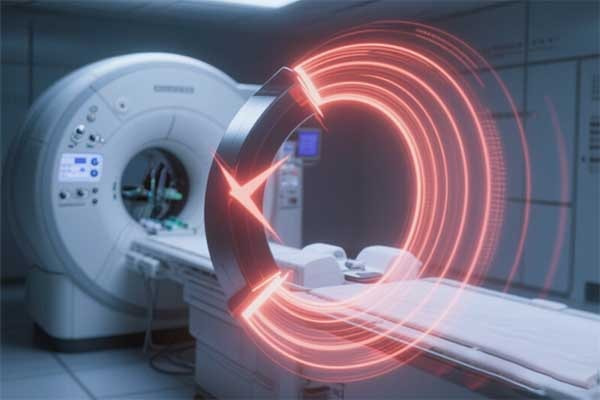
MRI machines rely on powerful magnets to create detailed images. But what happens if the MRI magnet’s field alternates instead of staying steady? This question raises safety and imaging concerns.
The MRI magnet usually produces a strong static magnetic field. If the magnet’s field alternated rapidly, it would disrupt image formation, cause mechanical vibrations, and potentially induce nerve stimulation or heating in patients. MRI machines use static fields combined with controlled alternating gradient fields to avoid these problems.
Let’s first understand what MRI means and how its magnet works.
Table of Contents
What does MRI stand for?
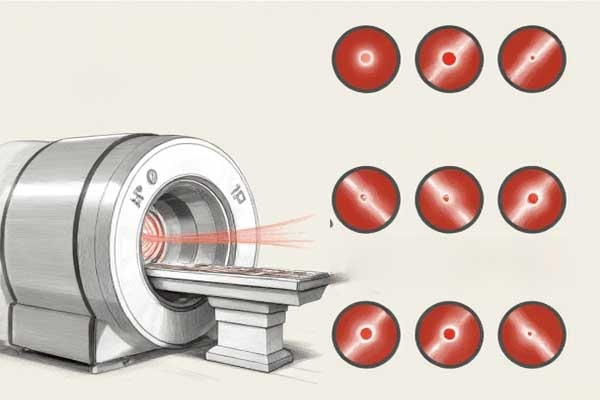
Magnetic Resonance Imaging (MRI) is a medical imaging technique that uses magnets and radio waves to create detailed pictures of the inside of the body. The magnet in an MRI machine produces a strong, steady magnetic field that aligns hydrogen protons in the body. Radiofrequency pulses then disturb this alignment, and the machine detects signals emitted as protons return to their original state, forming images.
MRI stands for Magnetic Resonance Imaging. The MRI magnet creates a large, static magnetic field (often 1.5 to 3 Tesla) that aligns hydrogen nuclei in tissues. This static field is essential for image clarity and accuracy. Alternating the main magnet field would disrupt proton alignment and degrade image quality.
The main magnet in an MRI scanner is typically a superconducting magnet that produces a constant magnetic field along the bore’s longitudinal axis. This field is combined with smaller, rapidly switched gradient magnetic fields that spatially encode the MRI signals. The static magnet provides the baseline magnetic environment necessary for nuclear magnetic resonance.
MRI Magnet Types and Functionality
MRI magnets are designed to produce a stable, homogeneous magnetic field. The main magnet is usually superconducting, cooled by liquid helium to maintain zero electrical resistance. This allows continuous current flow and a steady magnetic field without energy loss.
Types of MRI Magnets and Their Characteristics
| Magnet Type | Field Type | Key Features |
|---|---|---|
| Superconducting Magnet | Static (constant) | High field strength, stable, requires cooling |
| Resistive Magnet | Static | Lower field strength, easier to switch off |
| Permanent Magnet | Static | No power needed, lower field strength |
Alternating the main magnetic field of an MRI magnet is not practical because it would prevent the stable alignment of hydrogen protons. Instead, MRI machines use alternating gradient fields and radiofrequency pulses to manipulate proton spins without changing the primary static field.
The gradient coils produce rapidly switched magnetic fields that vary spatially, enabling image encoding. These fields alternate at frequencies up to several kilohertz but are much weaker than the main magnet. The main magnet’s static field is fundamental to MRI’s imaging capability.
At M-Magnet, we understand the critical role of stable magnetic fields in MRI technology. Our precision neodymium magnets support components that require reliable magnetic performance in medical devices.
Which MRI zone is the magnet located in?
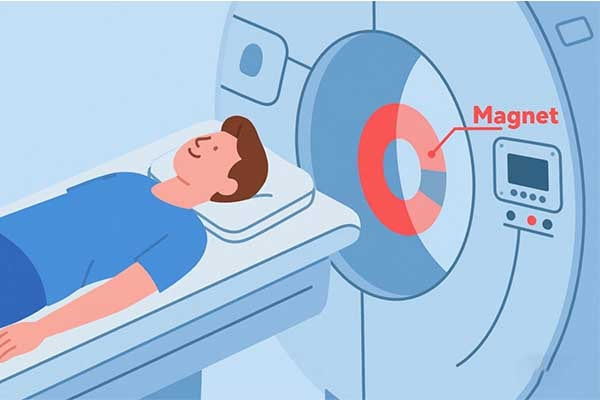
People often wonder about the specific location of the powerful magnet within an MRI suite. This is a critical safety concern, as strong magnetic fields pose risks to unscreened individuals and ferromagnetic objects.
MRI magnets are typically located in the MRI scanner room, which is a controlled environment to ensure safety and functionality.
Zones in MRI Facilities
| Zone | Description |
|---|---|
| Zone 1 | General waiting area with no magnetic field restrictions. |
| Zone 2 | Transition area with limited magnetic field exposure. |
| Zone 3 | Controlled area with significant magnetic field exposure. |
| Zone 4 | The MRI scanner room where the magnet is located. |
MRI magnets are strategically placed in Zone 4, the MRI scanner room. This zone is highly controlled due to the powerful magnetic fields generated by the MRI magnets.
Safety protocols are in place to prevent accidents and ensure that only authorized personnel and patients enter this area. The magnetic field in Zone 4 is strong enough to attract ferromagnetic objects with great force, which is why strict screening procedures are followed.
As a magnet manufacturer, I understand the importance of controlling magnetic fields to prevent interference and ensure accurate imaging results. The location of the magnet in Zone 4 is crucial for the proper functioning of the MRI machine and the safety of everyone involved.
Do MRI magnets remain on at all times?

Many people wonder if MRI magnets are switched off between patients. The reality is that the powerful magnetic field is nearly always active, posing continuous safety risks if not properly managed.
MRI magnets, specifically the superconducting magnets, remain on at all times. They are designed to maintain a constant magnetic field for optimal imaging performance.
Why MRI Magnets Stay On
| Reason | Explanation |
|---|---|
| Superconductivity | Superconducting magnets need to be kept at extremely low temperatures to maintain their superconducting state. |
| Stability | A constant magnetic field ensures consistent and high-quality imaging results. |
| Safety | Turning off the magnet would require a controlled quench process to safely dissipate the stored energy. |
MRI magnets, particularly the superconducting ones, are always on. This is due to the nature of superconductivity, which requires the magnet to be kept at extremely low temperatures.
The constant magnetic field ensures that the MRI machine can produce high-quality and consistent images. Turning off a superconducting magnet is not as simple as flipping a switch. It involves a controlled quench process to safely dissipate the stored energy.
As a magnet manufacturer, I know how crucial it is to maintain the integrity of the magnetic field. The continuous operation of MRI magnets is essential for both the functionality of the machine and the safety of the patients and staff. Understanding this aspect helps us appreciate the complexity and precision involved in MRI technology.
Can you feel the magnets in an MRI?
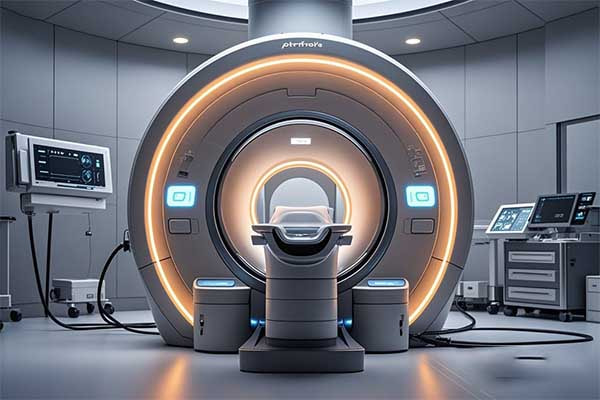
Many people wonder if they can feel the magnets during an MRI scan, and it's a common concern for first-time patients.
In general, patients do not feel the magnetic field of an MRI magnet. However, some may experience a sensation of warmth or a tingling feeling due to the radiofrequency pulses used during the scan.
Sensations During an MRI Scan
| Sensation | Cause |
|---|---|
| Warmth | Radiofrequency pulses used for imaging can cause a slight warming effect. |
| Tingling | Some patients may feel a tingling sensation due to the interaction of the magnetic field with the body. |
| None | Most patients do not feel the magnetic field itself. |
During an MRI scan, patients typically do not feel the magnetic field of the MRI magnet. The sensation of warmth or tingling that some patients experience is due to the radiofrequency pulses used during the imaging process. These pulses can cause a slight warming effect, but it is not the magnetic field itself that is felt.
We can understand the importance of ensuring that the magnetic field is safe and non-intrusive. The design of MRI magnets is such that they do not cause discomfort to patients. However, it is essential for patients to communicate any unusual sensations to the technicians to ensure a safe and comfortable scanning experience. The goal is to provide accurate imaging without causing distress to the patient.
Why do I feel weird after an MRI?
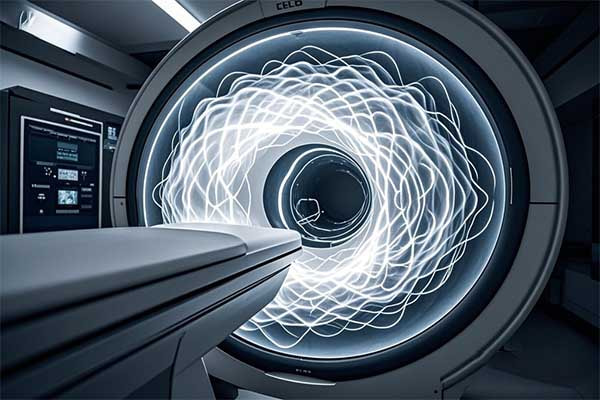
Many people feel dizzy or tired after an MRI. That’s common and can be explained simply.
The strong, static magnetic field in an MRI scanner affects the fluid in your inner ear and the electrical signals in your body. That temporary shift may make you feel dizzy, disoriented, or light-headed. These symptoms usually go away quickly.
When I think about the effect of magnetic fields on the human body, I understand it’s not just theory. It's something real. Magnetic resonance imaging (MRI) uses very powerful magnets, often up to 3 Tesla. That's more than 60,000 times stronger than Earth’s magnetic field. This field is steady, but it can still interact with the ions and fluids in your body. If that magnetic field were alternating — changing direction quickly — the effects would be even more intense. But even the steady field can influence how we feel.
Common Physical Responses to MRI Scans
| Symptom | Cause | Duration |
|---|---|---|
| Dizziness | Inner ear fluid affected by magnetic force | A few minutes |
| Tingling | Magnetic field inducing small currents | Temporary |
| Fatigue | Long stay in enclosed space, body stress | A few hours |
If an MRI magnet were alternating, the experience might be more serious. Alternating magnetic fields create electric currents in the human body. That could overstimulate nerves or muscles. We would also feel strong pressure on our balance system. That’s why medical MRI machines only use static magnetic fields. When alternating fields are needed, like in industrial settings, strict safety rules are followed.
As a magnet manufacturer, I understand how magnet strength, frequency, and exposure time affect both materials and people. If MRI systems used alternating neodymium magnets, the result could damage tissue or cause pain. That’s why control and shielding are critical in all magnetic designs, especially in medical equipment.
Is there a way to block magnetic fields?

Many people ask if magnetic fields can be blocked. The answer is complex but can be explained clearly.
Magnetic fields can’t be completely blocked. However, they can be redirected or absorbed using special materials like mu-metal or ferrite shields. These materials guide the magnetic field lines away from sensitive areas.
When I work with magnets, I often deal with field control. Blocking a magnetic field is not like blocking light or sound. It’s not possible to create a “wall” that stops it. Magnetic field lines need to go somewhere. That’s why we use redirection instead of true blocking.
High-permeability materials like mu-metal work by attracting the magnetic field lines and allowing them to flow through a path that avoids sensitive components. This technique is used in electronic devices, transformers, and MRI rooms. In a way, we’re not stopping the field, we’re giving it a safer path to follow.
Magnetic Shielding Materials Comparison
| Material | Shielding Ability | Typical Use |
|---|---|---|
| Mu-metal | Very high | MRI rooms, sensors |
| Ferrite plates | Moderate | Wireless chargers, speakers |
| Steel sheet | Low | Low-cost enclosures |
In my work at M-Magnet, I often help clients create magnetic shielding solutions. This is especially important in electronics and energy industries, where stray magnetic fields can damage circuits or interfere with signals. When we develop customized neodymium or ferrite magnets for MagSafe or industrial use, we also consider shielding as part of the full system solution.
If an MRI magnet were alternating, shielding would be even more important. The changing field would produce induced currents in nearby materials. Without proper shielding, that could interfere with other devices or even pose a health risk. That’s why high-quality materials and precise engineering are essential for any application involving strong magnetic fields.
Conclusion
MRI stands for Magnetic Resonance Imaging, relying on a strong, static magnet to align hydrogen protons for imaging. If the MRI magnet’s field alternated instead of remaining steady, it would disrupt proton alignment and degrade image quality. MRI machines use alternating gradient fields for spatial encoding but keep the main magnet field constant. Stable magnetic fields are essential for safe, accurate MRI scans. At M-Magnet, we provide customized magnets supporting the precision needs of MRI technology.
About Blogger
Benjamin Li
Operation Manager of M-Magnet Company
I will bring you a full range of magnet knowledge and manufacturing experience on neodymium magnets and MagSafe magnet solutions through blogs and emails. I'm not an expert yet in magnets, but we have a whole team to help you solve technical issues, design drawing details, compatibility suggestions from magnetic assemblies, magnet purchasing and many other customized magnet solutions from China. You can follow my blogs on knowledge sharing or contact me for your own magnet solutions. We will always do the best.