Why is neodymium used in lasers?
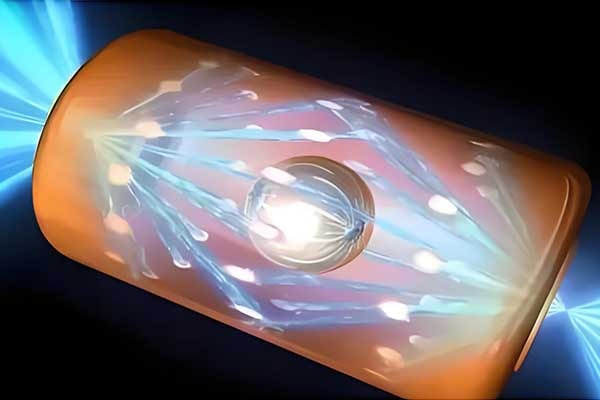
People want smaller, stronger, and more precise laser tools. But most don’t know what makes that possible. Neodymium does.
Neodymium[1] is used in lasers because it can store and release energy in the form of light efficiently. It enables powerful, high-precision beams[2] with a wide range of uses.
Keep reading to discover why neodymium makes lasers better than most other materials.
Table of Contents
How do neodymium lasers work?
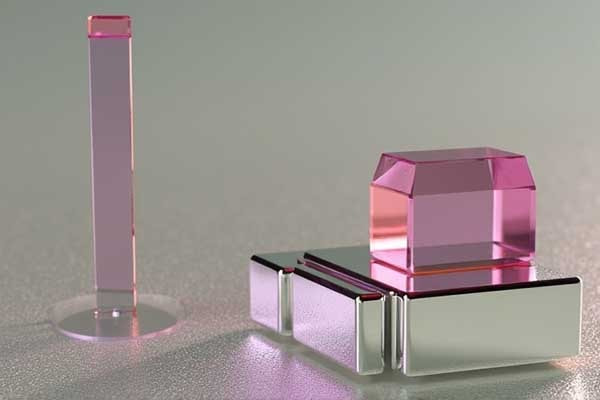
People expect lasers to be fast and powerful. But without the right material inside, lasers can’t deliver what they promise. Neodymium solves that.
Neodymium lasers[3] work by exciting neodymium ions with energy, which then release photons in a precise beam of light. The neodymium is usually inside a crystal like Nd:YAG (neodymium-doped yttrium aluminum garnet).
Let’s take a deeper look at how neodymium makes this possible, and why this material is essential to laser technology.
Why neodymium matters in laser function
Neodymium is a rare earth element. It is often used in solid-state lasers, especially Nd:YAG and Nd:YVO4 lasers[4]. In these systems, neodymium atoms replace a small number of atoms in the crystal host. These atoms are key because they absorb pump light and re-emit it in the form of coherent laser light.
When energy hits the neodymium ions — usually from a flash lamp or diode—they move to a higher energy level. This is called "excitation." After that, they drop back down, releasing light. When many ions release photons at the same time, we get a focused and powerful laser beam.
This setup makes neodymium lasers reliable, compact, and cost-effective. They are used in industries from medical surgery to metal cutting. Their stable output, high energy efficiency, and long service life are hard to beat.
Let me show how neodymium laser systems compare to others.
Comparison of Laser Types[5]
| Laser Type | Active Material | Output Power | Common Applications | Efficiency |
|---|---|---|---|---|
| Nd:YAG | Neodymium in YAG | High | Surgery, cutting, welding | High |
| CO₂[6] | Gas (CO₂) | Very High | Engraving, cutting non-metals | Moderate |
| Fiber Laser[7] | Rare-earth doped fiber | High | Marking, telecom, defense | Very High |
| Diode Laser | Semiconductor | Low to Medium | Pointers, barcodes | High |
As we see, neodymium lasers stand out for high output and good control. They are not as powerful as CO₂ for bulk cutting, but they beat others in precision and size. That's why I trust neodymium-based systems for compact laser modules in industries we serve.
In our factory, when clients need stable, clean beams for material processing or sensor applications, neodymium laser modules are our go-to. The material also works well with heat management, which keeps the devices stable even under heavy use.
Neodymium lasers have even more value when paired with neodymium magnets[8]. The alignment and miniaturization benefits of these magnets enhance performance. We use both technologies together in some advanced designs.
The term "neodymium laser" often pops up in custom industrial solutions, especially where size and beam control matter. Our team has used neodymium lasers for precision cutting applications and seen how consistent their performance is.
What metals are used in lasers?
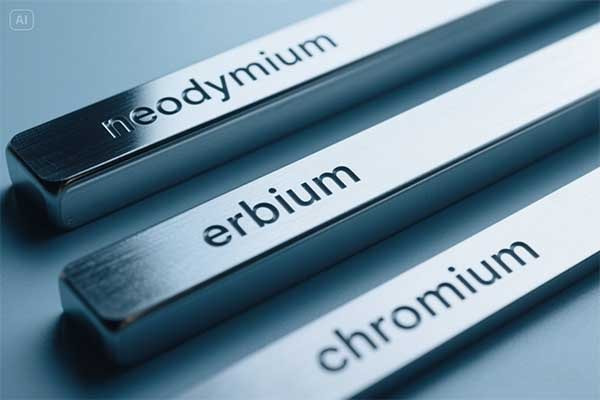
Are you curious about the metals that make lasers work? Lasers are everywhere, from medical tools to industrial machines, and metals play a big part. Let’s explore the key metals used.
Common metals[9] in lasers include neodymium, erbium, and chromium. Neodymium, for example, is used in solid-state lasers[10]. These metals can amplify light, helping lasers produce a powerful beam.
Different Roles of Metals in Lasers
When it comes to the metals used in lasers, each one has its own unique role[11]. Neodymium, a key metal in my work at M-Magnet Company, is highly valued in the laser industry. It’s used in solid-state lasers because of its ability to absorb and emit light at specific wavelengths. This property makes neodymium lasers effective in various applications, like laser cutting and engraving.
Erbium[12] is another important metal. It’s often used in fiber lasers, which are crucial in telecommunications. Erbium-doped fiber amplifiers can boost the signal strength of optical fibers over long distances. This is essential for maintaining high-speed internet connections around the world.
Chromium[13] also plays a significant part. In ruby lasers, chromium ions are responsible for the laser action. Ruby lasers[14] were among the first lasers developed, and they are still used in some specialized applications today, such as in certain medical procedures and scientific research.
| Metal | Common Laser Type | Main Application |
|---|---|---|
| Neodymium | Solid-state lasers | Laser cutting, engraving |
| Erbium | Fiber lasers | Telecommunications |
| Chromium | Ruby lasers | Medical procedures, scientific research |
What material can laser not penetrate?
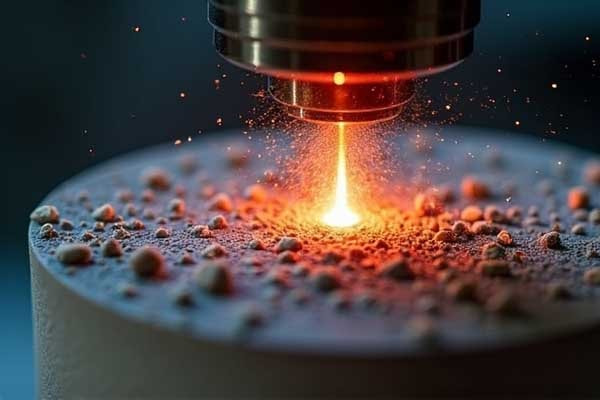
Have you ever wondered if there are materials lasers can’t go through? Knowing this is important, whether you’re in manufacturing or just curious. Let’s find out which materials can resist lasers.
Some materials lasers can’t easily penetrate include thick ceramics, certain types of diamond, and high-density metals like tungsten[15]. These materials are tough and can block laser beams effectively.
Why These Materials Resist Lasers
There are several reasons why certain materials can resist laser penetration. Thick ceramics[16], for example, have a high melting point and low thermal conductivity. When a laser beam hits a ceramic surface, the heat doesn’t spread easily. Instead, it builds up on the surface, but the ceramic can withstand the high temperatures without melting or getting penetrated quickly.
Diamond[17], especially in its pure form, is extremely hard and has excellent heat dissipation properties. Lasers struggle to cut through diamond because it can transfer the heat from the laser beam away rapidly. This prevents the diamond from reaching its melting or vaporization point easily.
High-density metals[18] like tungsten are also difficult for lasers to penetrate. Tungsten has a very high melting point, the highest among pure metals. Its dense atomic structure makes it hard for the laser energy to break through and cause significant damage.
In the manufacturing of magnets at M-Magnet Company, understanding these materials helps us choose the right protective gear and tools. When working with lasers to shape or cut magnets, we need to know which materials can shield us and our equipment from unwanted laser exposure.
| Material | Resistance Property |
|---|---|
| Thick ceramics | High melting point, low thermal conductivity |
| Diamond | Hardness, excellent heat dissipation |
| Tungsten | High melting point, dense atomic structure |
What is a unique fact about neodymium?
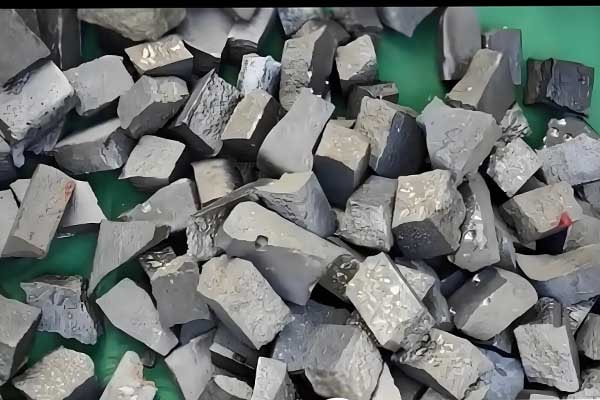
Many elements are rare and hard to find, which limits their use. Imagine a crucial element for advanced technology being so limited that its widespread application becomes impossible. A unique fact about neodymium is its relative abundance in the Earth's crust compared to other rare earth elements.
Neodymium is unique due to its relatively high abundance among rare earth elements[19]. This makes it more accessible and affordable for widespread use in technologies like powerful magnets and lasers.
As a manufacturer at M-Magnet Company, I've seen firsthand how the availability of neodymium[20] impacts our production of high-performance magnets. Unlike some other rare earth elements that are truly scarce, neodymium can be found in significant quantities in various ores. This doesn't mean it's as common as iron or aluminum, but its relative abundance is a key factor in why neodymium magnets have become so prevalent.
The term "rare earth elements" can be misleading because some of them, like cerium and neodymium, are actually more abundant than common metals like lead. However, they are rarely found in concentrated deposits, which makes the mining and extraction process complex and costly. The main sources of neodymium are minerals like monazite and bastnäsite, which are mined primarily in China, the United States, Brazil, India, and Australia.
The abundance of neodymium[21], compared to other rare earths, has been crucial for the development and widespread adoption of neodymium magnets. If neodymium were as scarce as some of the other lanthanides[22], the cost of these powerful magnets would be prohibitive for many applications. This relative availability has allowed us at M-Magnet to produce high-quality magnets for a variety of industries in America and Europe.
Furthermore, the supply chain[23] and geopolitical factors[24] surrounding rare earth elements, including neodymium, are important considerations for manufacturers like us. While neodymium is relatively abundant, its extraction and processing are often concentrated in specific regions, which can create vulnerabilities in the supply chain. Understanding these dynamics is crucial for ensuring a stable and reliable supply of this essential material for our magnet production.
Neodymium Abundance Compared to Other Elements[25]
| Element | Abundance (ppm) |
|---|---|
| Silicon | 282,000 |
| Aluminum | 82,300 |
| Iron | 56,300 |
| Neodymium | 38 |
| Lanthanum | 39 |
| Cerium | 66.5 |
| Praseodymium | 9.2 |
| Europium | 2.1 |
How do powerful lasers work?
Regular light spreads out and isn't very focused. Powerful lasers work by exciting atoms of a material, like neodymium-doped crystals[26] or glass, to higher energy levels. When these excited atoms return to their ground state, they release photons (light particles).
Powerful lasers work by amplifying light through a process called stimulated emission. Neodymium is often used in these lasers due to its ability to efficiently amplify light.
Lasers are fascinating devices that have revolutionized many fields, from medicine to industry. Understanding how powerful lasers work and the role of neodymium in these devices is essential for appreciating their capabilities and applications. Let's dive deeper into how powerful lasers work and explore the significance of neodymium in this technology.
Basic Principles of Laser Operation
| Principle | Description | Importance |
|---|---|---|
Stimulated Emission | Process by which light is amplified in a laser | Fundamental to laser operation |
Lasing Medium | Material that amplifies light | Determines the wavelength and power of the laser |
Optical Cavity | Reflective chamber that enhances light amplification | Essential for producing a coherent beam |
Powerful lasers work by amplifying light through a process called stimulated emission[27]. In this process, atoms or molecules in the lasing medium are excited by an external energy source, such as an electrical discharge or another laser. When these excited atoms return to their ground state, they emit photons of light. These photons can stimulate other excited atoms to emit additional photons, creating a cascade of light amplification[28].
The lasing medium[29] is a crucial component of a laser. It is the material that amplifies the light. Neodymium is often used as the lasing medium in powerful lasers due to its ability to efficiently amplify light. Neodymium-doped crystals, such as Nd:YAG[30], are commonly used in high-power lasers.
The optical cavity[31] is another essential component of a laser. It is a reflective chamber that enhances the amplification of light. The cavity is typically formed by two mirrors, one of which is partially reflective. Light bounces back and forth between these mirrors, gaining intensity with each pass. This process produces a coherent beam of light, which is the characteristic output of a laser.
Applications of Powerful Lasers
Powerful lasers have a wide range of applications. In medicine, they are used for procedures such as laser surgery and dermatological treatments. In industry, they are used for cutting and welding metals. In research, they are used for applications such as spectroscopy and material processing[32].
In medical applications, powerful lasers are used for their precision and control. Neodymium lasers, such as Nd:YAG lasers[33], are used in procedures such as laser eye surgery and dermatological treatments. These lasers emit infrared light, which is highly absorbed by water in biological tissues. This makes them ideal for precise and controlled procedures.
In industrial applications[34], powerful lasers are used for their high power and accuracy. They are used for cutting and welding metals, where their ability to produce clean and accurate cuts makes them popular in manufacturing processes. Powerful lasers are also used in material processing, where they can be used to etch or engrave materials with high precision.
Challenges and Considerations
While powerful lasers offer many benefits, they also come with some challenges. One of the main challenges is the high cost of the lasers. Powerful lasers are more expensive than other types of lasers due to the complexity of their construction and the materials used.
Another consideration is the safety of using high-power lasers. Powerful lasers emit intense beams of light that can cause damage to the eyes and skin. Proper safety measures, such as wearing protective eyewear and following safety protocols, are essential when using these lasers.
Future Developments in Laser Technology
The future of laser technology looks promising. Researchers are constantly working on improving the efficiency and power of lasers. One area of development is the creation of more compact and efficient lasers. This would make them more accessible and easier to use in a variety of applications.
Another area of research is the development of more sustainable production methods for laser materials[35]. The extraction and production of rare earth elements, such as neodymium, can have significant environmental impacts. By finding ways to recycle and reuse these materials, we can help to reduce the environmental impact of laser production.
In conclusion, powerful lasers work by amplifying light through a process called stimulated emission. Neodymium is often used in these lasers due to its ability to efficiently amplify light. While powerful lasers offer many benefits, they also come with challenges such as high cost and safety considerations. Ongoing research and development are aimed at overcoming these challenges and improving laser technology for the future.
How is neodymium used in lasers?

Neodymium plays a crucial role in laser technology. It serves as the active medium in many solid-state lasers, particularly in Nd:YAG lasers. The rare-earth element helps produce high-power laser beams efficiently.
Neodymium is doped into crystal hosts like YAG or glass to create laser gain mediums[36]. When excited by light sources, neodymium ions emit coherent light[37] at 1064nm, making it ideal for industrial, medical, and military applications[38].
Neodymium's Unique Properties for Laser Applications
Neodymium's atomic structure gives it special advantages in laser systems. The element has energy levels that perfectly match the requirements for efficient laser operation. Here's how it compares to other laser materials:
| Property | Neodymium Advantage | Other Materials |
|---|---|---|
| Emission Wavelength | 1064nm (ideal for many applications) | Often less versatile |
| Energy Efficiency | High quantum efficiency | Generally lower |
| Thermal Stability | Good in YAG hosts | Varies widely |
At M-Magnet, we understand neodymium's value beyond magnets. In lasers, neodymium ions[39] (Nd³⁺) are doped into crystalline hosts like yttrium aluminum garnet (YAG). When pumped by flashlamps or diodes, these ions absorb light energy and transition to excited states. As they return to ground state, they emit photons at specific wavelengths - primarily 1064nm in the infrared spectrum.
The choice of host material affects performance significantly. YAG crystals offer excellent thermal conductivity[40], while glass hosts allow larger sizes but with poorer heat dissipation. This explains why neodymium is preferred for high-power applications where thermal management is crucial. The strongest magnet materials often share similar rare-earth properties that make them valuable in diverse technologies.
Neodymium-doped lasers dominate many industries because they offer the right balance of power, efficiency, and reliability. Medical lasers use them for precise surgeries, while manufacturing employs them for cutting and welding. Even the military utilizes Nd:YAG lasers for targeting systems. The element's unique electron configuration enables these diverse applications while maintaining stability under intense operating conditions.
Conclusion
Neodymium is a perfect fit for laser systems because it can absorb energy well and release it in a strong, controlled beam. From compact devices to heavy-duty industry tools, neodymium lasers deliver stable and efficient results. That’s why we choose them for precision work.
Note:
[2]Learn about the significance of high-precision beams and their applications in various fields.↪
[12]Learn about erbium's crucial role in boosting internet connectivity through fiber lasers.↪
[13]Explore the unique uses of chromium in ruby lasers, especially in medical and research fields.↪
About Blogger
Benjamin Li
Operation Manager of M-Magnet Company
I will bring you a full range of magnet knowledge and manufacturing experience on neodymium magnets and MagSafe magnet solutions through blogs and emails. I'm not an expert yet in magnets, but we have a whole team to help you solve technical issues, design drawing details, compatibility suggestions from magnetic assemblies, magnet purchasing and many other customized magnet solutions from China. You can follow my blogs on knowledge sharing or contact me for your own magnet solutions. We will always do the best.