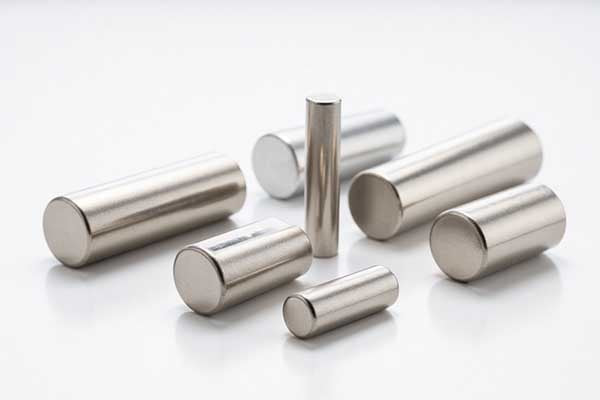
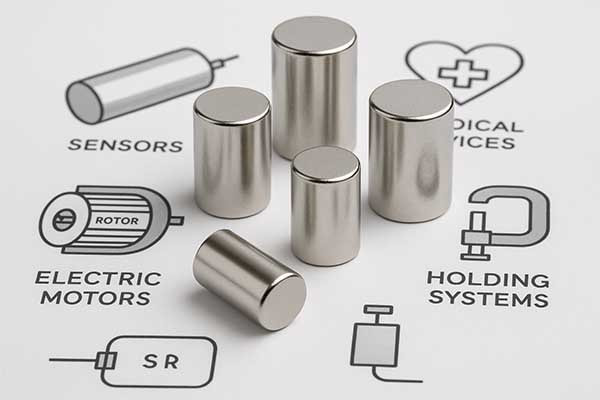
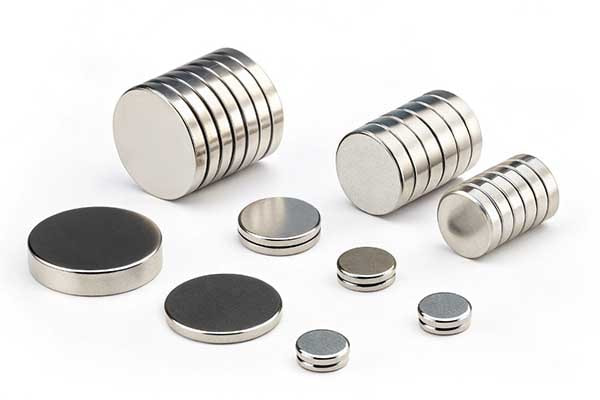
Is there a limit to how large a neodymium magnet can be?
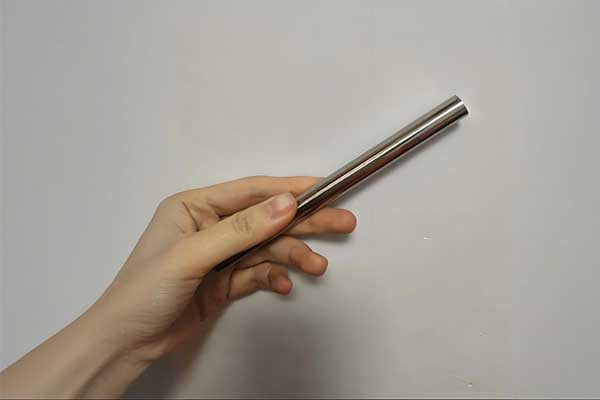
Neodymium magnets are powerful, but their size isn’t unlimited. Manufacturing constraints, material brittleness, and safety risks set practical boundaries.
Large neodymium magnets exist, but their maximum size is limited by structural fragility[1], demagnetization risks under high temperatures[2], and handling difficulties[3]. Giant neodymium magnets over 6 inches thick are rare due to cracking risks during production.
Want to know how size affects strength? Let’s explore the key factors below.
Table of Contents
Are larger magnets stronger?
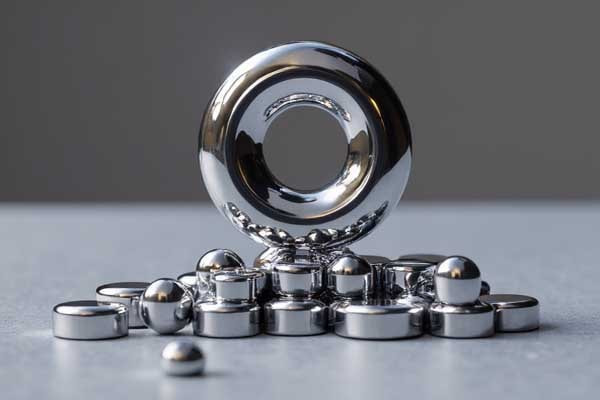
Bigger neodymium magnets usually have higher pull force, but strength doesn’t scale linearly with size. Thicker magnets resist demagnetization better, while wider ones increase surface contact.
Larger neodymium magnets often produce stronger magnetic fields[4], but their strength depends on shape and grade. A giant neodymium magnet may not outperform multiple smaller ones if its design compromises efficiency.
How Size and Shape Impact Magnet Performance
The relationship between size and strength isn’t straightforward. Here’s a comparison of key factors:
| Factor | Effect on Strength |
|---|---|
| Thickness | Increases resistance to demagnetization[5] but raises brittleness |
| Diameter/Width | Expands magnetic field coverage but may reduce field density |
| Grade (e.g., N52) | Higher grades amplify strength but require more precise sizing |
At M-Magnet, we’ve tested giant neodymium magnets up to 150mm in diameter. Beyond this, machining becomes unstable due to the material’s brittleness. Larger magnets also generate dangerous pinch hazards — handling them requires specialized tools. This ties back to the main question: physical limits exist because neodymium’s crystalline structure cracks under stress during production.
For context, the largest commercially available neodymium magnets rarely exceed 10kg. While a giant neodymium magnet could theoretically be made, its practical applications would be limited. Industrial setups often stack smaller magnets for safety and flexibility.
Do neodymium magnets get stronger if you stack them?
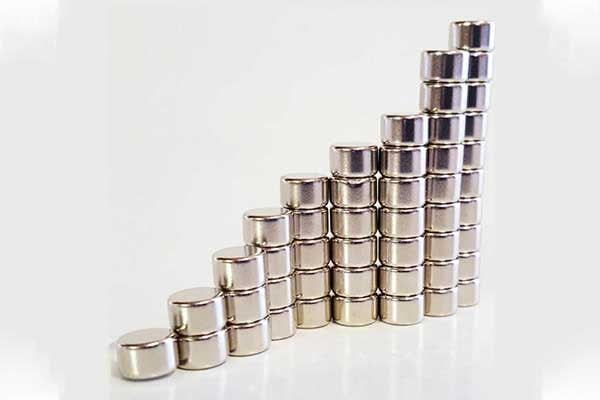
Many people wonder if putting neodymium magnets together will make them more powerful. They want to know if stacking increases the overall magnetic force.
Yes, stacking neodymium magnets generally makes the combined magnetic field stronger. When you put them together, their magnetic fields add up[6]. However, the increase in strength is not always directly proportional to the number of magnets you stack, and there are practical limits.
While it's true that combining magnets increases the magnetic field, the situation is more complex than simply adding their individual strengths together. The way the magnetic fields interact, the alignment of the magnets, and the overall magnetic circuit play significant roles.
When you stack two neodymium magnets with their north and south poles aligned, their magnetic fields reinforce each other. This results in a stronger magnetic field in the space around the stack. The increase in force you feel when trying to pull a ferromagnetic material away from the stack will be greater than with a single magnet. This principle is used in various applications where a strong, localized magnetic field is needed.
However, there are limitations and considerations. Firstly, the increase in strength is not linear. For example, stacking two identical magnets won't necessarily double the force they can exert. The magnetic field lines of each magnet interact, and some lines might not contribute as effectively to the overall external field. Secondly, the physical handling of stacked high-strength neodymium magnets becomes increasingly difficult and dangerous as the stack grows. The attractive forces between them are immense, posing a risk of pinching fingers or chipping the brittle magnet material.
Furthermore, the concept of the magnetic circuit[7] is important. In many practical applications, magnets are used in conjunction with ferromagnetic materials to focus and direct the magnetic field. Stacking magnets in such a circuit will have a different effect than stacking them in free space. The saturation of the ferromagnetic materials in the circuit can limit the extent to which adding more magnets increases the overall performance.
From our experience at M-Magnet, designing custom magnetic solutions often involves careful consideration of the number and arrangement of magnets to achieve the desired magnetic field strength and distribution without unnecessary bulk or cost. We analyze the entire magnetic circuit to optimize performance.
Consider the following table that illustrates the general trend of increased pull force with stacked magnets, although the exact values will vary based on the size and grade of the neodymium magnets:
Approximate Relative Pull Force of Stacked Neodymium Magnets
| Number of Magnets | Relative Pull Force |
|---|---|
| 1 | 1.0x |
| 2 | 1.8x |
| 3 | 2.5x |
| 4 | 3.1x |
This table shows that while stacking increases the force, the increase per added magnet decreases. This is due to the complex interactions of the magnetic fields. Therefore, while stacking neodymium magnets does generally make them stronger, the increase is not always directly proportional, and practical limitations exist.
Is there a limit to how strong a magnet can be?
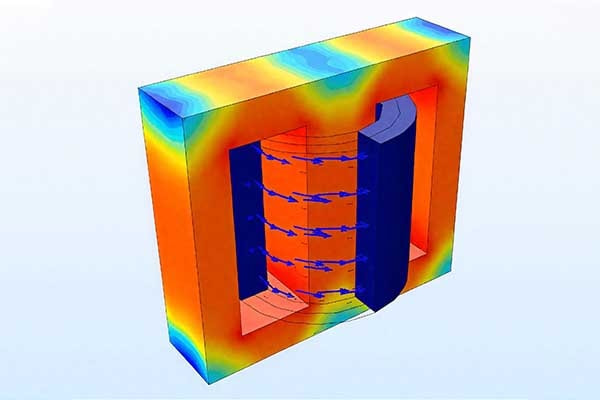
People are curious if there's a maximum possible strength for a magnet. They want to know if there are fundamental limits to how powerful a magnetic field can be created.
Yes, there is a theoretical limit to how strong a magnet can be. This limit is determined by the saturation magnetization of the magnetic material, which is the maximum magnetic moment that can be achieved per unit volume of the material. For neodymium magnets, this value is quite high, contributing to their strength.
While we consistently work with some of the strongest permanent magnets available, like neodymium magnets, it's important to understand that fundamental physical principles impose a limit on their strength.
The strength of a permanent magnet is primarily determined by its remanence (Br), which is the measure of the residual magnetic flux density in the material after the magnetizing field is removed, and its coercivity (Hc), which is the material's resistance to demagnetization[8]. Neodymium magnets possess exceptionally high remanence and coercivity[9] compared to other permanent magnet materials, which is why they are so powerful. The energy product (BHmax), which represents the maximum energy that a magnet can supply to an external magnetic circuit, is also significantly high for neodymium magnets.
However, the magnetic properties of a material arise from the alignment of the magnetic moments of its constituent atoms. Each atom has a tiny magnetic field associated with the spin and orbital motion of its electrons. In a ferromagnetic material like neodymium alloys (typically NdFeB), these atomic magnetic moments can align spontaneously within regions called magnetic domains. When an external magnetic field is applied, these domains that are aligned with the field grow at the expense of those that are not, and the magnetic moments rotate to align more closely with the field.
The saturation magnetization (Ms)[10] represents the state where all the atomic magnetic moments within the material are perfectly aligned. Once a material reaches its saturation magnetization, no further increase in an external field can increase the overall magnetization of the material. This saturation magnetization, therefore, sets a fundamental upper limit on the magnetic flux density that the material can produce. For neodymium iron boron alloys, this saturation magnetization is a physical property determined by the material's atomic structure and the magnetic moments of its constituent atoms (neodymium, iron, and boron).
While we can engineer the microstructure of the magnetic material and optimize the manufacturing processes to get as close to the theoretical limits of remanence and coercivity as possible for neodymium magnets, we cannot exceed the fundamental limit imposed by the saturation magnetization of the NdFeB alloy. The specific grade of neodymium magnet (e.g., N35, N52) indicates how close the manufactured magnet's properties are to these theoretical limits. Higher grades have higher remanence and energy products.
Furthermore, even if we could theoretically create a magnet with infinitely high remanence, the practical strength of such a magnet in a real-world application would also be limited by factors such as the geometry of the magnet and the magnetic circuit it is part of. The magnetic flux must have a closed path, and the field strength in any part of that path is governed by the overall magnetic circuit.
In specialized research settings, extremely strong magnetic fields can be generated using electromagnets, often employing superconducting coils. These fields can far exceed the strength of any permanent magnet, including neodymium magnets. However, these are not permanent magnets and require a continuous supply of electrical power to maintain their field. The physical limits for these are often related to the mechanical strength of the coil materials to withstand the immense magnetic forces involved.
Therefore, to answer the question of how strong are magnets, while neodymium magnets are incredibly powerful, their strength, like all permanent magnets, is ultimately limited by the intrinsic magnetic properties of the materials they are made from, specifically their saturation magnetization. We strive at M-Magnet to utilize the full potential of these materials in our custom magnetic solutions.
Is N52 the strongest neodymium magnet?
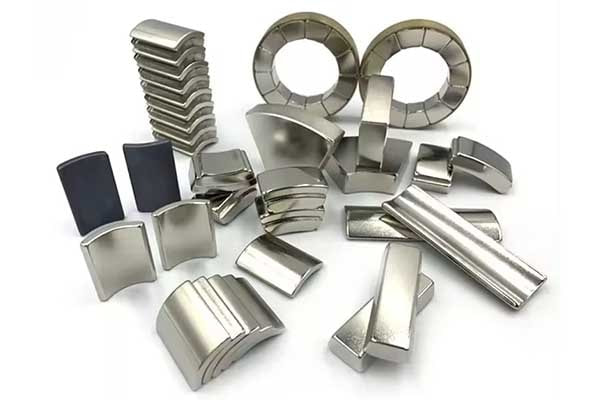
As a neodymium magnet manufacturer at M-Magnet Company, I often get asked about the strength of neodymium magnets. Is N52 the strongest neodymium magnet? This is a common question from many customers.
N52[11] is currently the strongest grade of neodymium magnets available. It offers the highest magnetic strength and is widely used in applications that require powerful magnetic fields.
Neodymium magnets are known for their incredible strength and versatility. They are used in a wide range of applications, from consumer electronics to industrial machinery. Let's dive deeper into why N52 is considered the strongest neodymium magnet and explore its applications and limitations.
Understanding Neodymium Magnet Grades[12]
| Grade | Description | Magnetic Strength |
|---|---|---|
N35 | Basic grade with moderate strength | Suitable for general applications |
N42 | Stronger than N35 | Ideal for applications requiring higher strength |
N52 | Strongest available grade | Used in high-performance applications |
Neodymium magnets come in various grades, each with different magnetic strengths[13]. The grade is determined by the magnet's maximum energy product, which is measured in units of MGOe (Mega Gauss Oersteds). The higher the grade, the stronger the magnet.
N52 is the strongest grade of neodymium magnets. It has a maximum energy product of 52 MGOe, making it the most powerful magnet available. This high strength makes N52 ideal for applications that require powerful magnetic fields, such as electric motors, generators, and high-performance speakers.
Applications of N52 Neodymium Magnets
N52 neodymium magnets are used in a variety of high-performance applications. Their high magnetic strength allows them to generate strong magnetic fields, which are essential for many modern technologies.
In electric motors, N52 magnets are used to increase efficiency and power density. This makes the motors smaller and lighter while maintaining high performance. In generators, N52 magnets help to generate more electricity with less input, making them ideal for renewable energy applications such as wind turbines.
N52 magnets are also used in high-performance speakers. Their strong magnetic fields allow for better sound quality and more efficient operation. This makes them popular in professional audio equipment and high-end consumer electronics.
Limitations and Considerations
While N52 is the strongest neodymium magnet, it also comes with some limitations. One of the main challenges is the high cost. N52 magnets are more expensive than lower-grade magnets due to their higher performance and manufacturing complexity.
Another consideration is the temperature sensitivity. Neodymium magnets, including N52, can lose their magnetic strength at high temperatures. This means that they may not be suitable for applications where the operating temperature exceeds their maximum operating temperature.
Future Developments in Neodymium Magnets
The future of neodymium magnets looks promising. Researchers are constantly working on developing new materials and manufacturing processes to improve their performance. One area of development is the creation of high-temperature neodymium magnets that can maintain their magnetic strength at higher temperatures.
Another area of research is the development of more sustainable production methods. The extraction and production of rare earth elements, such as neodymium, can have significant environmental impacts[14]. By finding ways to recycle and reuse these materials, we can help to reduce the environmental impact of neodymium magnet production.
What is the highest magnet strength?
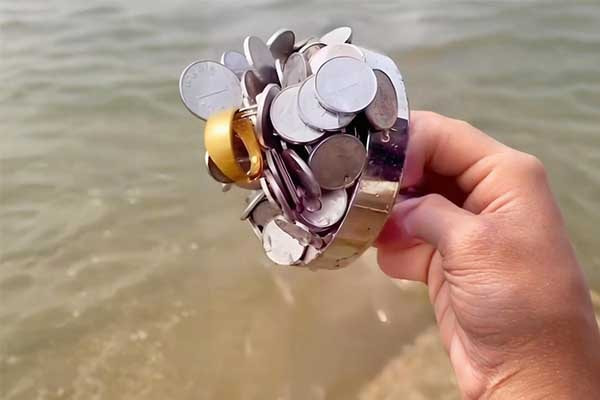
When it comes to magnet strength, the highest possible strength is a key concern for many industries. Let's break down the factors that determine magnet strength and what the strongest magnets are today.
The highest magnet strength for neodymium magnets is currently achieved with the N52 grade. This grade offers the strongest magnetic field and is used in applications that require the highest performance.
Magnetic strength is a critical factor in many applications, from consumer electronics to industrial machinery. Understanding the highest magnet strength and its implications is essential for choosing the right magnet for your needs. Let's dive deeper into the highest magnet strength and explore its applications and limitations.
Understanding Magnetic Strength
| Parameter | Description | Importance |
|---|---|---|
Magnetic Flux Density | Measures the strength of the magnetic field | Higher values indicate stronger magnets |
Maximum Energy Product | Indicates the magnet's ability to generate a magnetic field | Higher values mean more powerful magnets |
Coercivity | Measures the magnet's resistance to demagnetization | Higher values indicate more stable magnets |
Magnetic strength is measured in several ways, including magnetic flux density[15], maximum energy product, and coercivity. The highest magnet strength is achieved with the N52 grade of neodymium magnets, which offers the highest values in these parameters.
N52 magnets have a maximum energy product[16] of 52 MGOe, making them the strongest magnets available. This high strength allows them to generate powerful magnetic fields, which are essential for many modern applications.
Applications of High-Strength Magnets
High-strength neodymium magnets, such as N52, are used in a variety of applications that require powerful magnetic fields. These applications include:
Electric Motors: High-strength magnets increase efficiency and power density, making motors smaller and lighter while maintaining high performance.
Generators: High-strength magnets help to generate more electricity with less input, making them ideal for renewable energy applications such as wind turbines.
Speakers: High-strength magnets allow for better sound quality and more efficient operation, making them popular in professional audio equipment and high-end consumer electronics.
Limitations and Considerations
While high-strength magnets offer many benefits, they also come with some limitations. One of the main challenges is the high cost. High-strength magnets, such as N52, are more expensive than lower-grade magnets due to their higher performance and manufacturing complexity.
Another consideration is the temperature sensitivity. Neodymium magnets, including high-strength magnets, can lose their magnetic strength at high temperatures. This means that they may not be suitable for applications where the operating temperature exceeds their maximum operating temperature.
How to make a large magnet?

Neodymium magnets are known for their strength, but is there a limit to how large they can get? Understanding the factors that affect their size can help answer this common question.
There is a limit to how large a neodymium magnet can be, as size[17] impacts magnetic stability and manufacturing capabilities. The larger the magnet, the more challenging it becomes to maintain its strength and integrity. The properties of the materials and production methods also play significant roles.
Creating a large neodymium magnet involves various challenges, including the properties of the magnet material[18], the magnetic field's stability, and manufacturing constraints. As a manufacturer at M-Magnet, we deal with the complexities of designing large magnets regularly.
Material Considerations
Neodymium magnets are made from an alloy of neodymium, iron, and boron. The strength of these magnets depends largely on their composition and the process used to create them. As the magnet size increases, the material properties become harder to maintain, especially when trying to keep the magnet's strength intact. Larger magnets tend to experience issues like magnetic flux leakage, which reduces their effectiveness.
Manufacturing Techniques[19]
Another factor is the method of production. The process used to create neodymium magnets includes melting and casting, followed by a sintering process. For large magnets, ensuring a consistent material structure is essential. If the material's density is uneven, it can result in weak spots or failure to maintain the magnetic field's strength. Additionally, creating large magnets requires specialized equipment and technology that can handle the increased size and heat involved in the production process.
Magnetic Field Stability[20]
A significant challenge in making large neodymium magnets is the stability of the magnetic field. For smaller magnets, the magnetic field is more easily contained, but as the magnet’s size increases, the field becomes harder to stabilize. This issue is exacerbated by the fact that neodymium magnets are highly sensitive to temperature and external magnetic interference. Large magnets, therefore, often need additional support systems to maintain their field integrity.
Applications[21] and Limitations
While large magnets are possible, their application is usually limited to specialized industries that require heavy lifting or specific equipment like MRI machines and large motors. These magnets also need to be handled carefully due to their strength, which increases the risk of injury or damage to surrounding materials.
Factors Affecting Large Neodymium Magnets
| Factor | Impact on Magnet Size |
|---|---|
| Material Composition | Larger magnets are harder to maintain with consistent material properties, which can reduce strength. |
| Manufacturing Process | Larger magnets require advanced manufacturing techniques to ensure even material density and strength. |
| Magnetic Field Stability | Larger magnets are harder to stabilize, and may require additional measures to maintain a strong magnetic field. |
| Applications | Large magnets are typically used in specialized industries such as heavy machinery or MRI systems. |
Conclusion
Neodymium magnets have size limits due to material fragility and safety concerns. Larger magnets can be stronger, but their performance depends on shape, grade, and application. For extreme magnetic needs, optimized arrays of smaller magnets often outperform single giant units. At M-Magnet, we balance size and strength to deliver reliable solutions.
Note:
About Blogger
Benjamin Li
Operation Manager of M-Magnet Company
I will bring you a full range of magnet knowledge and manufacturing experience on neodymium magnets and MagSafe magnet solutions through blogs and emails. I'm not an expert yet in magnets, but we have a whole team to help you solve technical issues, design drawing details, compatibility suggestions from magnetic assemblies, magnet purchasing and many other customized magnet solutions from China. You can follow my blogs on knowledge sharing or contact me for your own magnet solutions. We will always do the best.