Why Permeability is So Important?

Magnetic permeability plays a crucial role in determining how materials interact with magnetic fields. It’s vital to understand its impact, whether you’re working with magnetic components or designing electronic devices.
Magnetic permeability[1] refers to a material’s ability to conduct magnetic lines of force[2]. A higher permeability indicates better magnetic field conduction, crucial in various industries like electronics and automotive manufacturing.
Let’s explore why permeability matters and how it affects the performance of materials.
Table of Contents
What is Magnetic Permeability?

Magnetic permeability is a fundamental property that determines how easily a material allows magnetic field lines to pass through it. The higher the permeability, the easier it is for magnetic fields to penetrate.
Permeability is expressed as a constant in the relationship between magnetic field strength and magnetic flux density. It’s a key property for designing magnetic circuits and devices like transformers and electric motors.
Magnetic permeability is typically denoted by the symbol µ and has units of henry per meter (H/m). The permeability of free space[3], known as µ₀, is approximately 4π × 10⁻⁷ H/m.
What Affects Permeability?
Magnetic permeability varies widely between materials. It’s essential to differentiate between materials that are ferromagnetic, paramagnetic, and diamagnetic. Ferromagnetic materials, like iron, have high permeability and can significantly amplify magnetic fields, while diamagnetic materials, like copper, have very low permeability.
Here’s a breakdown of how different factors affect permeability:
| Material Type | Permeability | Magnetic Behavior |
|---|---|---|
| Ferromagnetic Materials | High | Strongly attracted to magnets |
| Paramagnetic Materials | Low to Moderate | Weakly attracted to magnets |
| Diamagnetic Materials | Very Low | Weakly repelled by magnets |
Magnetic Permeability and Applications
Magnetic permeability is critical when designing magnetic components for electrical systems. For instance, high permeability materials are used in transformers to ensure efficient energy transfer. In contrast, low permeability materials are employed to minimize magnetic interference in sensitive devices.
What is the Advantage of High Permeability?

High permeability materials offer several advantages in magnetic applications, most notably their ability to guide and concentrate magnetic fields efficiently. This property is invaluable in the design of components like transformers, inductors, and magnetic shielding devices[4].
High permeability allows for better energy transfer, reduced power loss, and more efficient designs in applications requiring magnetic fields, such as motors, sensors, and power electronics.
When a material has high permeability[5], it allows the magnetic flux to pass through more easily, reducing the need for large or bulky magnetic components. This means smaller, lighter, and more efficient designs.
Practical Applications of High Permeability
Consider an application in electric motors. A high permeability material in the motor core reduces energy losses[6] by allowing more efficient magnetic field propagation. This leads to better overall motor efficiency and lower operating temperatures. In industries like automotive or renewable energy, reducing power losses is crucial for performance and longevity.
Similarly, in transformers, the high permeability of the core material allows for the effective transfer of electrical energy between coils. Without high permeability, transformers would require more coils, leading to larger and less efficient designs.
How to Measure Magnetic Permeability?

Measuring magnetic permeability involves determining how much magnetic field a material can support under a given external magnetic field strength. This can be done using several methods, including the use of specialized equipment like a vibrating sample magnetometer or a permeameter.
Magnetic permeability can be measured using a variety of instruments, with the most common being a permeameter. The test involves applying a known magnetic field and measuring the response of the material.
The measurement of permeability is essential in materials science, especially when designing components that require precise magnetic field control, such as inductors, transformers, and magnetic sensors.
Methods of Measuring Permeability
There are two main methods for measuring permeability: the open-loop and closed-loop methods. In the open-loop method, a sample is placed in a magnetic field, and the field strength and flux density are measured. In contrast, the closed-loop method uses a ring of material to measure the flux density directly.
Here’s a comparison of the two methods:
| Method | Procedure | Advantages |
|---|---|---|
| Open-Loop Method | Measures flux density in an open setup | Quick and simple, suitable for rough measurements |
| Closed-Loop Method | Uses a closed ring of material to measure permeability | More accurate and suitable for precise measurements |
Difference Between Magnetic Permeability and Susceptibility?
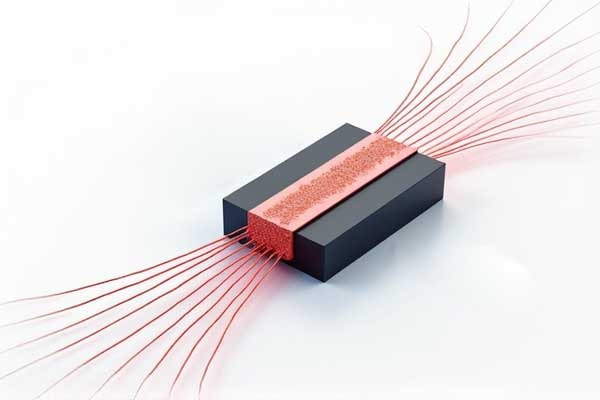
Magnetic permeability and magnetic susceptibility are related but distinct concepts. Permeability refers to the material’s ability to support the magnetic field, while susceptibility[7] refers to how much the material will magnetize in response to the applied magnetic field.
Permeability indicates a material’s overall response to magnetic fields, while susceptibility measures the degree to which a material will become magnetized under an external magnetic field.
Magnetic susceptibility is often used to categorize materials as ferromagnetic, paramagnetic, or diamagnetic[8], based on how they respond to a magnetic field.
Permeability vs. Susceptibility – The Connection
The two properties are linked through the equation:
[ \mu = \mu_0 (1 + \chi) ]
Where:
-
( \mu ) is the permeability of the material,
-
( \mu_0 ) is the permeability of free space,
-
( \chi ) is the magnetic susceptibility.
Thus, permeability is directly influenced by the material’s susceptibility. However, while susceptibility is a dimensionless quantity, permeability has the units of H/m, making it a more practical property for engineering applications.
What’s the Permeability of Soft Magnetic Materials?

Soft magnetic materials are those that can be easily magnetized and demagnetized. They typically have high permeability, making them ideal for use in applications like transformers and electric motors, where frequent changes in the magnetic field occur.
Soft magnetic materials have high permeability, allowing them to easily respond to and conduct magnetic fields. This makes them ideal for dynamic applications such as motors and magnetic shielding.
The high permeability of soft magnetic materials like iron allows them to efficiently channel magnetic flux, leading to more compact and efficient designs in electrical components.
Soft Magnetic Materials and Their Uses
Soft magnetic materials, such as silicon steel[9], are widely used in electric transformers, inductors, and electric motor cores. In these applications, their high permeability ensures that the magnetic field can efficiently transfer energy, minimizing losses and improving performance.
Here’s a brief comparison of common soft magnetic materials[10]:
| Material | Permeability (μ) | Application |
|---|---|---|
| Silicon Steel | High | Used in transformers and motors |
| Soft Iron | Very High | Used in magnetic shielding and inductors |
| Permalloy | Very High | High-performance magnetic applications |
What’s the Permeability of Hard Magnetic Materials?
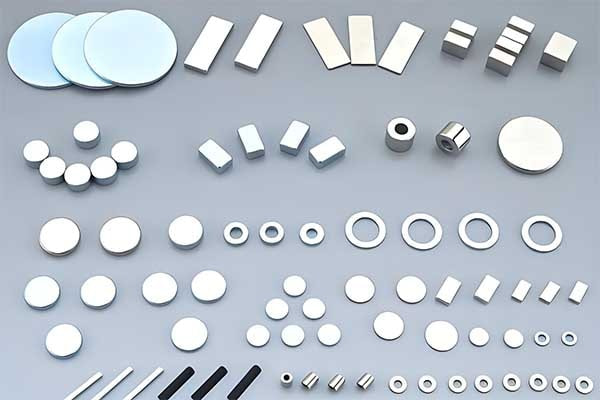
Hard magnetic materials, such as rare-earth magnets, have low permeability but retain their magnetization over time. These materials are crucial for applications requiring stable and long-lasting magnetic fields, such as in permanent magnets.
Hard magnetic materials have low permeability but possess strong, stable magnetic properties, making them ideal for permanent magnets and data storage devices.
Their unique properties allow them to generate strong magnetic fields that remain constant over long periods, making them perfect for applications like motors, sensors, and data storage devices.
Hard Magnetic Materials and Their Applications
Unlike soft magnetic materials, which are used for applications requiring frequent magnetization changes, hard magnetic materials are designed for stability. For example, neodymium magnets[11], with their strong and stable magnetic properties, are used in everything from electric vehicle motors to high-performance loudspeakers.
Here’s a comparison of common hard magnetic materials[12]:
| Material | Permeability (μ) | Magnetic Stability | Application |
|---|---|---|---|
| Neodymium (NdFeB) | Low | Very High | Permanent magnets in motors, sensors, etc. |
| Samarium-Cobalt (SmCo) | Low | High | Precision motors and aerospace applications |
Conclusion
Magnetic permeability is a key property that influences the behavior and performance of materials in magnetic applications. Whether you’re working with soft or hard magnetic materials, understanding permeability is essential for designing efficient and effective systems. As a manufacturer of neodymium magnets, we know how crucial permeability is in ensuring high-performance products that meet the demands of industries like electronics, automotive, and renewable energy.
Note:
About Blogger
Benjamin Li
Operation Manager of M-Magnet Company
I will bring you a full range of magnet knowledge and manufacturing experience on neodymium magnets and MagSafe magnet solutions through blogs and emails. I'm not an expert yet in magnets, but we have a whole team to help you solve technical issues, design drawing details, compatibility suggestions from magnetic assemblies, magnet purchasing and many other customized magnet solutions from China. You can follow my blogs on knowledge sharing or contact me for your own magnet solutions. We will always do the best.