If I melt a bar magnet, what will happen to its poles?
If I melt a bar magnet, what will happen to its poles?
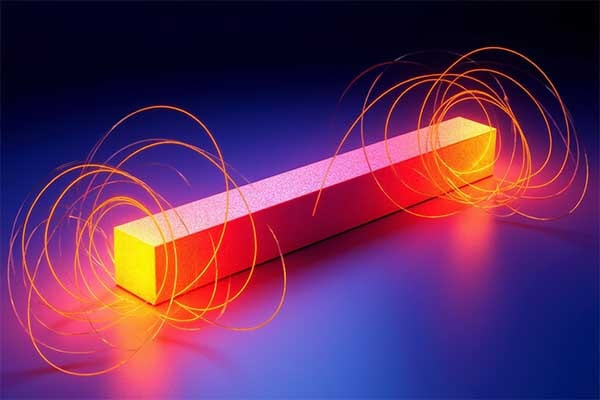
A bar magnet’s poles hold strong magnetic forces, but what happens if you melt it? The problem is that heat disrupts the magnet’s internal order, causing loss of magnetism.
Melting a bar magnet destroys its poles because heating above the Curie temperature breaks down the magnetic domains. The magnet loses its ferromagnetic properties and becomes non-magnetic. When cooled, the original poles do not return automatically.
Keep reading to understand why melting affects magnetism and what bar magnets are used for.
Table of Contents
What can a bar magnet be used for?
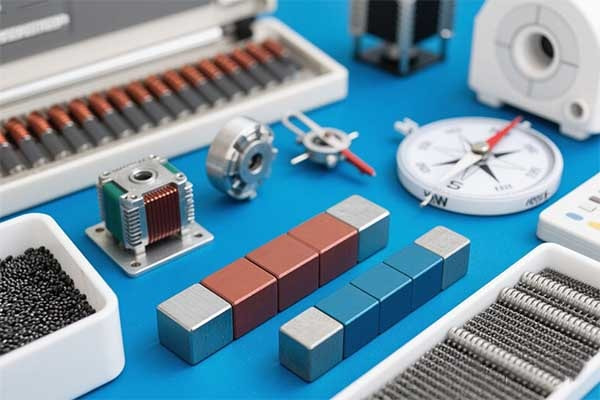
Bar magnets are common tools in many fields, but what exactly do they do?
Bar magnets are used in compasses, educational demonstrations, electric motors, generators, magnetic separation, and medical devices like MRI machines. Their magnetic field attracts ferromagnetic materials and helps convert energy in motors.
Magnetic bars have many uses, but to understand why melting affects their poles, we need to dive deeper into how their magnetism works.
Why do bar magnets lose magnetism when melted
When a bar magnet is heated beyond a certain point, called the Curie temperature, the heat causes the magnetic domains inside the magnet to lose their alignment. This alignment is what creates the magnet’s poles and magnetic field. Without it, the magnet becomes paramagnetic, meaning it no longer has permanent magnetism.
What is the Curie temperature
The Curie temperature is the point where a ferromagnetic material loses its permanent magnetic properties due to thermal agitation disrupting the magnetic domains. For iron, this temperature is around 770°C (1420°F). When melted, the magnet’s structure breaks down completely, destroying its poles.
Magnetic Properties of Bar Magnets Before and After Melting
| Property | Before Melting | After Melting |
|---|---|---|
| Magnetic Domains | Well-aligned | Disrupted, random |
| Magnetic Poles | Stable north and south | No poles |
| Magnetism | Permanent ferromagnetism | Paramagnetic or non-magnetic |
Can magnetism be restored after melting
Once melted, the original magnetic alignment is lost. Cooling alone does not restore the poles unless the material is re-magnetized by applying an external magnetic field below the Curie temperature. This is why melting a magnetic bar effectively destroys its poles permanently unless reprocessed.
How does melting affect different types of magnets
Neodymium magnets, often used in high-strength applications, also lose magnetism when heated above their Curie temperature. Unlike steel, which can regain some magnetism when cooled, neodymium magnets usually do not recover after melting. This is important for manufacturers and users of magnets in technology and industry.
Melting magnets is a destructive process for their magnetic properties. The term "melting magnets" refers to this loss of magnetism due to heat, which is why magnets must be handled carefully in high-temperature environments.
What are the advantages of a bar magnet?

Engineers need reliable magnetic solutions for countless applications. They struggle to find magnets that offer both simplicity and consistent performance. Bar magnets provide answers to these challenging design requirements.
Bar magnets offer several key advantages including simple rectangular geometry, predictable magnetic field patterns, easy manufacturing processes, and versatile mounting options. Their straightforward design enables cost-effective production while delivering reliable magnetic strength for industrial applications, scientific experiments, and consumer products.
The fundamental advantages of bar magnets stem from their geometric simplicity and magnetic field characteristics that have proven valuable across diverse applications. When examining the relationship between magnet shape and functionality, magnetic bars demonstrate unique properties that distinguish them from other magnetic configurations like horseshoe, ring, or disc magnets.
Bar magnets produce highly predictable magnetic field patterns that engineers can calculate and model with exceptional accuracy. The magnetic field lines emerge from the north pole, curve around the magnet's exterior, and return to the south pole. This predictable behavior enables precise design calculations for applications ranging from simple compass needles to complex magnetic separation systems.
Bar Magnet Advantages Comparison
| Advantage Category | Bar Magnet | Disc Magnet | Ring Magnet |
|---|---|---|---|
| Manufacturing Simplicity | Excellent | Good | Complex |
| Field Predictability | High | Medium | Specialized |
| Mounting Options | Versatile | Limited | Specialized |
| Cost Effectiveness | High | Medium | Low |
The manufacturing advantages of bar magnets make them particularly attractive for large-scale production. Their rectangular geometry requires simple tooling and straightforward machining processes. Dies for pressing magnetic powder into bar shapes cost significantly less than complex curved or hollow geometries. This manufacturing simplicity translates directly into lower production costs and faster delivery times for customers.
M-Magnet specializes in producing high-quality small bar magnets for diverse applications across American and European markets. The company leverages advanced manufacturing techniques to create bar magnets with precise dimensions and consistent magnetic properties that meet demanding industrial specifications.
Mounting versatility represents another significant advantage of bar magnets. Their flat surfaces provide excellent contact areas for adhesive bonding, mechanical fastening, or magnetic holding applications. Engineers can easily incorporate bar magnets into assemblies using standard hardware and mounting techniques. The rectangular shape allows for efficient space utilization in compact designs.
Educational and research applications benefit tremendously from bar magnet characteristics. Students can easily visualize magnetic field patterns using iron filings around bar magnets. The clear definition of north and south poles helps demonstrate fundamental magnetic principles. Research laboratories use small bar magnets as reference standards for field strength measurements and magnetic property testing.
Industrial separation systems frequently employ bar magnets for their ability to create strong, focused magnetic fields. Food processing equipment uses bar magnets to remove ferrous contamination from product streams. Mining operations utilize bar magnet arrays to separate valuable minerals from waste materials. The predictable field patterns enable efficient separator design and optimization.
The thermal stability of bar magnets varies based on their material composition and manufacturing process. Neodymium bar magnets maintain strong magnetic fields at room temperature but require careful temperature management in high-heat applications. Ferrite bar magnets offer better temperature resistance but with lower magnetic strength. This relationship between magnet geometry and pole behavior becomes critical when considering what happens if you melt a bar magnet.
Quality control processes for bar magnets benefit from their simple geometry. Dimensional measurements can be performed quickly using standard measuring tools. Magnetic field testing requires minimal setup compared to complex magnet shapes. Surface quality inspection proceeds efficiently along flat surfaces. These advantages reduce production costs while ensuring consistent product quality.
Inventory management becomes simplified with bar magnets due to their stackable design and standard dimensions. Warehouses can store large bar magnets efficiently in organized arrays. Shipping costs remain minimal due to optimized packing densities. Customers appreciate the predictable dimensions that facilitate design planning and procurement processes.
What happens if you break a bar magnet into two pieces?
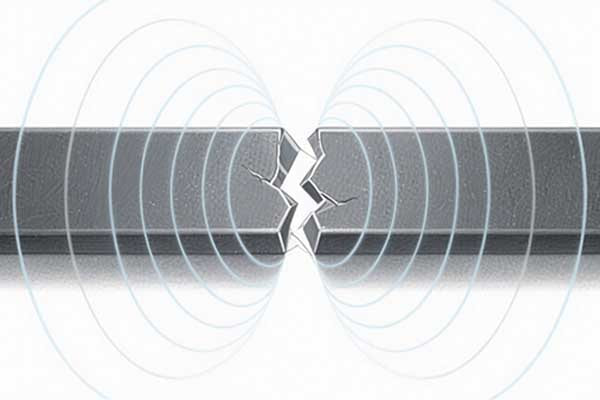
Scientists and engineers encounter situations where magnets break unexpectedly during handling or operation. They need to understand the magnetic behavior of broken magnet pieces. This knowledge helps predict equipment performance and safety considerations.
When you break a bar magnet into two pieces, each piece becomes a complete magnet with its own north and south poles. The magnetic domains within each piece reorganize to create new pole pairs. Breaking a magnet never creates isolated magnetic poles, as each fragment maintains magnetic dipole characteristics regardless of size.
The phenomenon of magnetic pole reformation after breaking a large bar magnet reveals fundamental principles about magnetic domain structure and behavior. This process demonstrates why isolated magnetic monopoles do not exist in everyday magnetic materials and illustrates the atomic-level organization that creates macroscopic magnetic effects.
Magnetic domains within bar magnets consist of regions where atomic magnetic moments align in the same direction. When a large bar magnet breaks, the domains near the fracture surface reorganize to minimize magnetic energy. This reorganization creates new north and south poles at the broken ends, ensuring each piece maintains complete magnetic dipole characteristics.
Effects of Breaking Bar Magnets
| Break Location | Piece 1 Poles | Piece 2 Poles | Total Magnetic Force |
|---|---|---|---|
| Center Break | N-S | N-S | Slightly Reduced |
| Quarter Break | N-S (Weak) | N-S (Strong) | Moderately Reduced |
| End Break | N-S (Very Weak) | N-S (Very Strong) | Significantly Reduced |
The strength of magnetic poles in broken pieces depends on the volume of magnetic material and the distribution of magnetic domains within each fragment. Larger pieces typically exhibit stronger magnetic fields than smaller pieces because they contain more aligned magnetic domains. However, the total magnetic strength of both pieces combined remains slightly less than the original unbroken magnet due to energy lost during the breaking process.
Domain wall movement plays a crucial role in pole reformation after magnet breakage. These boundaries between differently oriented magnetic domains shift to accommodate the new small bar magnet geometry. The process occurs rapidly, creating new poles within microseconds of the break. Understanding this behavior helps predict how broken magnets will behave in practical applications.
The fracture surface characteristics influence the magnetic properties of broken magnet pieces. Clean breaks through crystalline structures typically produce stronger magnetic fields than rough fractures that disrupt domain alignment. Manufacturing processes that create more uniform grain structures result in more predictable magnetic behavior after breakage.
Temperature effects become important when considering broken magnet behavior. The mechanical stress of breaking can generate localized heating that temporarily reduces magnetic strength near the fracture. This thermal effect usually reverses as the material cools, but extreme stress fractures can create permanent demagnetization zones near broken surfaces.
M-Magnet conducts extensive testing on magnet failure modes to understand how their products behave under various stress conditions. This research helps customers design safer and more reliable systems that account for potential large bar magnet breakage scenarios.
Material composition significantly affects the magnetic behavior of broken pieces. Neodymium magnets maintain strong magnetic fields in small fragments due to their high energy density. Ferrite magnets show more dramatic strength reduction in small pieces because of their lower magnetic energy product. Samarium cobalt magnets exhibit intermediate behavior with good retention of magnetic properties in broken pieces.
The interaction between broken magnet pieces creates interesting magnetic phenomena. When brought together, the small bar magnet pieces attempt to realign and rejoin along their original break line. The newly formed poles at the break surfaces create attractive forces that can make reassembly appear automatic. However, the fracture surface irregularities prevent perfect realignment and magnetic field restoration.
Safety considerations become important when handling broken magnets, particularly with strong neodymium materials. Sharp edges at fracture surfaces can cause cuts during handling. Small magnetic fragments pose ingestion hazards if not properly contained. The unexpected magnetic forces between broken pieces can cause pinching injuries during cleanup procedures.
Quality control testing for magnet brittleness helps predict break behavior and prevent unexpected failures. Drop tests simulate handling stresses that could cause breakage. Thermal cycling tests reveal how temperature changes affect magnet integrity. These tests help manufacturers like M-Magnet develop magnets with improved durability and predictable failure modes.
The relationship between magnet breaking and melting involves similar principles of magnetic domain reorganization. When considering what happens if you melt a bar magnet, the atomic structure becomes completely disrupted, unlike the localized reorganization that occurs during mechanical breaking. This distinction helps explain why broken magnets retain their magnetic properties while melted magnets lose them entirely.
Recycling considerations for broken magnets vary based on their material composition and intended applications. Neodymium magnet fragments retain significant value for reprocessing into new magnets. Ferrite pieces typically undergo crushing and remelting for incorporation into new ceramic magnets. The economic viability of recycling depends on the size and purity of the broken pieces.
What is the difference between a bar magnet and a horseshoe magnet?
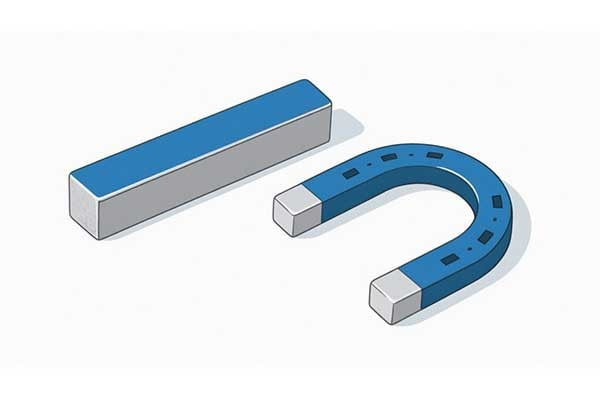
Many confuse bar and horseshoe magnets. Misunderstanding their designs leads to wrong applications. Knowing their differences helps you choose the right magnet.
Bar magnets are straight with poles at opposite ends, ideal for simple applications. Horseshoe magnets are U-shaped, bringing poles close together for stronger magnetic fields. Both are used in industry, but horseshoe magnets suit tasks needing concentrated force, like in motors.
Understanding Bar Magnet Design
Bar magnets are simple. They are long, straight, and have a north pole at one end and a south pole at the other. This design creates a magnetic field that loops from one pole to the other. Bar magnets are common in schools for experiments. They are also used in sensors and basic industrial tools. At M-Magnet Company, we produce neodymium bar magnets for clients in America and Europe. Their straightforward design makes them easy to handle.
Exploring Horseshoe Magnet Structure
Horseshoe magnets are different. They are bent into a U-shape, so the north and south poles are close together. This creates a strong magnetic field between the poles. Horseshoe magnets are used in applications needing focused magnetic force, like electric motors or magnetic clamps. The design allows them to hold heavier objects. However, they are harder to store because the poles attract metal objects easily.
Critical Thinking: Choosing the Right Magnet
Which magnet is better? It depends on the task. Bar magnets are versatile for general use, like in compasses or fridge magnets. Horseshoe magnets excel in specific applications, like lifting metal or in scientific experiments. Consider the melting question from the topic. Melting a bar magnet destroys its magnetic domains, removing its poles. Horseshoe magnets behave the same when melted, as heat disrupts their structure.
| Magnet Type | Shape | Pole Position | Common Uses |
|---|---|---|---|
| Bar Magnet | Straight | Opposite ends | Sensors, compasses |
| Horseshoe Magnet | U-shaped | Close together | Motors, lifting tools |
Practical Considerations
Bar magnets are easier to manufacture, keeping costs low. Horseshoe magnets require precise shaping, increasing production time. For custom solutions, horseshoe magnets offer unique benefits but need careful design. Both types use rare metals like neodymium for strength. Supply chain issues for rare metals can affect pricing. Investors in magnet technology must watch these trends. The choice between bar and horseshoe magnets impacts efficiency and cost in real-world applications.
Do all bar magnets have the same strength?
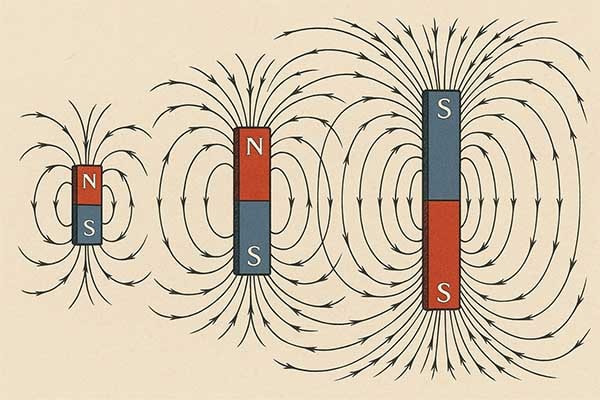
People assume all bar magnets are equally strong. Using the wrong magnet wastes time and money. Understanding strength differences ensures better choices.
Bar magnets do not have the same strength. Strength depends on material, size, and magnetization. Neodymium bar magnets are stronger than ferrite ones. Larger magnets and higher magnetization increase force, suiting specific industrial needs.
Factors Affecting Magnet Strength
Not all bar magnets are equal. Material is a key factor. Neodymium magnets, made from rare metals, are the strongest. Ferrite magnets are weaker but cheaper. Size also matters. A larger bar magnet holds more magnetic domains, increasing its force. Magnetization level is another factor. Stronger magnetization aligns domains better, boosting strength.
Material and Supply Chain Impacts
Neodymium magnets rely on rare metals, which face supply challenges. China dominates production, controlling 80% of the market. This creates risks for price volatility. Ferrite magnets avoid this issue but lack the power for advanced uses. Investors in magnet technology must consider these dynamics. Recycling rare metals is a growing solution, but it’s not yet widespread. These factors influence the strength and cost of bar magnets in the market.
Critical Thinking: Matching Strength to Application
Why does strength matter? A weak magnet fails in demanding tasks, like holding heavy machinery parts. A too-strong magnet can be unsafe or costly. For example, melting a bar magnet, as asked in the topic, destroys its strength. Heat above the Curie temperature (about 310°C for neodymium) randomizes magnetic domains, erasing poles. Choosing the right strength involves trade-offs. Neodymium offers power but at a higher cost. Ferrite is budget-friendly but less effective.
| Material | Strength Level | Cost | Common Applications |
|---|---|---|---|
| Neodymium | High | High | Motors, sensors |
| Ferrite | Low | Low | Fridge magnets, speakers |
Strategic Investment in Magnet Technology
Strength differences drive investment decisions. Neodymium magnets are in demand for electric vehicles and renewable energy. Their reliance on rare metals makes supply diversification critical. New mining projects in Australia and Canada aim to reduce China’s dominance. Recycling could lower costs long-term. Investors must balance strength needs with market risks. Stronger magnets improve efficiency but require stable supply chains. Our work at M-Magnet Company focuses on delivering reliable, high-strength solutions for global clients.
What happens if you hang a bar magnet freely in the air?

A bar magnet hung freely can rotate without limits. The problem is that it will always settle in a specific direction due to Earth's magnetic forces.
A freely suspended bar magnet aligns itself along the Earth's magnetic field, pointing its north pole toward the geographic north and its south pole toward the geographic south. This happens because magnetic poles have directionality and interact with Earth's magnetic poles.
When you hang a bar magnet from a string or a non-magnetic wire, it can rotate freely. The magnet experiences forces from Earth's magnetic field. The north pole of the magnet is attracted to the Earth's magnetic south pole, which is near the geographic north, and vice versa for the south pole. This causes the magnet to align itself along the north-south axis.
How does Earth's magnetic field affect a suspended bar magnet
Earth acts like a giant magnet with two poles near the geographic poles. The magnetic field lines run from the magnetic south pole (near geographic north) to the magnetic north pole (near geographic south). The bar magnet's poles interact with these lines. The north pole of the magnet is attracted to Earth's magnetic south pole, causing the magnet to rotate until it aligns north-south.
Why do magnetic poles have directionality
Magnetic poles always come in pairs: a north and a south. Each pole has a property called directionality, meaning the north pole will always seek the Earth's geographic north direction, and the south pole seeks the geographic south. This property explains why a freely suspended magnet always points north-south.
Magnet-Earth Magnetic Interaction
| Magnet Pole | Attracted To | Geographic Direction |
|---|---|---|
| North Pole | Earth's Magnetic South Pole | Geographic North |
| South Pole | Earth's Magnetic North Pole | Geographic South |
What practical uses come from this property?
This alignment property allows bar magnets to serve as compasses. Travelers and navigators use freely suspended magnets to find directions. The magnet’s north pole points toward geographic north, helping users orient themselves. This simple principle is the foundation of magnetic compasses and navigation tools.
How does this relate to melting magnets?
Understanding how a bar magnet behaves when freely suspended highlights the importance of magnetic poles and their directionality. When magnets melt, their poles and magnetic domains break down, losing this directional property. This shows why maintaining the magnet’s structure is vital for applications like compasses or magnetic sensors. For manufacturers like M-Magnet, preserving magnetic properties during production is crucial.
The behavior of freely suspended magnets illustrates the fundamental principles that also explain why melting magnets lose their poles and directionality. This connection is key for both scientific understanding and industrial applications.
Conclusion
Melting a bar magnet breaks down its internal magnetic domains, causing it to lose its poles and permanent magnetism. The Curie temperature is the key threshold where this happens. After melting, the magnet becomes non-magnetic unless re-magnetized. Understanding this helps in applications where magnets face heat and guides manufacturers like M-Magnet Company in producing durable magnetic solutions.
About Blogger
Benjamin Li
Operation Manager of M-Magnet Company