How to directly invest in rare earth metals like neodymium?
Investing directly in rare earth metals can be confusing due to their complex market and limited physical trading options. Many investors face challenges finding clear paths to invest in these critical materials.
Rare earth metals, including neodymium, are essential for modern technology but cannot be bought physically on exchanges. The most direct investment methods involve buying shares in mining companies or ETFs that focus on rare earth production. These provide exposure to the market without owning the metals themselves.
Keep reading to discover how to invest directly in rare earth metals like neodymium.
Table of Contents
Why are rare earth metals so valuable?

Rare earth metals are vital for many modern technologies but are difficult to extract and process, making them highly valuable despite their relative abundance.
Rare earth metals are critical due to their unique magnetic, optical, and chemical properties. They are used in electronics, renewable energy, and defense, which drives high demand. Their extraction is complex and environmentally challenging, adding to their value.
The value of rare earth metals comes from both their physical properties and the difficulties in sourcing them sustainably and securely.
The Value Drivers Behind Rare Earth Metals
Rare earth metals, including neodymium, owe their value to a combination of scientific, economic, and geopolitical factors.
Unique Properties and Applications
Rare earth elements have special electron configurations that give them exceptional magnetic and luminescent properties. For example, neodymium is used to make super-strong permanent magnets essential in electric vehicles, wind turbines, and consumer electronics. These magnets are smaller and more efficient than alternatives, which makes neodymium irreplaceable in many applications.
Supply Constraints and Geopolitical Risks
Though rare earth metals are more abundant in the Earth’s crust than gold or silver, they rarely occur in concentrated deposits suitable for economical mining. Extracting and refining these metals require significant technical effort and environmental management. Currently, China dominates global production, controlling about 80% of the supply chain. This concentration creates geopolitical risks, as trade restrictions or political tensions can disrupt supply and cause price volatility.
Environmental and Economic Challenges
Mining rare earth metals often involves environmental risks such as water pollution and habitat destruction. These concerns have led to stricter regulations and higher extraction costs, which increase the metals' market value. Additionally, recycling efforts and new mining technologies, including deep-sea mining, are emerging but face technical and environmental hurdles.
Key Rare Earth Metals and Their Uses
| Metal | Primary Use | Importance |
|---|---|---|
| Neodymium | Permanent Magnets | High demand in EVs and electronics |
| Dysprosium | Magnets & Steel Alloys | Improves magnet heat resistance |
| Europium | Lighting & Displays | Critical for color in screens |
Critical Reflection
While rare earth metals are indispensable, the market's complexity means investors must understand that owning shares in mining companies or ETFs exposes them to company performance and geopolitical risks rather than the metals' spot prices directly. Environmental concerns also challenge sustainable supply growth. Therefore, investors should balance potential returns with these risks and consider diversification strategies.
Is neodymium running out?
Neodymium demand is rising fast due to clean energy and electronics. It is abundant in the Earth's crust but is difficult to extract economically.
Neodymium is not running out globally, but supply faces pressure from growing demand, geopolitical risks, and mining limitations. While reserves exist, supply chain disruptions and processing capacity bottlenecks create periodic shortages.
Supply Stability vs. Demand Pressure in Neodymium Resources
Neodymium is a critical component in permanent magnets, especially those used in wind turbines, electric vehicles, and consumer electronics. As nations adopt greener technologies, the demand for neodymium magnets continues to rise. This has caused concern about potential depletion or long-term availability. However, global reserves of neodymium are still substantial, with significant deposits in China, the United States, Australia, and other regions.
The real challenge is not the absolute amount of neodymium but the concentration and refinement of ores containing it, such as bastnäsite and monazite. Neodymium is not extracted on its own—it is separated from a mix of rare earth elements, a process that requires advanced technology and comes with environmental costs. Many countries lack the infrastructure to do this efficiently.
China controls the majority of the global supply chain for rare earth elements, including neodymium. This dominance creates vulnerabilities. Any changes in export policy, domestic consumption, or geopolitical friction may lead to international supply chain constraints. For example, during trade disputes or pandemic-related shutdowns, prices and availability of neodymium magnets can fluctuate dramatically.
At M-Magnet, our manufacturing uses a stable supply chain to ensure high production continuity of neodymium-based magnetic products. But global-scale investment and recycling efforts will be required to prevent future shortages or over-dependence on single regions.
Global Neodymium Supply Status
| Country | Estimated Reserves (Tons) | Primary Role |
|---|---|---|
| China | 44 million | Producer & Refiner |
| United States | 2.3 million | Mining |
| Australia | 4 million | Exporting raw ores |
The neodymium supply is also being supplemented by new mining projects, especially in Africa and Southeast Asia. Recycling efforts from used electronics and magnets are also growing. However, refining capacity and material purity remain bottlenecks.
The long-term answer lies in diversified supply, advanced processing, and recycling innovations—especially as demand for permanent magnets in energy and defense sectors continues to climb.
What is the most abundant rare earth metal in the world?

Different rare earths occur in different concentrations, but not all are equally in demand.
Cerium is the most abundant rare earth element in the world. It makes up about 50% of rare earth oxide content in most deposits and is widely used in catalytic converters, glass polishing, and metal alloys.
Cerium Abundance vs. Market Use and Relevance to Neodymium
Rare earth elements (REEs) include 17 elements, but their abundance and economic value vary. Cerium (Ce) is the most abundant and most mined rare earth. It is commonly found in bastnäsite and monazite ores. Cerium is often a byproduct during the production of more valuable rare earths like neodymium, which is essential for permanent magnets used in clean energy and electronics.
Cerium is useful in industry but is much less critical than neodymium. Its applications include catalytic converters in vehicles, additives in glass and ceramics, and as an oxidizing agent in chemical reactions. Because of its wide availability, cerium is not usually the limiting factor in rare earth mining projects.
In contrast, neodymium makes up a smaller portion of total REE deposits but drives the majority of economic interest. This mismatch creates a surplus of cerium and a shortage of neodymium when demand spikes—especially in sectors relying on neodymium magnets.
Companies like M-Magnet specialize in neodymium-based products due to their powerful magnetic strength and consistent demand. While cerium is abundant, it cannot replace neodymium’s role in motors, wind turbines, and high-precision equipment.
Comparison of Rare Earth Element Abundance
| Element | Relative Abundance (%) | Primary Application |
|---|---|---|
| Cerium (Ce) | ~50% | Catalysts, glass polishing |
| Neodymium (Nd) | ~17% | Permanent magnets |
| Lanthanum (La) | ~20% | Battery alloys |
Even though cerium is the most abundant, its surplus has limited economic value. Investments and industrial strategies remain focused on less abundant but more critical elements like neodymium. Understanding this distinction helps guide both mining efforts and end-use applications—especially in sectors requiring high-efficiency permanent magnets.
What is the rarest element in the universe?
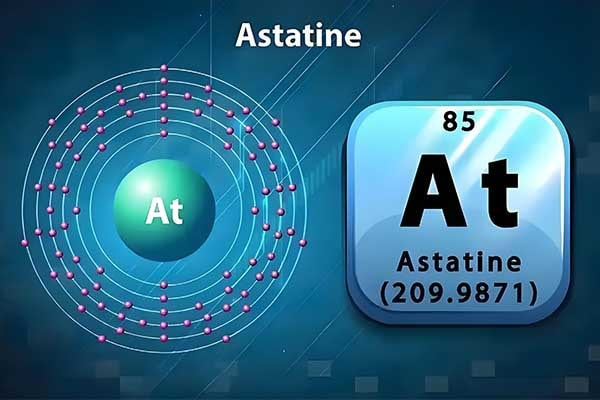
Many people wonder which element is the rarest and why it is so hard to find. This can confuse investors interested in rare metals.
Astatine is the rarest naturally occurring element on Earth. It exists only in tiny amounts due to its short half-life and continuous decay, making it almost impossible to collect in usable quantities.
Why Astatine Is the Rarest Element and Its Implications
Astatine is extremely rare because it is highly unstable. It has an atomic number of 85 and exists only as short-lived isotopes produced by radioactive decay of heavier elements like uranium and thorium. At any moment, less than one gram of astatine is estimated to be present on Earth’s crust. This rarity is not due to scarcity in the universe but due to its rapid decay and ephemeral nature.
Scientific and Practical Context
Astatine’s isotopes have half-lives ranging from seconds to hours, which means any sample quickly disintegrates into other elements. This instability prevents astatine from accumulating in nature or being mined like other elements. Its rarity contrasts with rare earth metals, which are relatively abundant but hard to extract in pure form.
Impact on Investment and Industry
Since astatine cannot be stored or traded, it has no commercial mining or investment market. This differs greatly from rare earth metals like neodymium, which have stable isotopes and critical industrial uses, especially in magnets and electronics. Investors should note that rarity alone does not create a viable market; stability and applications matter more.
Comparison of Rarest Elements and Their Characteristics
| Element | Atomic Number | Natural Abundance | Stability | Commercial Use |
|---|---|---|---|---|
| Astatine | 85 | < 1 gram on Earth | Highly unstable | None |
| Neodymium (Rare Earth) | 60 | 41.5 ppm in crust | Stable | Magnets, electronics |
| Gold | 79 | 0.004 ppm in crust | Stable | Jewelry, investment |
The rarity of astatine highlights how not all rare elements can be invested in or used commercially. This contrasts with rare earth metals like neodymium, which are less rare but crucial for industry and investment.
Is gold a rare earth metal?

Many confuse gold with rare earth metals due to its high value and rarity. Clarifying this helps investors understand the different markets.
Gold is not a rare earth metal. It is a precious metal with distinct chemical properties and uses, mainly in jewelry, finance, and electronics, unlike rare earth metals which are a group of 17 elements used mainly in high-tech applications.
Differences Between Gold and Rare Earth Metals
Gold and rare earth metals differ fundamentally in their chemistry, abundance, and industrial roles.
Chemical and Physical Differences
Gold is a noble metal, known for its resistance to corrosion and excellent conductivity. It is a single element with atomic number 79. Rare earth metals are a group of 17 chemically similar elements, including neodymium, scandium, and yttrium. These metals are silvery, reactive, and have unique magnetic and optical properties.
Market and Investment Differences
Gold has a long history as a store of value and is traded globally as bullion, coins, and ETFs. Its market is highly liquid and well-established. Rare earth metals cannot be traded physically on commodity exchanges due to their complex extraction and processing. Instead, investors gain exposure through mining stocks or specialized ETFs. This makes rare earth metals a more niche and industrially focused investment.
Industrial Applications
Gold is used in jewelry, electronics, and finance. Rare earth metals are critical for magnets, batteries, lasers, and renewable energy technologies. For example, neodymium magnets power electric motors in vehicles and devices, which is a growing market due to green energy trends.
Table: Comparison of Gold and Rare Earth Metals
| Feature | Gold | Rare Earth Metals |
|---|---|---|
| Chemical Type | Noble metal | Group of 17 metals |
| Abundance in Earth's Crust | ~0.004 ppm | Varies; neodymium ~41.5 ppm |
| Main Uses | Jewelry, finance, electronics | Magnets, electronics, renewable energy |
| Investment Options | Bullion, ETFs, coins | Mining stocks, ETFs |
Understanding these differences helps investors choose the right exposure for their portfolios. Rare earth metals, including neodymium, have growing industrial demand but require different investment approaches than gold.
What is the future of rare earth metals?
Rare earth metals are critical for technology, but supply risks worry investors. Limited sources and geopolitical issues raise concerns about availability. Understanding the market’s future helps you invest wisely.
The future of rare earth metals like neodymium is strong due to rising demand in tech, renewable energy, and electric vehicles. Supply challenges persist, but new mining projects and recycling efforts are increasing availability.
Exploring the Demand for Rare Earths
Rare earth metals, including neodymium, power modern technology. They are key in magnets for electric vehicle motors, wind turbines, and electronics. Demand is growing fast. For example, the global electric vehicle market is expected to reach 31.1 million units by 2030. Each vehicle needs about 1-2 kg of neodymium-based magnets. This pushes the need for stable supply chains. At M-Magnet Company, we see rising orders from American and European clients, reflecting this trend. However, supply is tight. China controls about 80% of global rare earth production, creating risks for investors.
Supply Challenges and Opportunities
Supply constraints are a big issue. Geopolitical tensions, like trade disputes, can disrupt access. Mining is also complex. Rare earths are hard to extract and process, requiring heavy investment. New projects in Australia, Canada, and the U.S. aim to diversify supply. Recycling is another solution. Companies are developing ways to recover neodymium from old electronics, reducing reliance on mining. These efforts could stabilize prices, making investments safer. Still, environmental regulations and high costs slow progress.
Critical Thinking: Balancing Risks and Rewards
Investing in rare earths offers high potential but also risks. On one hand, demand growth ensures long-term value. On the other, supply disruptions or policy changes could hurt returns. Investors must weigh these factors. Should you focus on mining companies, recycling firms? Each has unique risks and benefits. Mining offers direct exposure but faces environmental hurdles. Recycling is sustainable but less developed. Manufacturers provide stability but depend on raw material access.
| Investment Option | Benefits | Risks |
|---|---|---|
| Mining Companies | High returns, direct exposure to rare metals | Environmental regulations, geopolitical risks |
| Recycling Firms | Sustainable, growing market | Limited scale, high costs |
| Manufacturers | Stable demand, established operations | Supply chain dependency, price volatility |
Long-Term Outlook
The future of rare earth metals hinges on innovation. Advances in mining technology could lower costs. Recycling could reduce reliance on China. Policy support, like U.S. subsidies for domestic production, may boost supply. However, investors must stay cautious. Rapid tech changes could shift demand. For example, new magnet materials might replace neodymium in some uses. Still, the push for green energy ensures rare metals remain vital.
Conclusion
Rare earth metals like neodymium are valuable due to their unique properties and critical role in technology. Direct physical investment is not possible, but investors can gain exposure through mining stocks and ETFs. Understanding supply challenges, geopolitical risks, and environmental impacts is essential for informed investing in this sector.