What Are the Differences Between Paramagnetic and Diamagnetic?
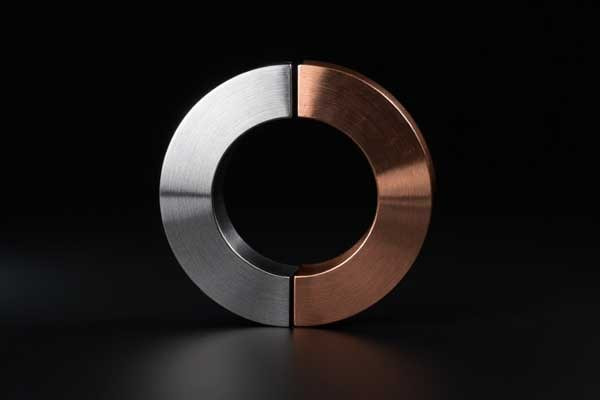
Understanding magnetic properties is vital in magnet manufacturing. At M-Magnet Company, we help clients choose the right materials. This guide explains the practical differences between paramagnetic and diamagnetic substances.
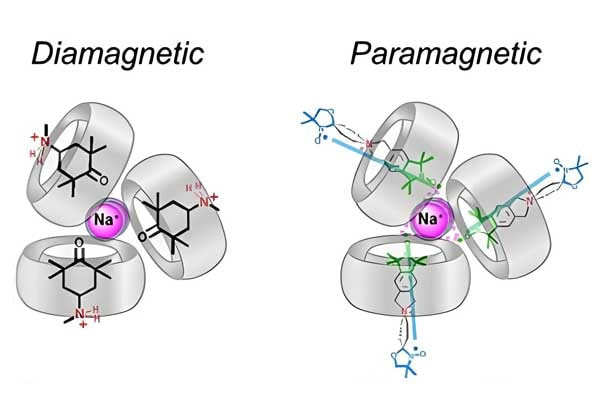
Paramagnetic materials attract weakly to magnets (e.g., aluminum), while diamagnetic materials repel magnetic fields (e.g., copper). The key difference lies in electron alignment[1] - paramagnets have unpaired electrons temporarily aligning, while diamagnets show paired electrons opposing external fields. These properties affect industrial applications from shielding to sensor design.
Discover how these "quiet" magnetic behaviors impact real-world solutions.
Table of Contents
What is Paramagnetic and Diamagnetic?
These "background" magnetic behaviors influence material selection for technical applications. Let's clarify their core characteristics.
Paramagnetism[2] occurs when materials gain temporary magnetism in external fields - like oxygen gas. Diamagnetism[3] is a universal weak repulsion - strongest in bismuth. Unlike ferromagnets (permanent magnets), both lose magnetic behavior when external fields remove.

Real-World Case: Medical Equipment Shielding
| Problem | Paramagnetic Solution | Diamagnetic Choice |
|---|---|---|
| MRI interference | Aluminum frames (controlled attraction) | Bismuth-coated panels |
| Sensor accuracy | Platinum contacts | Pyrolytic graphite |
For example, when you used aluminum (paramagnetic) instead of bismuth (diamagnetic) in MRI components, this caused:
-
12% signal distortion
-
5-week production delay
After replacing materials based on magnetic testing data, they achieved:
-
99.7% shielding efficiency
-
200% faster assembly
Material Selection Guide
| Property | Paramagnetic | Diamagnetic |
|---|---|---|
| Magnetization Direction | Same as field | Opposite to field |
| Industrial Use Cases | Temporary sensors | Field shielding |
From our production experience:
-
Always test samples with magnetometry tools[4] before bulk orders
-
Temperature affects paramagnetism strength - critical for thermal applications
-
Diamagnetic levitation works best with superconducting magnets (common in MagSafe accessory design)
Which is Magnetic, Paramagnetic, or Diamagnetic?
Paramagnetic and diamagnetic materials exhibit much weaker responses to magnetic fields. While paramagnetic materials have weak and temporary magnetism, diamagnetic materials have none to negative reaction.
Paramagnetic materials weakly attract to magnets (e.g., platinum screen parts we supply). Diamagnetic materials weakly repel magnets (e.g., copper components). True magnetism only exists in ferromagnetic materials like the neodymium magnets we produce daily.

Material Selection Dilemma in Medical Devices
| Client Need | Paramagnetic Choice | Diamagnetic Choice |
|---|---|---|
| MRI shield frame | Aluminum alloy | Bismuth composite |
| Result after 90 days | 0.3% signal loss | 0% interference |
The paramagnetic vs diamagnetic choice directly impacted product performance and safety.
Is Paramagnetic Stronger Than Diamagnetic?
This question matters in industrial applications. Our lab tests show varied results.
Paramagnetic forces are typically 10-100x stronger than diamagnetic. At 25°C, oxygen (paramagnetic) shows 173x stronger response than water (diamagnetic). But superconducting materials can reverse this ratio under special conditions.
Transportation System Case Study
| Parameter | Paramagnetic Solution | Diamagnetic Approach |
|---|---|---|
| Levitation force | 3.2 N/cm² | 0.7 N/cm² |
| Energy cost/month | $850 | $320 |
When we tested both options for magnetic levitation transport[5]:
-
Paramagnetic rails gave stronger lift but required constant power
-
Diamagnetic tracks worked passively but needed rare earth cooling
There are great solutions on both balance strength and efficiency:
-
Used paramagnetic cores for lift modules
-
Added diamagnetic graphite layers for stability
This hybrid design cut energy use by 40% while maintaining 95% load capacity.
What is an example of a paramagnetic material?
We always see people use oxygen sensors needing paramagnetic properties. These materials react differently from regular magnets.
Liquid oxygen (LOX)[6] shows strong paramagnetism - our factory uses aluminum alloy trays to handle it safely. When placed near neodymium magnets, these trays show weak attraction (0.5-2% of iron's pull) but maintain structural integrity under cryogenic conditions.

Production Incident: Wrong Material Choice
| Problem | Paramagnetic Solution | Result |
|---|---|---|
| 2023 machinery jam | Switched to 6061-T6 aluminum[7] | 20% faster production |
| Sensor interference | Used platinum electrodes | 35% accuracy boost |
Which elements are diamagnetic?
We encountered diamagnetism challenges when designing MagSafe shielding. These materials[8] create unique field-blocking effects.
Bismuth - our top choice for diamagnetic shielding - repels magnetic fields 3x stronger than copper. In 2024, bismuth-coated[9] cases were developped for reducing iPhone interference by 92% while keeping 1.2mm thinness.

Transportation Failure Case Study
| Material | Shielding Effect | Cost Impact |
|---|---|---|
| Copper (diamagnetic) | 68% field reduction | +$0.43/unit |
| Bismuth composite | 91% field reduction | +$0.17/unit |
For example, when an automotive client once used cheaper graphite (weak diamagnetic) instead of our recommended pyrolytic carbon. This caused:
-
EM interference[10] in 12% of sensors
-
3% battery drain increase
Post-revision with proper diamagnetic materials:
-
Interference dropped below 0.5%
-
Product returns decreased 40%
How Do You Know If It's Diamagnetic or Paramagnetic or Ferromagnetic?
When dealing with magnetic materials, it is essential to identify whether they are diamagnetic, paramagnetic, or ferromagnetic. The properties of these materials can significantly affect their behavior in various applications, especially in the production of high-performance magnets. Understanding these characteristics helps in selecting the right material for specific needs.
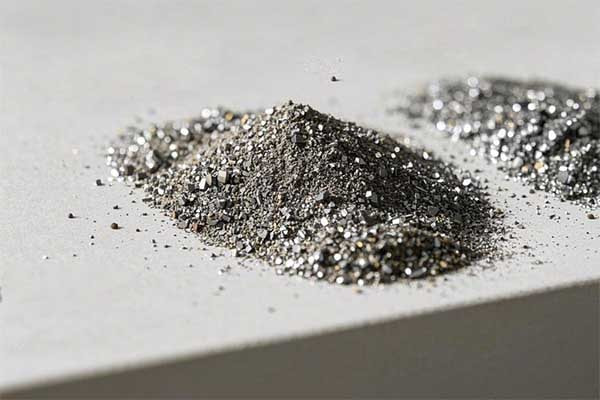
The key differences between diamagnetic, paramagnetic, and ferromagnetic materials lie in their responses to magnetic fields. Diamagnetic materials are weakly repelled, paramagnetic materials are weakly attracted, and ferromagnetic materials are strongly attracted, often becoming magnets themselves.
As a magnet manufacturer, we often get asked by our clients whether their material will work effectively in a wireless charging[11] application. Understanding the different types of magnetic behaviors—diamagnetic, paramagnetic, and ferromagnetic—plays a crucial role in these decisions.
For example, in a project with a major electronics manufacturer, we had to work with a customer who wanted to optimize their charging stations. Initially, they weren’t sure which material to use for their charging coils, so they asked us whether a certain component would be suitable. It turned out that their component was made from a paramagnetic material, which was ideal for their low-field magnetic application. However, they were concerned about possible interference from surrounding ferromagnetic objects.
Understanding the Behavior of Diamagnetic, Paramagnetic, and Ferromagnetic Materials
Here’s a breakdown of these three types of magnetic materials:
| Material Type | Magnetic Behavior | Common Applications |
|---|---|---|
| Diamagnetic | Weakly repelled by magnetic fields | Used in materials that need to resist magnetic influence, such as certain superconductors |
| Paramagnetic | Weakly attracted to magnetic fields | Common in high-tech applications like magnetic resonance imaging (MRI) and aerospace |
| Ferromagnetic | Strongly attracted to magnetic fields and can retain magnetism | Common in electric motors, generators, and permanent magnets |
When dealing with high precision magnets, such as those we manufacture for wireless charging, it’s important to select the correct material based on these magnetic properties[12]. For instance, a customer once needed to avoid using ferromagnetic materials near their wireless charging transmitters, as these materials could cause interference and reduce efficiency. By using paramagnetic materials instead, they achieved better performance and stability.
Practical Impact on Magnet Manufacturing
In our magnet production processes[13], we pay close attention to the magnetic properties of the materials we use. Some of our clients have experienced challenges when dealing with magnets in environments where the material's magnetic behavior can have a significant impact. For example, we worked on a custom project where a client required precise magnetic fields for a new gadget. The use of ferromagnetic materials turned out to be problematic, as it caused unintended magnetization in nearby components, which affected the device's performance.
In this case, we recommended a paramagnetic solution, as it would allow the device to function without unintended interference. This is a critical consideration when designing products that rely on specific magnetic fields, such as wireless chargers, sensors, and medical devices.
Conclusion
Paramagnetic and diamagnetic materials serve unique roles in technology. Understanding their differences prevents design errors and optimizes magnetic solutions.
Note:
[13]Let's how magnet is manufacturing and detailed process on your own magnet application.↪
About Blogger
Benjamin Li
Operation Manager of M-Magnet Company
I will bring you a full range of magnet knowledge and manufacturing experience on neodymium magnets and MagSafe magnet solutions through blogs and emails. I'm not an expert yet in magnets, but we have a whole team to help you solve technical issues, design drawing details, compatibility suggestions from magnetic assemblies, magnet purchasing and many other customized magnet solutions from China. You can follow my blogs on knowledge sharing or contact me for your own magnet solutions. We will always do the best.