How strong is the Earth's magnetic field?
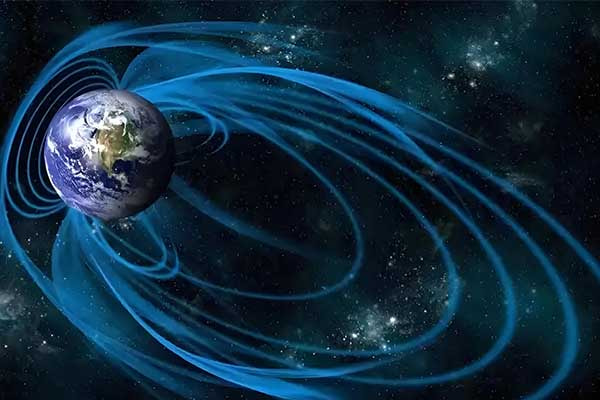
The Earth's magnetic field varies and can confuse many. You might ask how strong it really is and why it matters.
The Earth's magnetic field strength ranges roughly from 22 to 67 microteslas (0.22 to 0.67 gauss), depending on location. This strength is much weaker than common magnets like fridge magnets. It protects life by deflecting solar radiation and is generated by electric currents in the Earth's molten core.
Let’s dive deeper to understand what determines the earth magnetic field strength and its variations.
Table of Contents
What is the Earth's magnetic field strength?

Many people wonder about the earth magnetic field strength and how it compares to everyday magnets. This question is important for science and daily life.
The earth magnetic field strength at the surface varies between 22,000 and 67,000 nanoteslas (22 to 67 µT), equivalent to 0.22 to 0.67 gauss. The strength is stronger near the poles and weaker near the equator. By comparison, a strong fridge magnet has about 10,000 µT (100 gauss), much stronger than Earth’s field.
Understanding earth magnetic field strength requires looking at its origin and variations. The field is generated by the geodynamo effect in the Earth's outer core, where molten iron moves and creates electric currents. These currents produce the magnetic field that extends into space and surrounds the planet.
The field strength is not uniform. It is strongest near the magnetic poles and weakest near the equator. For example, at 50° latitude, the strength can reach about 58 µT, while at the equator, it may be around 31 µT. This variation is shown on isodynamic maps that chart magnetic intensity worldwide.
Earth’s magnetic field also changes over time. Studies show it fluctuates in cycles lasting hundreds of millions of years. Recently, the field has weakened by about 9% over the last 200 years, especially in a region called the South Atlantic Anomaly. This weakening affects satellites and space technology but does not pose immediate danger on Earth’s surface.
The earth magnetic field strength is much smaller than everyday magnets but vital for life. It shields us from solar wind and cosmic radiation. Without it, Earth’s atmosphere could be stripped away, and life would face harsh radiation.
Comparison of Magnetic Field Strengths
| Source | Magnetic Field Strength | Unit | Notes |
|---|---|---|---|
| Earth's Magnetic Field (Equator) | 22,000 - 31,000 | nanoteslas (nT) | Approximately 0.22 - 0.31 gauss |
| Earth's Magnetic Field (Poles) | 58,000 - 67,000 | nanoteslas (nT) | Approximately 0.58 - 0.67 gauss |
| Strong Refrigerator Magnet | 10,000,000 | nanoteslas (nT) | About 100 gauss, much stronger than Earth’s field |
The earth magnetic field strength is a dynamic and complex phenomenon. It depends on deep Earth processes, including heat flow and rotation. The field’s tilt of about 11° from the rotation axis causes the magnetic poles to move over time. This movement and strength variation are important for navigation and satellite operations.
In my work with neodymium magnets at M-Magnet Company, I often compare our magnets’ strength to the earth magnetic field strength. Our magnets are thousands of times stronger, which helps me appreciate the subtle but crucial role Earth’s magnetic field plays in protecting our planet.
Understanding the earth magnetic field strength helps us respect its power and fragility. It also guides innovations in magnet manufacturing and applications.
Is the earth a magnet?
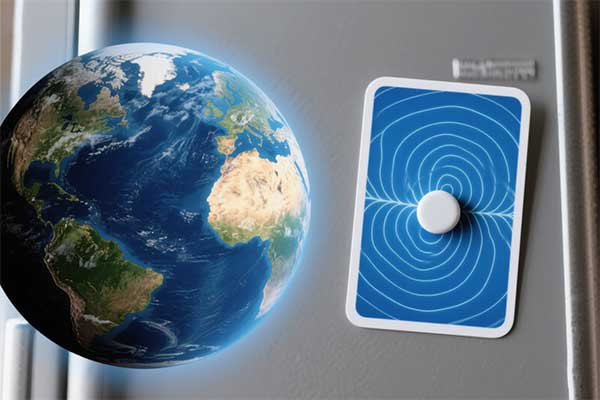
I spend my days working with powerful neodymium magnets, but I still find myself amazed by the biggest magnet we encounter daily. Most people walk around completely unaware that they live on a giant magnetic sphere. This invisible force shapes our entire existence.
Yes, Earth functions as a massive magnet with magnetic north and south poles. The planet generates a magnetic field approximately 25 to 65 microteslas strong at the surface, which is roughly 100 times weaker than a typical refrigerator magnet but extends thousands of kilometers into space.
Understanding Earth's Magnetic Properties
I often explain to my customers that Earth behaves like a bar magnet tilted about 11 degrees from its rotational axis. This creates the magnetic field that makes compasses work and protects us from solar radiation. The field strength varies significantly across the planet's surface, just like the magnetic fields I measure in our factory products.
The comparison between Earth and manufactured magnets reveals fascinating differences. While my neodymium magnets can produce fields of several thousand gauss at their surface, Earth's field measures only about 0.5 gauss at the equator and 0.6 gauss at the poles. This seems weak, but the scale makes all the difference. Earth's magnetic field extends far into space, creating a protective bubble called the magnetosphere.
Earth vs Manufactured Magnet Comparison
| Property | Earth's Magnetic Field | Neodymium Magnet |
|---|---|---|
| Surface Field Strength | 0.25-0.65 gauss | 1000-14000 gauss |
| Field Range | Thousands of kilometers | Centimeters to meters |
| Pole Alignment | 11° offset from rotation axis | Aligned with magnet axis |
| Field Stability | Changes over time | Relatively stable |
The evidence for Earth's magnetic nature comes from multiple sources that I find scientifically compelling. Compass needles have pointed toward magnetic north for over a thousand years. Birds use magnetic navigation for migration. Even bacteria contain magnetite crystals that help them orient themselves. These biological systems demonstrate how life has evolved to use Earth's magnetic field.
Rock formations provide additional proof of Earth's magnetism. When volcanic rocks cool, iron minerals within them align with the prevailing magnetic field direction. This creates a permanent record of Earth's magnetic field at the time of formation. I use similar principles when magnetizing our products, though on a much smaller scale and with much stronger fields.
The magnetic field strength varies dramatically across Earth's surface. The magnetic equator experiences the weakest field, while the magnetic poles show the strongest readings. This variation affects everything from satellite operations to the aurora displays. The northern lights occur when solar particles interact with Earth's magnetic field lines near the magnetic poles.
What makes Earth unique among planets is the combination of magnetic field strength and stability. Mars lost most of its magnetic field billions of years ago. Venus has almost no magnetic field despite being similar in size to Earth. Jupiter has an incredibly strong magnetic field, but it's a gas giant with completely different characteristics. Earth sits in a sweet spot that makes complex life possible.
The practical implications of Earth's magnetism extend far beyond navigation. The magnetic field deflects harmful solar radiation that would otherwise strip away our atmosphere. Without this protection, Earth might look more like Mars today. This cosmic shield allows liquid water to exist on the surface and protects the delicate chemical processes that support life.
Modern technology depends heavily on understanding Earth's magnetic field strength. GPS systems must account for magnetic variations to provide accurate positioning. Power grids can be disrupted by magnetic storms. Even the smartphones that many people use to find M-Magnet products online contain magnetometers that measure local magnetic fields relative to Earth's baseline.
How earth magnetic field is created?
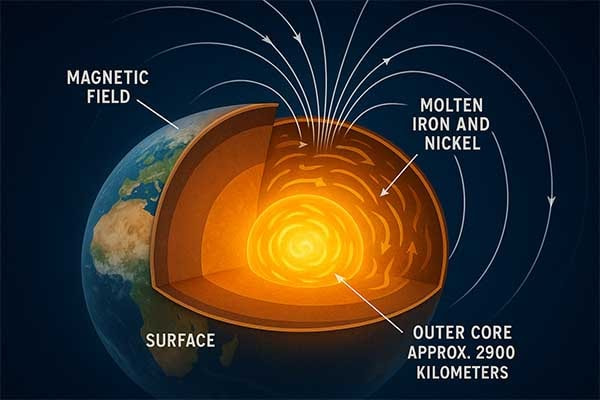
Earth's magnetic field works completely differently from the magnets we manufacture. The planet doesn't contain a giant permanent magnet at its core. Instead, it generates magnetism through a dynamic process that has fascinated scientists for generations. This ongoing mystery drives much of our understanding about planetary magnetism.
Earth's magnetic field is created by the movement of molten iron and nickel in the outer core, approximately 2900 kilometers below the surface. This liquid metal moves in complex patterns due to the planet's rotation and internal heat, generating electrical currents that produce the magnetic field through a process called the geodynamo.
The Geodynamo Process Explained
I find the geodynamo process remarkably similar to the electromagnets I sometimes work with, though on an unimaginably larger scale. Earth's outer core contains molten iron and nickel at temperatures exceeding 4000 degrees Celsius. This liquid metal conducts electricity extremely well. When this conductive fluid moves, it creates electrical currents that generate magnetic fields.
The movement patterns in Earth's core are incredibly complex. Heat from the inner core creates convection currents that rise toward the mantle. The planet's rotation adds a twisting motion called the Coriolis effect. These combined forces create spiral patterns of flowing metal that act like massive electrical circuits. Each circuit generates its own magnetic field, and all these fields combine to create Earth's overall magnetic field.
The process requires three essential components that work together seamlessly. First, you need a conductive fluid, which Earth has in abundance with its molten iron core. Second, you need motion of that fluid, provided by convection and rotation. Third, you need an initial magnetic field to get the process started, which scientists believe came from the early solar system's magnetic environment.
Geodynamo Requirements and Components
| Component | Earth's Specification | Function |
|---|---|---|
| Conductive Material | Molten iron-nickel alloy | Carries electrical current |
| Heat Source | Inner core solidification | Drives convection currents |
| Rotation | 24-hour day cycle | Creates Coriolis effect |
| Initial Field | Primordial magnetism | Starts dynamo process |
The beauty of the geodynamo lies in its self-sustaining nature. Once the process starts, the magnetic field it creates helps organize the fluid motion, which in turn strengthens the magnetic field. This positive feedback loop has kept Earth's magnetic field active for billions of years. It's like a cosmic battery that recharges itself continuously.
However, the system is not perfectly stable. The magnetic field strength varies over time, and the magnetic poles drift slowly across the planet's surface. Sometimes the field weakens dramatically and the poles completely flip positions. These magnetic reversals have happened hundreds of times throughout Earth's history, with the last one occurring about 780,000 years ago.
Computer models of the geodynamo process require some of the world's most powerful supercomputers. The fluid dynamics involved are incredibly complex, with turbulent flows, temperature gradients, and electromagnetic forces all interacting simultaneously. Scientists are still working to fully understand how all these factors combine to create the magnetic field patterns we observe.
The comparison with manufactured electromagnets helps illustrate the scale and complexity involved. In my factory, we can create strong magnetic fields by running electrical current through copper wire coils. Earth essentially does the same thing, but with molten metal currents thousands of kilometers long flowing through the core. The electrical currents in Earth's core are estimated to be millions of amperes, far exceeding anything we could produce artificially.
What makes Earth's magnetic field creation particularly remarkable is its longevity and stability. The geodynamo has operated continuously for at least 3.5 billion years, possibly longer. This consistency has been crucial for protecting Earth's atmosphere and enabling the evolution of complex life. Without this magnetic shield, solar wind would gradually strip away our atmosphere, just as it did to Mars when that planet's magnetic field failed.
Understanding how Earth's magnetic field is created helps explain why magnetic field strength varies across the planet's surface. The dynamic processes in the core create a complex, ever-changing magnetic field pattern. This is why magnetic declination varies by location and changes over time. It's also why magnetic storms can occur when solar activity interacts with our planet's magnetic field.
The knowledge gained from studying Earth's geodynamo has practical applications for M-Magnet and the broader magnetic industry. Understanding natural magnetic processes helps engineers design better electromagnets and develop new magnetic technologies. The principles of electromagnetic induction that power Earth's magnetic field are the same ones we use in electric generators, motors, and transformers.
Is Earth's magnetic field weak or strong?
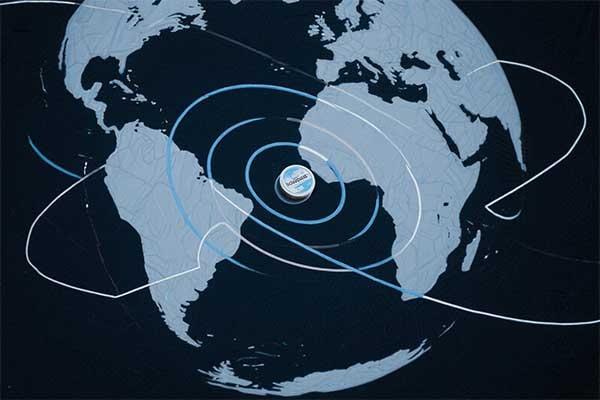
You might think of the Earth's magnetic field as very powerful. This is because it protects us from space. Agitation: However, its actual strength might surprise you. Solution: Understanding its true strength helps clarify its role and limitations.
The Earth's magnetic field is relatively weak when compared to common household magnets. Its strength at the surface ranges from about 25 to 65 microteslas (0.25 to 0.65 Gauss). While weak, this field is vast and crucial. It protects our planet from harmful solar winds and cosmic radiation.
We often hear about the Earth's magnetic field. We know it helps compasses work. We also know it protects us from the sun. This makes us think it must be very strong. But how strong is it, really? We need to look at its actual power. This helps us understand its importance.
Measuring Magnetic Field Strength
Scientists measure magnetic field strength in units called Gauss or Tesla. One Tesla is equal to 10,000 Gauss. The Earth's magnetic field is quite weak in these terms. At the surface, its strength is about 0.25 to 0.65 Gauss. This is very small. For comparison, a small refrigerator magnet is about 100 Gauss. A strong neodymium magnet, like those we make at M-Magnet Company, can be hundreds or even thousands of Gauss at its surface. This shows the Earth's field is not strong in an absolute sense. But its large size makes it effective.
Why Its Weakness Matters
The Earth's magnetic field is weak. But it covers a huge area. This allows it to do its job effectively. It deflects charged particles from the sun. These particles make up the solar wind. Without this protection, our atmosphere would slowly strip away. Life on Earth would be very different. The field also helps protect satellites and astronauts. It is like a giant shield around our planet. Even though it is weak, its vastness makes it powerful enough for its purpose.
Comparing Earth's Field to Other Magnets
Let us compare the Earth's magnetic field to some other magnetic sources. This helps put its strength into perspective.
Magnetic Field Strength Comparison
| Magnetic Source | Typical Strength (Gauss) | Notes |
|---|---|---|
| Earth's Surface Magnetic Field | 0.25 - 0.65 | Varies with location, protects the planet |
| Refrigerator Magnet | ~10 - 100 | Holds notes to a fridge |
| Strong Neodymium Magnet | ~1,000 - 14,000 (at surface) | Used in motors, sensors, MagSafe magnets |
| MRI Machine | ~15,000 - 60,000 (1.5 - 6 Tesla) | Medical imaging, uses very strong electromagnets |
| Sunspot Magnetic Field | ~1,000 - 4,000 | Areas of intense magnetic activity on the sun |
As you can see, even a small magnet from your fridge is much stronger than the Earth's field at the surface.
The strength of the Earth's magnetic field is not about being intense in a small area. It is about its huge scale. It acts as a planetary shield.
At M-Magnet Company, we specialize in creating strong, customized magnets. We use neodymium magnet materials. Our magnets are designed for specific tasks. For example, they provide strong holding forces. They also create precise magnetic fields for electronic devices.
The Earth's magnetic field is a natural wonder. It shows how even a weak, spread-out force can be incredibly important.
Can you generate power from Earth's magnetic field?
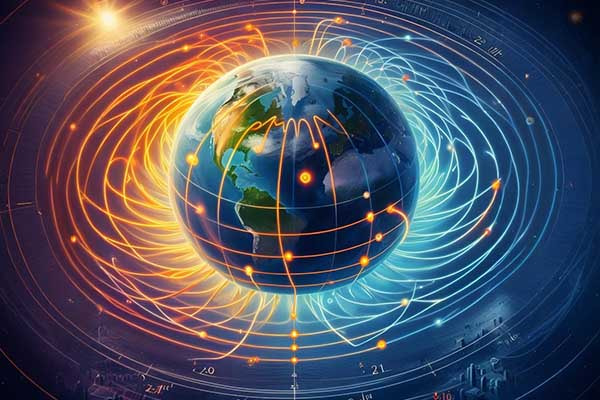
The idea of limitless energy from the Earth's magnetic field sounds appealing. However, it is not a practical source for generating significant power. Understanding the principles of electromagnetism explains why this is the case.
It is technically possible to generate a tiny amount of electricity from the Earth's magnetic field. This is based on Faraday's Law of Induction. However, the Earth's magnetic field is very weak. The amount of power generated would be extremely small. It would be too insignificant for practical use or to power homes and industries.
The Earth has a magnetic field. This makes us wonder if we can use it to make electricity. The idea of free energy is attractive. But we need to look at how electricity is made from magnetic fields. This helps us see if it is truly possible for large-scale power.
The Science of Generating Electricity
To make electricity from a magnetic field, you need two things. You need a magnetic field. You also need a conductor.
This conductor must move relative to the magnetic field. Or, the magnetic field must change around the conductor. This is called electromagnetic induction.
It is how generators work. In a power plant, strong magnets spin rapidly inside coils of wire. That creates a strong changing magnetic field. This changing field then induces a large current in the wires. The amount of electricity made depends on a few things. It depends on the strength of the magnetic field. It also depends on how fast the conductor moves. And it depends on the number of turns in the wire coil.
Why Earth's Field is Not a Good Power Source
The Earth's magnetic field is very weak. We discussed this earlier. It is only about 0.25 to 0.65 Gauss at the surface.
To get a useful amount of power from such a weak field, you would need enormous coils of wire. You would also need very fast movement.
Think about moving a massive coil of wire at high speeds. This is not practical. The energy you would put in to move the coil would be much more than the energy you would get out.
So, while the principle works, the scale of the Earth's magnetic field makes it useless for practical power generation.
Practicality Versus Theory
In theory, you can generate power. If you wave a wire through the air, it cuts magnetic field lines. This induces a tiny voltage.
You can measure this with very sensitive equipment. But this voltage is not enough to power anything useful. It would not even light a small LED bulb.
The cost and effort of building such a system would be huge. The return would be almost zero. This is a key difference between what is theoretically possible and what is practically useful.
What Makes a Good Magnetic Power Source?
For power generation, we need strong, controlled magnetic fields. This is why human-made generators use powerful magnets. They use either permanent magnets or electromagnets.
Factors for Effective Power Generation
| Factor | Relevance to Power Generation | Earth's Field vs. Man-made Magnets |
|---|---|---|
| Magnetic Field Strength | Stronger fields induce more current. | Earth's field is very weak; Neodymium magnets are thousands of times stronger. |
| Rate of Change/Movement | Faster relative motion produces more power. | Hard to move huge coils fast enough in Earth's field. Generators use high RPM. |
| Number of Coil Turns | More turns mean more voltage induced. | Would need impractical number of turns for Earth's weak field. |
| Efficiency of System | Minimizing energy loss in the system. | Losses would far outweigh gains from Earth's field. |
This is where industrial magnets are important. At M-Magnet Company, we make powerful magnets.
These magnets are used in many applications. They are used in electric motors and generators. Our neodymium magnet products are ideal for such uses. They provide the high magnetic field strength needed for efficient power generation. They are also used in various magnet customized solutions.
For example, they are in the magnetic arrays for efficient wireless charging. They are also in MagSafe products. These applications need focused, strong magnetic fields. The Earth's magnetic field is a marvel. But it is not a practical source for our energy needs. We rely on stronger, human-engineered magnetic systems for that.
What would happen if Earth suddenly lost its magnetic field?
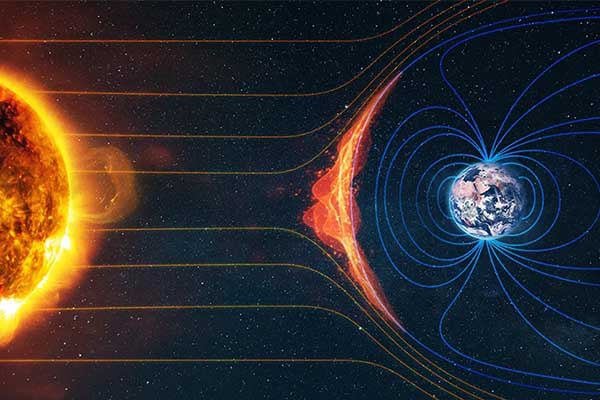
Many worry about what would happen if Earth lost its magnetic field. The thought raises fears about life and technology.
If Earth suddenly lost its magnetic field, the planet would lose its main shield against harmful solar and cosmic radiation. This would cause increased radiation exposure, satellite failures, power grid disruptions, and severe impacts on animal navigation. Over time, Earth's atmosphere could thin, making life much harder.
Losing the earth's magnetic field would be a major event. This field protects us from charged particles from the sun and cosmic rays that can harm living things and damage technology. Without it, satellites in high orbits would fail first. Then astronauts in low Earth orbit would lose communication. Eventually, harmful radiation would reach the surface, increasing cancer risks and damaging ecosystems.
The magnetic field is created by the flow of liquid iron in Earth's outer core. It has weakened about 30% over the last 3,000 years and may continue to weaken. Some scientists warn it could reach a critically low level in the next few centuries. The South Atlantic Anomaly, a weak spot in the field, already causes satellite malfunctions.
Consequences of Losing Earth's Magnetic Field
| Impact | Description | Potential Outcome |
|---|---|---|
| Radiation Exposure | Cosmic rays and solar particles bombard Earth | Increased cancer risk and DNA damage |
| Satellite Failures | Electronics damaged by charged particles | Loss of communication and GPS services |
| Power Grid Disruptions | Solar storms induce currents in power lines | Widespread blackouts and equipment damage |
| Animal Navigation | Migratory species lose magnetic cues | Disrupted migration and ecological imbalance |
| Atmospheric Loss | Solar wind strips away atmosphere over time | Long-term climate changes and habitability loss |
The magnetic field also guides many animals. Birds, sea turtles, and bees use it to navigate. Without it, their survival would be threatened. This could disrupt ecosystems and food chains.
Some fear that losing the magnetic field would cause an immediate disaster. However, history shows the field has reversed many times without mass extinctions. The main danger is during the weakening phase before a reversal, when protection is low.
Our technology depends heavily on the earth's magnetic field. Satellites and power grids are vulnerable to solar storms. Without the field, solar particles would cause frequent failures and outages. We would need new ways to protect our systems.
The atmosphere could slowly thin as solar wind strips particles away. Mars lost its magnetic field long ago and now has a thin atmosphere. Earth could face a similar fate over millions of years if the field vanished.
As a manufacturer at M-Magnet, I often think about the earth's magnetic field’s role. Our strong neodymium magnets are tiny compared to the planet’s field, yet Earth’s magnetic shield is crucial for life and technology.
Understanding these risks helps us prepare for future changes in the earth's magnetic field. Monitoring and research are vital to protect life and infrastructure.
Conclusion
The earth's magnetic field shields life and technology from harmful space radiation. Losing it would increase radiation exposure, disrupt satellites and power grids, and threaten animal navigation. Over time, Earth’s atmosphere could thin, impacting climate and habitability. While catastrophic effects would take time, the weakening of this field demands attention and preparation.
About Blogger
Benjamin Li
Operation Manager of M-Magnet Company
I will bring you a full range of magnet knowledge and manufacturing experience on neodymium magnets and MagSafe magnet solutions through blogs and emails. I'm not an expert yet in magnets, but we have a whole team to help you solve technical issues, design drawing details, compatibility suggestions from magnetic assemblies, magnet purchasing and many other customized magnet solutions from China. You can follow my blogs on knowledge sharing or contact me for your own magnet solutions. We will always do the best.