Which shape of magnet is the strongest?

People often ask, "Which magnet shape is the strongest?" The answer depends on how you define "strongest." We’ll explore pull force, field concentration, and real-world applications to find the best shape for your needs.
The strongest magnet shape depends on the application. For pull force, horseshoe (U-shaped) magnets are strongest due to concentrated poles. For raw magnetic strength, thick discs or blocks often perform best. Neodymium magnets in optimized shapes deliver peak performance.
Let’s break down the relationship between shapes and magnetic field.
Table of Contents
Does shape affect magnetic field?
Magnets come in many shapes, and people often wonder if shape changes their strength. This question matters for choosing the strongest magnet.
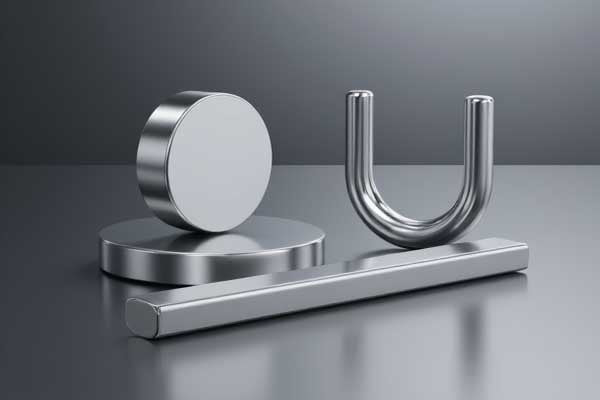
The shape of a magnet affects how its magnetic field lines are arranged and concentrated. Shapes like discs and cylinders tend to focus the magnetic field more strongly than bars. Horseshoe magnets bring poles closer, doubling effective strength. So yes, shape influences magnetic field strength and performance.
Magnet shape plays a key role in how the magnetic field spreads and concentrates. For example, bar magnets have field lines running between their flat poles, but these lines spread out more, making the field weaker at a distance. Cylindrical or disc magnets concentrate the field near the center due to their round cross-section, producing a stronger, more focused field.
Horseshoe magnets are bent bars that bring the north and south poles close together. This proximity concentrates the magnetic field lines between the poles, effectively doubling the lifting force compared to a straight bar magnet of the same size. This shape is popular in applications needing strong, focused fields.
Ring magnets have a hollow center, which reduces their magnetic volume and strength compared to solid discs of the same size. However, their shape suits specialized uses like sensors and motors.
Common Magnet Shapes and Their Magnetic Field Characteristics
| Shape | Field Concentration | Typical Strength | Common Uses |
|---|---|---|---|
| Bar Magnet | Low; field lines spread between flat poles | Moderate | Education, fridge magnets, cabinet latches |
| Horseshoe Magnet | High; poles close, field lines concentrated | High (about double bar magnet) | Picking metal, engineering, experiments |
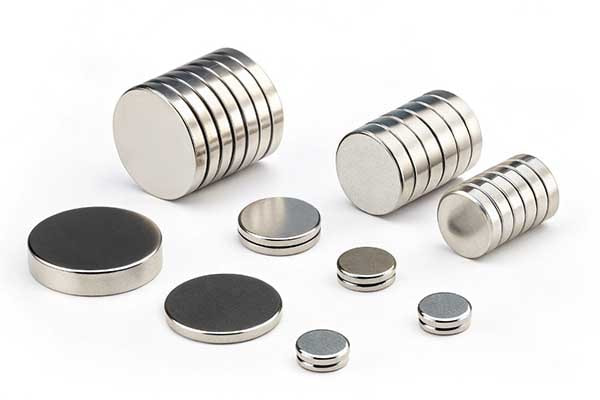
| Disc Magnet | Very High; field focused near center | Very strong | Industrial lifting, jewelry clasps, craft |
| Ring Magnet | Moderate; hollow center reduces strength | Moderate | Motors, sensors, work holding |
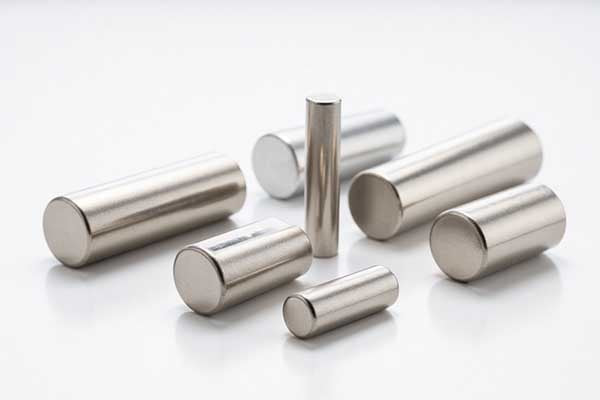
| Cylinder Magnet | High; depends on height-to-diameter ratio | Strong | Specialized industrial uses |
The strongest magnet shape depends on the application. For general strength and compactness, cylindrical and disc magnets made from neodymium are often the strongest. Their shape allows a dense, concentrated magnetic field, maximizing lifting force and field intensity.
Horseshoe magnets excel where a strong, focused field between two close poles is needed. This shape effectively doubles the magnetic force compared to a straight bar magnet of the same size.
While shape matters, the strongest magnet is also determined by the material’s magnetic properties. Neodymium magnets remain the strongest permanent magnets available, regardless of shape. The shape helps direct and concentrate the magnetic field to suit specific needs.
Which is stronger bar magnet or U shaped magnet?

I get this question constantly from customers who want maximum magnetic strength for their applications. Many people assume that bigger always means stronger, but magnet shape plays a crucial role in determining actual performance. The wrong choice can waste money and compromise your project.
U-shaped magnets are generally stronger than bar magnets of the same material and volume because the U-shape concentrates magnetic flux between the poles, creating higher field density. Bar magnets spread their magnetic field over a larger area, resulting in lower concentrated strength but longer reach.
Understanding Magnet Shape Physics
The relationship between shape and strength follows predictable physical principles. The key factor is magnetic flux concentration. U-shaped magnets bring both magnetic poles close together, which concentrates the magnetic field lines in the gap between the poles. This creates a much stronger magnetic field in that specific area.
Bar magnets work differently because their poles are separated by the full length of the magnet. The magnetic field lines travel from north to south pole through the air, creating a longer but weaker magnetic path. This means bar magnets have better reach but lower concentrated strength at any given point.
The comparison becomes more complex when you consider practical applications. U-shaped magnets excel when you need strong attraction force over a small area. Bar magnets work better when you need magnetic influence over a larger space or when you need to maintain magnetic strength at greater distances.
Bar Magnet vs U-Shaped Magnet Performance Comparison
| Performance Factor | Bar Magnet | U-Shaped Magnet |
|---|---|---|
| Concentrated Strength | Lower | Higher |
| Field Reach | Greater | Limited |
| Material Efficiency | Lower | Higher |
| Manufacturing Cost | Lower | Higher |
The strength advantage of U-shaped magnets comes with trade-offs that affect their practical usefulness. The concentrated field strength only exists in the gap between the poles. Outside this gap, U-shaped magnets actually perform worse than bar magnets of the same size. This makes U-shaped magnets ideal for applications like magnetic clamps, where you need maximum holding force in a specific location.
Bar magnets offer more versatile magnetic fields that work well for sensing applications, magnetic separation, and situations where you need magnetic influence over irregular shapes or varying distances. The longer magnetic path of bar magnets also makes them less susceptible to demagnetization from external magnetic fields.
Material considerations play a major role in the bar versus U-shaped magnet decision. Neodymium magnets work exceptionally well in both shapes, but the manufacturing process for U-shaped magnets is more complex and expensive. Bar magnets can be cut from larger blocks, while U-shaped magnets often require specialized tooling and more careful handling during production.
Temperature effects also differ between the two shapes. U-shaped magnets concentrate more magnetic energy in a smaller space, which can lead to higher operating temperatures in some applications. Bar magnets distribute heat more evenly and typically run cooler under similar load conditions.
The choice between bar and U-shaped magnets ultimately depends on your specific application requirements. If you need maximum pull force in a confined space and cost is not the primary concern, U-shaped magnets deliver superior performance. If you need versatile magnetic fields, lower cost, or operation over varying distances, bar magnets provide better value and functionality.
What is the most efficient magnet shape?
I spend considerable time optimizing magnet shapes for different applications, and efficiency means different things depending on your specific needs. Some customers want maximum strength per dollar, while others need the best performance per unit of space. The most efficient magnet shape depends entirely on how you define and measure efficiency.
The most efficient magnet shape varies by application, but ring magnets and cylindrical magnets typically offer the best strength-to-weight ratio for most uses. Disc magnets provide excellent efficiency for compact applications, while custom-shaped magnets optimized for specific geometric requirements deliver the highest overall efficiency.
Defining Magnet Efficiency Parameters
I have learned that magnet efficiency encompasses multiple factors that customers often overlook when selecting shapes. Material efficiency measures how much magnetic performance you get from a given amount of rare earth material. Space efficiency considers the magnetic strength achieved within size constraints. Cost efficiency balances performance against manufacturing and material costs.
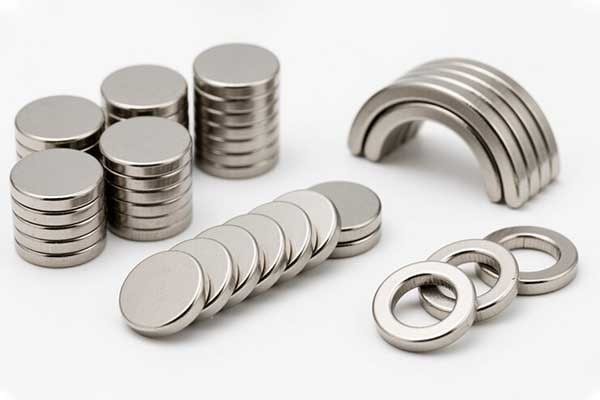
Ring magnets consistently rank among the most efficient shapes because they eliminate much of the magnetic material that contributes little to the overall field strength. The hollow center reduces weight and material cost while maintaining most of the magnetic performance. This makes ring magnets ideal for motors, speakers, and rotating applications where weight matters.
Cylindrical magnets offer another highly efficient configuration because the circular cross-section provides uniform magnetic field distribution. The shape naturally resists demagnetization and provides consistent performance regardless of orientation. Many of my customers choose cylindrical magnets for sensors and actuators where reliability and efficiency matter more than absolute maximum strength.
Magnet Shape Efficiency Analysis
| Magnet Shape | Material Efficiency | Space Efficiency | Cost Efficiency |
|---|---|---|---|
| Ring Magnet | High | Very High | High |
| Disc Magnet | Very High | High | Very High |
| Cylinder Magnet | High | High | High |
| Custom Shape | Variable | Very High | Low |
Disc magnets deserve special mention for their exceptional efficiency in compact applications. The flat, circular shape provides excellent surface contact for holding applications while using minimal material thickness. This makes disc magnets incredibly cost-effective for applications like magnetic closures, sensors, and decorative items where space is limited.
The aspect ratio of magnet shapes significantly affects efficiency. Magnets that are too long and thin suffer from increased demagnetization susceptibility. Magnets that are too short and wide waste material without proportional strength gains. The optimal aspect ratio depends on the specific magnetic material and application requirements.
Advanced shape optimization goes beyond simple geometric forms. M-Magnet has developed custom shapes that follow the natural magnetic field lines to maximize efficiency for specific applications. These optimized shapes can achieve 20-30% better performance than standard shapes using the same amount of magnetic material.
Manufacturing considerations play a crucial role in determining the most efficient magnet shape for production quantities. Simple shapes like discs and cylinders can be produced efficiently in large volumes with minimal waste. Complex shapes require specialized tooling and may have higher scrap rates, which affects overall efficiency calculations.
Temperature stability varies significantly between different magnet shapes. Thinner shapes tend to operate at higher temperatures due to increased surface area to volume ratios. Thicker shapes maintain more stable temperatures but may not fit in space-constrained applications. The most efficient shape must balance thermal considerations with performance requirements.
The magnetic circuit design surrounding the magnet shape affects overall system efficiency more than the magnet shape alone. A well-designed magnetic circuit can make a simple disc magnet outperform a complex custom shape in the wrong application. This is why I always recommend considering the entire magnetic system when optimizing for efficiency.
Field simulation software helps identify the most efficient magnet shape for specific applications before manufacturing. These tools can model how different shapes perform in various magnetic circuits and identify optimization opportunities that are not obvious from basic calculations. The investment in simulation typically pays for itself through improved efficiency and reduced material waste.
Real-world efficiency must account for manufacturing tolerances, surface finish requirements, and long-term performance stability. A theoretically efficient shape that is difficult to manufacture consistently may prove less efficient in practice than a simpler shape with predictable performance characteristics.
The most efficient magnet shape for any application requires balancing multiple competing factors including material cost, manufacturing complexity, performance requirements, and space constraints. Ring magnets excel for rotating applications, disc magnets work best for compact holding applications, and custom shapes provide maximum efficiency when engineering resources justify the development cost.
Are thicker or wider magnets stronger?
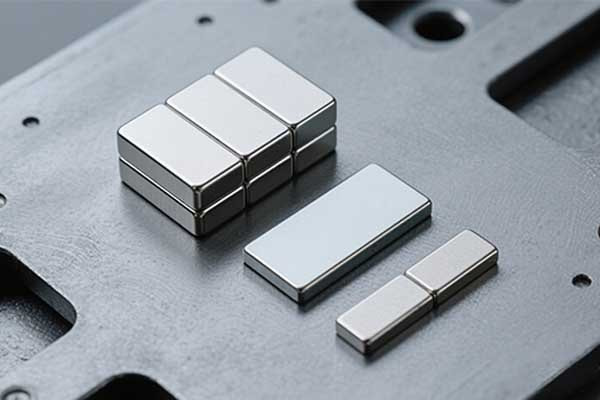
You might wonder if a magnet's shape affects its strength. You might think only its material matters. It is not always clear if thickness or width makes a magnet more powerful. Understanding how dimensions influence magnetic fields helps in choosing the right magnet.
Both thickness and width can influence a magnet's strength. Generally, increasing a magnet's thickness along the magnetization direction increases its holding power. Increasing its surface area (width) can also increase the contact area and thus the overall pull force. The optimal shape depends on the application.
When we talk about magnet strength, we often think about the material itself. Neodymium magnets are known for being very strong. But the shape of a magnet also plays a big role. We need to look at how thickness and width affect a magnet's performance.
How Thickness Influences Strength
A magnet's thickness, especially along its magnetization direction, is important.
Think of it like this: a thicker magnet has more magnetic domains aligned in the same direction. This creates a stronger magnetic field that extends further.
For instance, a tall, thin magnet might have a strong field at its poles. This field will project outwards.
This can be very useful for applications needing a deep magnetic reach. For example, a thicker magnet can provide a stronger holding force when pulling against a metal surface. We often see this with our custom magnet solutions. A thicker magnet means a stronger pull.
How Width Influences Strength
The width or surface area of a magnet also matters.
A wider magnet, or one with a larger surface area, means more contact points. This can increase the total pull force.
Imagine trying to lift a metal plate. A wider magnet will make better contact. It will distribute the magnetic force over a larger area. This can be very effective for applications needing a broad, even hold.
So, a wider magnet might not project its field as far out as a thicker one. But it can have a higher total pull force on a flat surface.
The Interplay of Dimensions and Applications
The strongest shape for a magnet depends on its use. There is no single "strongest" shape for all situations.
Influence of Magnet Dimensions on Strength
| Dimension Changed | Effect on Magnetic Field/Force | Typical Application Benefit |
|---|---|---|
| Increased Thickness (along magnetization) | Stronger external field, longer reach, greater pull distance. | Sensors, motors, applications needing field projection. |
| Increased Width/Surface Area | Higher direct pull force (contact), better surface adhesion. | Holding applications (cabinet latches, magnetic bases), lifting. |
| Optimal Volume Utilization | Achieving maximum strength for a given amount of magnet material. | Cost-effective design, efficient use of a powerful magnet. |
For example, if you need a magnet to lift a heavy steel plate, a wider, thinner magnet might be better. This is because it provides more surface contact. If you need a magnet for a sensor, where the field needs to pass through a gap, a thicker magnet might be more effective. This is because its field reaches further.
Material grade and the dimensions ensure the magnet provides the right strength for its specific use. A powerful magnet is not just about its material. It is also about its shape and how it is used.
Our expertise in neodymium magnet manufacturer processes allows us to create precise shapes. This includes those used in MagSafe magnet factory production. We ensure the magnet delivers maximum performance for its application.
Can magnet be any shape?
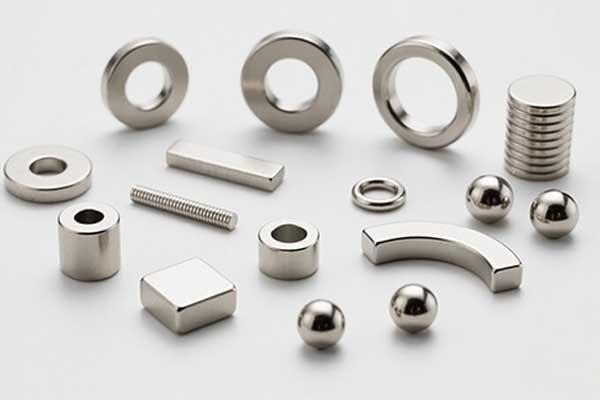
You might have unique product designs that require magnets in unusual shapes. You might wonder if a magnet factory can produce magnets in any custom form. Understanding the manufacturing limits and possibilities helps you design magnets effectively.
Magnets can be produced in a wide variety of shapes, including discs, rings, blocks, and custom forms. However, manufacturing constraints exist, particularly for brittle materials like neodymium. Complex shapes might require specialized tooling or multi-part assemblies, influencing cost and feasibility.
When we design products, we often have very specific needs for components. Magnets are no exception. Can a magnet be made into any shape we imagine? This question is important for product design. We need to look at what is possible in a magnet factory.
Manufacturing Processes and Shape Limitations
The ability to create different magnet shapes depends on the magnet material. It also depends on the manufacturing process.
-
Sintered Magnets (like Neodymium): Neodymium magnets are made through a sintering process. This involves pressing powdered material and heating it. After sintering, the material is hard and brittle. It is like ceramic. This means it is hard to machine. It can chip or break. So, while we can make many shapes, very thin walls or sharp corners can be difficult. Complex shapes are usually molded into a near-net shape before sintering. After sintering, they are ground to final dimensions. This grinding process can be costly for intricate designs.
-
Bonded Magnets: Some magnets are made by mixing magnet powder with a binder material. This mixture can then be pressed or injection molded. This allows for more complex shapes. They can have tighter tolerances. However, bonded magnets are generally weaker than sintered magnets.
-
Cast Magnets: Some older magnet types, like Alnico, are cast. This means molten metal is poured into a mold. Casting allows for some complex shapes. But Alnico magnets are not as powerful as neodymium magnets.
Factors Influencing Shape Feasibility
Several factors determine if a specific magnet shape is possible and practical.
Factors for Custom Magnet Shapes
| Factor | Impact on Customization | Considerations for Clients |
|---|---|---|
| Material Brittleness | Limits intricate details, very thin walls, or sharp internal corners. | Avoid overly delicate features to prevent breakage during handling/use. |
| Tooling Complexity | Unique shapes require custom molds/tools, increasing initial costs. | Consider trade-offs between unique shape and tooling investment, especially for small orders. |
| Machining Difficulty | Hard materials mean slow, precise grinding, raising production time and cost. | Simpler shapes are more economical for high volumes. |
| Cost vs. Performance | Highly complex shapes may become very expensive to produce. | Evaluate if the unique shape's benefit justifies the increased cost. |
| Magnetization Limitations | Achieving uniform or complex magnetization patterns in irregular shapes can be challenging. | Discuss magnetization needs early in the design phase. |
We often recommend designing shapes that are practical to manufacture. Sometimes, a complex shape can be made by combining simpler magnets. This is called a magnetic assembly. For example, a specialized magnetic array for a MagSafe charger might involve multiple small magnets assembled into a specific pattern. This creates the desired overall magnetic field. This is part of our magnet customized solutions.
So, while magnets cannot be any shape, a wide range of shapes is possible. Our engineering team can work with you. We can help you design a magnet that meets your needs. We balance performance with manufacturability. This ensures you get a powerful magnet that fits your budget. We strive to provide the best solutions for our clients in America and Europe.
What is the importance of different shapes of magnets?
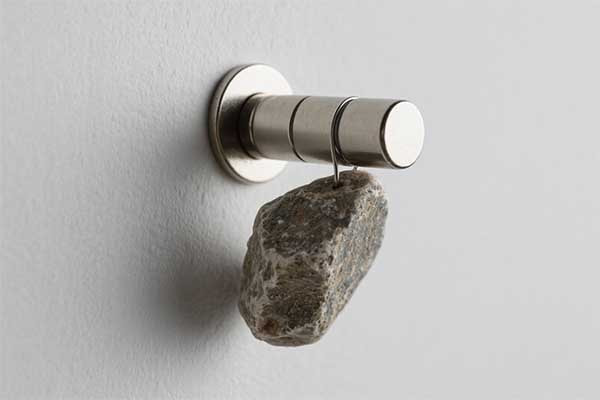
Magnets come in many shapes, and this can confuse people about their strength and use. Understanding shape matters for choosing the right magnet.
Magnets of different shapes affect how their magnetic fields spread and how strong they feel. Shapes like horseshoe or cylindrical magnets focus the magnetic field, making them stronger for lifting or holding. Bar and disc magnets suit other uses because of their field distribution.
Magnets of different shapes change how magnetic energy is delivered in space. For example, bar magnets have poles at the ends, so their magnetic force is focused there but weaker overall. Horseshoe magnets bend the bar shape to bring poles closer, concentrating the field and doubling the effective strength. Cylindrical magnets have axial symmetry, producing strong fields along their axis, useful in motors or sensors.
The shape affects not only strength but also how the magnetic field lines arrange outside the magnet. This influences how the magnet interacts with other materials and fits into devices. For example, disc magnets have large flat poles, giving a wide area of magnetic force, ideal for holding or craft uses.
Magnet Shapes and Their Importance
| Shape | Magnetic Field Characteristics | Common Applications |
|---|---|---|
| Bar Magnet | Field focused at poles; weaker overall field | Education, compasses, fridge magnets |
| Horseshoe Magnet | Field concentrated between close poles; strong pull | Lifting, engineering, experiments |
| Disc Magnet | Wide pole area; strong and even field | Holding, crafts, furniture fixing |
| Cylinder Magnet | Axial symmetry; strong field along axis | Motors, sensors, industrial uses |
Magnets of different shapes also affect self-demagnetization. Some shapes cause parts of the magnet to weaken others internally. For example, in cylinder magnets, the inner core and outer sleeve produce fields that can partially cancel each other. This affects the net magnetic field strength and must be considered in design.
The shape impacts how magnets fit into magnetic circuits, where multiple magnets and magnetic materials work together. Optimizing shape improves overall circuit efficiency and strength.
At M-Magnet, we customize magnet shapes to meet specific needs. We balance magnetic field strength, shape, and size to produce the strongest magnet solutions for different applications. Understanding magnets of different shapes helps us design better magnets and advise customers accurately.
Magnets of different shapes appear in many devices, from small electronics to heavy machinery. Each shape offers advantages depending on how the magnetic field is used. Knowing the importance of shape helps in selecting the right magnet for the strongest and most efficient performance.
Conclusion
In summary, the strongest magnet shape really depends on what you're using it for. But generally speaking, cylindrical or ring magnets are often considered to be among the strongest in terms of magnetic field strength.
About Blogger
Benjamin Li
Operation Manager of M-Magnet Company
I will bring you a full range of magnet knowledge and manufacturing experience on neodymium magnets and MagSafe magnet solutions through blogs and emails. I'm not an expert yet in magnets, but we have a whole team to help you solve technical issues, design drawing details, compatibility suggestions from magnetic assemblies, magnet purchasing and many other customized magnet solutions from China. You can follow my blogs on knowledge sharing or contact me for your own magnet solutions. We will always do the best.