How to Choose the Right Wind Turbine Magnet?
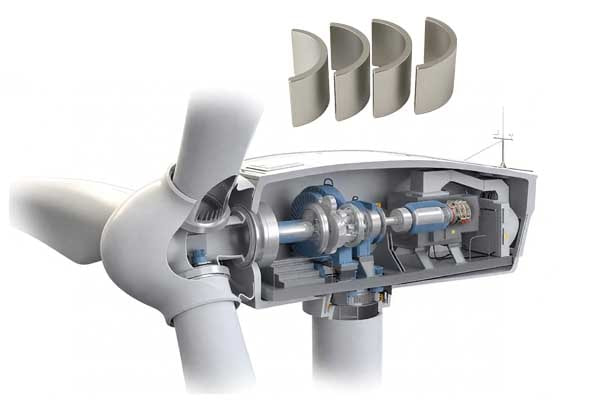
Wind generator magnets are vital for efficient power generation. Many people struggle to select the best type, risking poor performance and high costs. I help you solve this challenge.
Choose wind turbine magnets based on: 1) Size/Shape (arc segments 120×60×25mm for direct-drive generators), 2) Temperature Class (SH grade for -40°C to 150°C operation), 3) Coating (Ni-Cu-Ni for salt corrosion resistance), and 4) Magnetic Strength (N48EH grade with 45MGOe energy product).
If you want to maximize your wind generator's output, keep reading for practical advice.
Table of Contents
What magnets are used in wind turbines?
Wind generator magnets are the heart of the turbine. If you pick the wrong one, you may lose efficiency and face more maintenance.
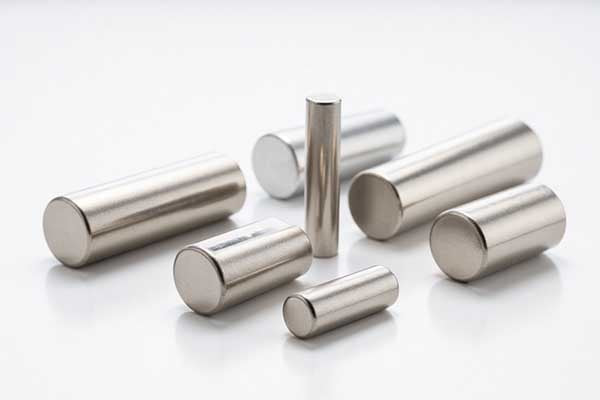
Wind turbines mainly use neodymium magnets for their high magnetic strength and efficiency. In some cases, samarium-cobalt or ferrite magnets are chosen for better temperature resistance or lower costs. Magnet selection depends on turbine size, location, and design requirements.
A Critical Look at Wind Generator Magnet Choices
When we evaluate wind generator magnets, I see that neodymium magnets (NdFeB) dominate the industry. They offer the highest magnetic energy product, which means more power from a smaller, lighter generator. This efficiency is crucial for direct-drive wind turbines, which avoid gearboxes and reduce maintenance. However, neodymium magnets have some limitations, especially in high-temperature or corrosive environments. Their performance drops when temperatures rise, and they can corrode without proper coatings.
For offshore wind farms, samarium-cobalt magnets are recommended. These magnets resist corrosion and maintain stability at higher temperatures, though they cost more than neodymium magnets.
Ferrite magnets are another option, mainly for small, cost-sensitive wind generators. They are less powerful but very stable against temperature changes and corrosion.
Comparison of Wind Generator Magnet Types
| Magnet Type | Magnetic Strength | Temperature Resistance | Corrosion Resistance | Typical Use |
|---|---|---|---|---|
| Neodymium (NdFeB) | Very High | Moderate | Low (needs coating) | Large/direct-drive turbines |
| Samarium-Cobalt (SmCo) | High | Very High | High | Offshore/extreme climates |
| Ferrite | Low | High | Very High | Small turbines |
Factors like magnet size, grade, shape, and coating all affect long-term performance. we recommend discussing your project with an experienced supplier to get the best results. The right wind generator magnet can boost efficiency, reduce costs, and ensure reliable power for years to come.
Is boron used in wind turbine magnets?
Many people worry about understanding the complex chemistry behind these powerful machines. The truth is, knowing the right materials can make or break your wind energy project.
Yes, boron is a critical component in wind turbine magnets. Neodymium-iron-boron (NdFeB) magnets are the most common type used in modern wind turbines because they provide the strongest magnetic field per unit weight. This combination creates the high-performance permanent magnets that make wind turbines efficient and reliable.
The role of boron in wind turbine magnets goes much deeper than most people realize. When I work with clients at M-Magnet, I always explain that boron acts as the crucial binding agent that holds the entire magnetic structure together. Without boron, the neodymium and iron atoms would not form the stable crystal lattice that creates such powerful magnetic fields.
The chemistry behind this is fascinating yet practical. Boron atoms are small enough to fit into the spaces between the larger neodymium and iron atoms. This creates what we call the Nd2Fe14B crystal structure. This specific arrangement is what gives these magnets their incredible strength. The boron content typically makes up about 1% of the total magnet weight, but this small percentage is absolutely essential.
Boron Content and Magnet Performance
| Boron Content (%) | Magnetic Strength (MGOe) | Wind Turbine Application |
|---|---|---|
| 0.95-1.05% | 48-52 | Standard Wind Turbines |
| 0.90-0.95% | 42-47 | Budget Wind Systems |
| 1.05-1.15% | 52-55 | High-Performance Turbines |
I have seen many wind turbine projects fail because they used magnets with incorrect boron content. Too little boron makes the magnet weak and unstable. Too much boron makes the magnet brittle and expensive. The sweet spot is usually between 0.95% and 1.05% for most wind turbine applications.
The temperature stability of boron-containing magnets is another critical factor. Wind turbines operate in harsh conditions with temperature swings from -40°C to +80°C. The boron helps maintain magnetic strength across these temperature ranges. This is why we always recommend NdFeB magnets for outdoor wind applications.
Quality control of boron content is essential in manufacturing. M-Magnet uses advanced testing equipment to verify exact boron percentages. Even small variations can affect the magnet's performance by 10-15%. This directly impacts the wind turbine's energy output and lifespan.
The sourcing of boron is also important for long-term projects. Most boron comes from Turkey and the United States. I always advise clients to consider supply chain stability when choosing their magnet suppliers. Price fluctuations in boron can affect the total cost of wind turbine magnets.
How can magnets help optimize wind turbine designs?
I see too many engineers struggling with wind turbine efficiency problems. They spend months tweaking blade angles and gear ratios. The real solution often lies in better magnet selection and placement.
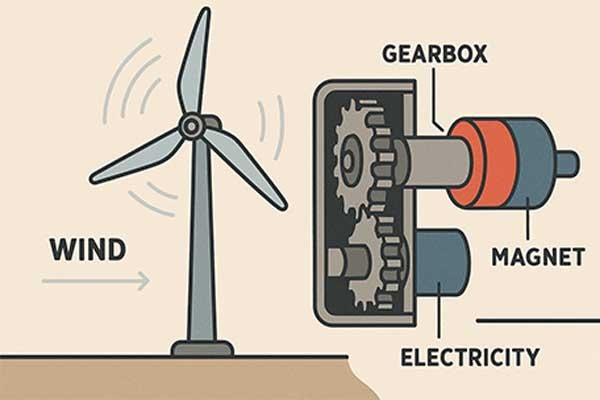
Magnets optimize wind turbine designs by enabling direct-drive generators that eliminate gearboxes, reducing maintenance costs by up to 40%. High-performance permanent magnets also increase energy conversion efficiency from 85% to over 95%, while reducing the overall weight and size of the generator system.
The optimization potential of magnets in wind turbine design extends far beyond simple efficiency gains. When I consult with wind energy companies, I always start by examining their current magnet configuration. Most traditional wind turbines use a complex gearbox system to convert the slow rotation of the blades into the high-speed rotation needed for electricity generation. This creates multiple points of failure and requires constant maintenance.
Direct-drive generators using powerful permanent magnets eliminate this problem entirely. The magnets create such strong magnetic fields that they can generate electricity efficiently even at low rotational speeds. This means the turbine blades can connect directly to the generator without any gears. The result is a simpler, more reliable system that requires much less maintenance.
The weight reduction achieved through magnet optimization is remarkable. Traditional wound-rotor generators with gearboxes can weigh over 100 tons for a 3MW turbine. A direct-drive system using high-performance wind turbine magnets typically weighs 30-40% less. This weight reduction affects the entire turbine structure. Lighter generators require smaller towers and foundations, reducing the total project cost significantly.
Magnet Configuration Impact on Turbine Performance
| Magnet Configuration | Efficiency (%) | Maintenance Hours/Year | Weight Reduction (%) |
|---|---|---|---|
| Traditional Geared | 85-90 | 120-150 | 0 |
| Direct-Drive PM | 95-97 | 40-60 | 30-40 |
| Hybrid Magnetic | 92-95 | 80-100 | 15-25 |
The magnetic field strength directly affects the generator's power density. Higher power density means more electricity generation from a smaller, lighter generator. This is where choosing the right wind turbine magnets becomes crucial. I work with clients to calculate the optimal magnetic field strength for their specific wind conditions and power requirements.
Temperature management is another area where magnets optimize wind turbine designs. High-performance permanent magnets generate less heat than traditional electromagnetic systems. This reduces the cooling requirements and extends component life. The lower operating temperatures also improve the electrical efficiency of the entire system.
Magnet placement and orientation within the generator also offers significant optimization opportunities. The arrangement of magnets affects the magnetic flux density and the smoothness of power generation. Small changes in magnet spacing or angle can improve power output by 5-10%.
The lifespan of wind turbine magnets is typically 20-25 years, which matches the expected life of the turbine itself. This means one set of high-quality magnets can serve the entire operational life of the wind turbine. The initial investment in premium magnets pays for itself through improved efficiency and reduced maintenance costs.
Offshore wind turbines benefit even more from magnet optimization. The harsh marine environment makes maintenance extremely expensive and difficult. Direct-drive systems with permanent magnets have fewer moving parts and require less frequent service. This makes offshore wind projects much more economically viable.
Future developments in magnet technology continue to push the boundaries of wind turbine optimization. New magnet alloys and manufacturing techniques are creating even stronger, more temperature-stable materials. These advances will enable the next generation of ultra-efficient wind turbines that can capture energy from even lower wind speeds.
How Do Wind Turbine Magnets Work in Energy Production?
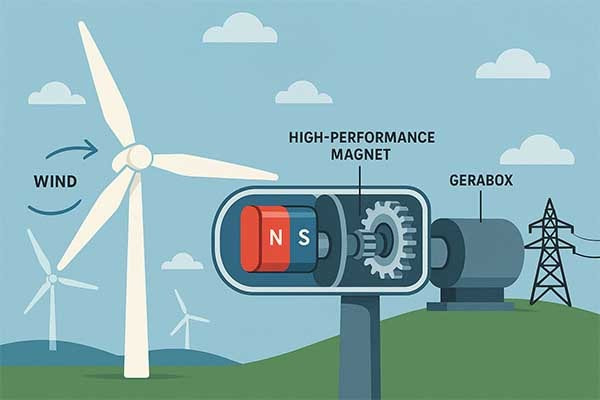
Are you curious about how wind turbines make electricity? Many people do not know the exact process. Wind turbine magnets are a key part of how these systems create power. Understanding this helps us appreciate green energy.
Wind turbine magnets are essential for converting wind power into electricity. They create a magnetic field. When wind spins the turbine blades, a rotor inside the generator also spins. This movement of the rotor through the magnetic field induces an electric current in the coils of wire, generating power. These are usually strong permanent magnets, often neodymium.
Wind turbines use a principle called electromagnetic induction. This is a basic idea in physics. When a conductor moves through a magnetic field, it creates an electric current. In a wind turbine, the blades catch the wind. This makes a shaft spin. The shaft connects to a generator. Inside the generator, there are coils of wire and powerful magnets.
The magnets are usually on the rotor. The coils of wire are on the stator. As the rotor spins, the magnets move past the wire coils. This constant motion creates a changing magnetic field. This change induces an electric current in the coils. This is how mechanical energy from the wind changes into electrical energy.
The type of magnet matters greatly. Neodymium magnets are very strong. They create powerful magnetic fields even when they are small. This makes them ideal for modern wind turbines. These turbines need high efficiency. They also need to be compact. Our magnet customized solutions focus on these needs. Stronger magnets mean more electricity. This also means the turbine can be smaller. This helps reduce costs and makes maintenance easier.
The demand for clean energy is growing. Wind power is a big part of this. Our role as a neodymium magnet manufacturer is important. We help make these turbines more efficient. This benefits everyone. It helps us move towards a more sustainable future.
Wind Turbine Generator Components and Their Roles
| Component | Description | Function in Energy Production |
|---|---|---|
| Blades | Capture wind energy. | Convert wind's kinetic energy into mechanical rotation. |
| Rotor | Houses the permanent magnets. | Rotates to create a changing magnetic field. |
| Stator | Contains copper wire coils. | Induces electric current as magnets pass by. |
| Neodymium Magnets | Strong rare-earth permanent magnets. | Provide the strong and stable magnetic field for induction. |
| Gearbox (optional) | Increases rotation speed. | Allows generator to operate at optimal speed with slower blade rotation. |
Why can't we use magnets to spin a turbine?
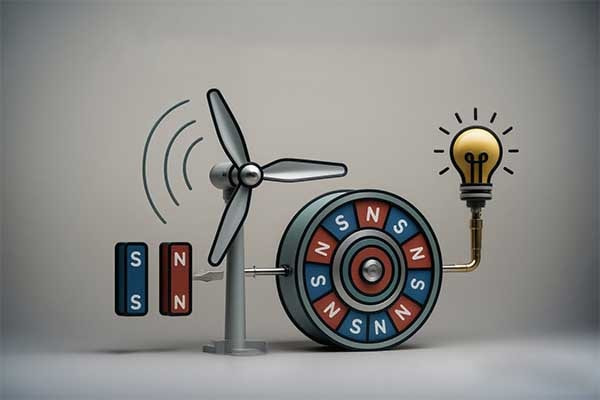
Have you ever wondered if magnets could spin a turbine without wind? This is a common question. It touches on basic physics principles. The answer is not as simple as it seems.
We cannot use only magnets to spin a turbine indefinitely without external energy input because it would violate the laws of thermodynamics, specifically the law of conservation of energy. Perpetual motion machines are not possible. While magnets are crucial for generating electricity from motion, they cannot create that motion from nothing.
This is a very important point. It relates to the fundamental laws of physics. The idea of a "perpetual motion machine" is appealing. This machine would run forever without any energy input. It would also produce energy. However, this concept goes against the law of conservation of energy. This law states that energy cannot be created or destroyed. It can only change form.
In a wind turbine, wind provides the initial energy. This kinetic energy from the wind causes the blades to move. This movement then powers the generator. The magnets inside the generator help convert this mechanical energy into electrical energy.
The magnets themselves do not create the initial motion. They are a passive component. They facilitate the energy conversion process. If we could use magnets alone to spin a turbine and generate power, it would mean we are getting energy from nothing. This is not possible.
Think about two magnets. You can push them together or pull them apart. They exert forces on each other. But they do not create continuous motion on their own. To get continuous motion, you need an external force. In a wind turbine, that force is the wind. Without the wind, the magnets stay still. There is no relative movement. So, no electricity gets generated.
Our work at M-Magnet Company focuses on real-world applications of magnets. We know the power of magnets, but also their limitations within physical laws. As a MagSafe magnet factory and provider of magnet customized solutions, we design magnets for specific functions. These functions always follow the rules of physics. We make magnets that work with external energy sources. This helps generate power efficiently. We cannot make magnets that defy these laws.
Understanding Energy Conservation in Magnetism
| Principle | Explanation | Relevance to Wind Turbines |
|---|---|---|
| Law of Conservation of Energy | Energy cannot be created or destroyed, only transformed. | Wind provides kinetic energy, which converts to electrical energy. Magnets facilitate this conversion, they do not create energy. |
| Electromagnetic Induction | A changing magnetic field induces an electric current. | Turbine rotation causes magnets to move relative to coils, creating a changing magnetic field and thus electricity. |
| Perpetual Motion | A hypothetical machine that operates indefinitely without external energy. | Not possible. Magnets cannot create motion or energy on their own to sustain a turbine's operation. |
| Energy Input vs. Output | Energy output is always less than or equal to energy input due to losses. | Wind is the energy input. The electrical energy generated is the output, accounting for energy losses like friction. |
Can you generate free electricity with magnets?
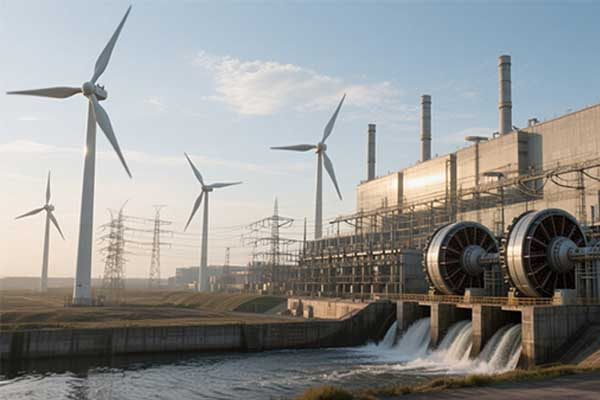
The idea of generating free electricity with magnets sounds exciting, but it's not realistic in a practical sense.
No, you cannot generate truly free electricity using magnets alone. Magnets can be used in generators to convert mechanical energy into electrical energy, but they require movement — usually supplied by wind, water, or other sources.
Understanding the Magnetic-Electric Relationship
To understand if magnets can provide free electricity, we must look at the basics of how a generator works. In all real-world generators, magnets alone do not create power. Instead, magnets interact with copper coils and a moving mechanical force (such as a wind turbine) to induce current.
This is the same principle used in wind generators. The term “wind generator magnets” refers to powerful neodymium magnets used inside wind turbine alternators. These magnets are critical for the turbine’s ability to convert wind energy into usable electricity.
Using magnets without a mechanical input does not work. While it’s true that magnets never run out of magnetic energy, their ability to generate electricity depends on continuous motion.
Comparison of Magnet Use in Electricity Generation
| Application | Is Motion Required? | Power Output | Uses Wind Generator Magnets? |
|---|---|---|---|
| Wind Turbine | Yes | High | Yes |
| Magnetic Motor Toy | Yes | Low | No |
| Stationary Magnet Setup | No | None | No |
Real-World Energy Needs
In the real world, we need systems that produce reliable power. That’s where magnetic windmills come in. They use wind energy to rotate turbines. Inside the turbine, wind generator magnets help turn this mechanical movement into electricity. But the energy comes from the wind—not the magnets.
Some people online suggest “free energy” devices based on magnets. These ideas are misleading. They often ignore the laws of physics, especially the law of conservation of energy. Magnets can reduce friction in certain applications, or help systems work more efficiently, but they cannot create energy from nothing.
At M-Magnet, we supply strong neodymium magnets used in wind generators. These magnets are engineered for durability, high magnetic strength, and heat resistance. Our wind generator magnets help maximize the efficiency of turbines, but they must be paired with real energy sources like wind or water flow.
If you are considering building or optimizing a wind turbine, you need to choose the right grade and shape of neodymium magnets. The magnet design, size, and layout directly affect the efficiency of the generator. We can provide support on how to match magnets with your turbine’s rotor/stator design to ensure optimal output.
In short, while magnets are essential in many types of power generation, they are not a power source themselves. The term "free electricity" is a myth unless you count naturally available energy like wind or sunlight — which still needs a conversion system.
Conclusion
Choosing the right wind generator magnet is a balance of efficiency, cost, durability, and environmental suitability. Neodymium magnets are best for most applications, but samarium-cobalt and ferrite magnets have their place. I help clients match the right magnet to their wind turbine, ensuring stable, efficient, and reliable power generation in every project.
About Blogger
Benjamin Li
Operation Manager of M-Magnet Company
I will bring you a full range of magnet knowledge and manufacturing experience on neodymium magnets and MagSafe magnet solutions through blogs and emails. I'm not an expert yet in magnets, but we have a whole team to help you solve technical issues, design drawing details, compatibility suggestions from magnetic assemblies, magnet purchasing and many other customized magnet solutions from China. You can follow my blogs on knowledge sharing or contact me for your own magnet solutions. We will always do the best.